News
Isabela
Pineapple Leaves as Packaging: DOST Is Testing a Local Solution for Isabela's Honeydew Melon Industry
The DOST Industrial Technology and Development Institute is running live transport tests on pineapple leaf fiber cushion pads at a farm in Echague, Isabela — a practical attempt to reduce post-harvest losses using an agricultural waste material the region already produces in abundance.

Amianan Desk
Amianan Innovation Ventures
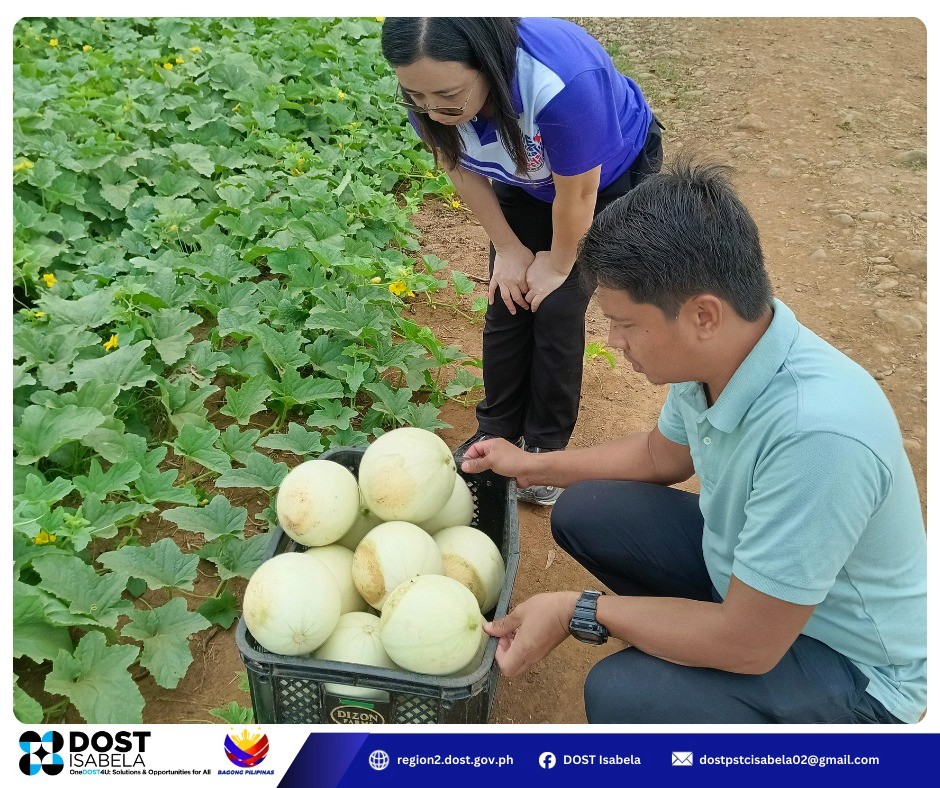
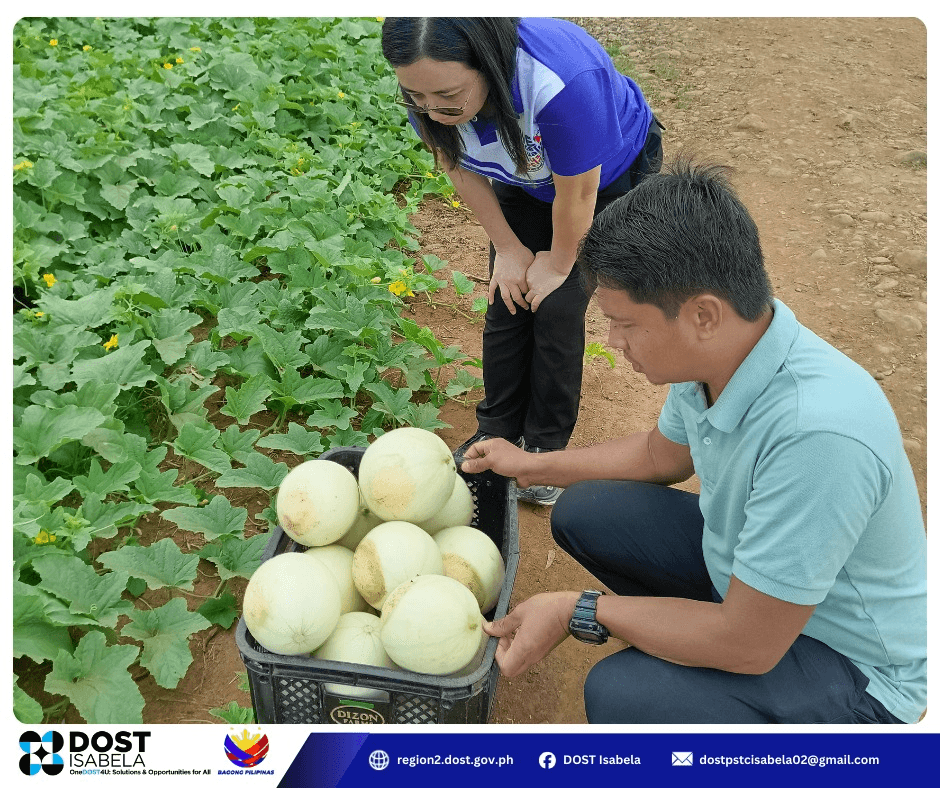
The Department of Science and Technology's Industrial Technology and Development Institute, through its Packaging Technology Division, is testing a new biodegradable packaging system for honeydew melons in Isabela, using cushion pads made from pineapple leaf fibers as protective material during long-distance transport. The initiative is being implemented in partnership with the DOST Provincial Science and Technology Office in Isabela, with testing currently underway at Simons Farm in Sta. Ana, Echague — a SETUP-assisted enterprise owned by Mary Ann R. Pungan.
The project addresses one of the most persistent and underreported problems in Philippine agriculture: produce that survives the field but does not survive the truck.
What Is Being Tested and How
On March 4, 2026, the DOST research team collected 600 to 800 kilograms of honeydew melons from Simons Farm. The fruits were packed using newly developed packaging prototypes — transport and display boxes paired with the pineapple leaf fiber cushion pads. The packed melons were then loaded into a refrigerated van and transported to the ITDI Simulation Packaging and Testing Laboratory in Bicutan, Taguig City, where laboratory simulations will assess how well the biodegradable materials protect the fruit during transport and storage.
The specific problem the packaging is designed to solve is bruising and fruit softening during long-distance travel. These are not dramatic losses. They are quiet ones: melons that arrive slightly damaged, slightly soft, slightly less sellable than they were when they left the farm. Multiplied across a harvest season and an entire province, those quiet losses add up to real money that farmers and agribusinesses never recover.
Mary Joy P. Paico, science research specialist II at the ITDI Packaging Technology Division, is leading the research. The study's primary goal is to determine whether the new packaging system can measurably reduce those transport-related losses compared to conventional materials.
Why Pineapple Leaf Fiber
The material choice is the most interesting part of the project. Pineapple leaf fiber is an agricultural by-product — it comes from the leaves left behind after pineapple harvesting, material that is typically discarded or burned. Using it as a packaging input transforms waste into a functional, biodegradable resource with real commercial value.
Isabela is one of the country's major pineapple-producing provinces. It is also a significant producer of honeydew melons. The possibility of using a by-product from one crop to protect another during transport is the kind of circular, locally grounded solution that makes sense for the province's agricultural economy in ways that imported synthetic packaging materials simply do not.
If the laboratory results validate the packaging system, the technology would offer farmers and agribusinesses a cost-efficient, biodegradable alternative that reduces post-harvest losses, lowers the carbon footprint of agricultural logistics, and creates a new use case for a material that currently has limited value in the production chain.
What This Means for Northern Luzon
Post-harvest loss is one of the most significant and least glamorous problems in Northern Luzon's agricultural sector. The region produces vegetables, fruits, and specialty crops at scale, but the infrastructure between farm and market — packaging, cold chain, transport — has not kept pace with production capacity. A validated, locally sourced biodegradable packaging solution developed and tested in Isabela would be directly applicable across the region's fruit and vegetable supply chains.
The project is also a reminder of what DOST's provincial science offices and national research institutes can produce when they work together at the farm level. The research did not happen in a laboratory in Manila. It started with 600 kilograms of melons collected on a farm in Echague. That ground-level approach is what gives the eventual results their practical credibility.
Farmers, agribusinesses, and cooperatives in Isabela and across Northern Luzon working with perishable produce should follow the results of this study. When the ITDI laboratory validation is complete, the technology will be available for adoption — and the DOST PSTO Isabela is the right first point of contact for enterprises interested in accessing it.
Source: PIA