News
Baguio City
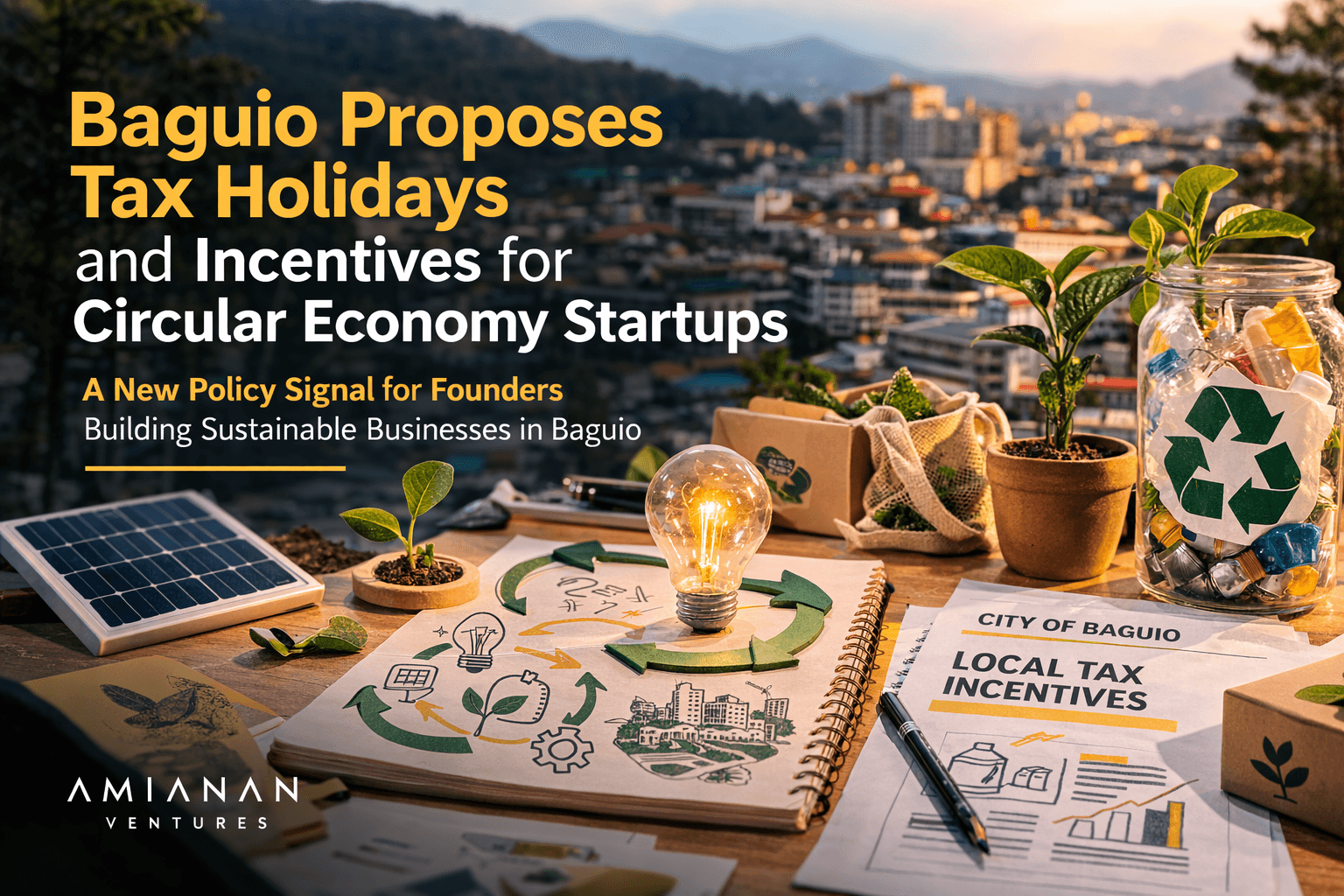
Baguio City Council Takes Up a Tax Holiday Proposal for Circular Economy Startups — With Real Incentives Tied to Real Impact
Councilor Paolo Raynor Salvosa's proposed ordinance offers graduated tax exemptions and rental discounts to Baguio-based startups built around waste reduction, reuse, and resource recovery — and the structure rewards founders who prevent waste at the source, not just those who recycle it.

Amianan Desk
Amianan Innovation Ventures
Baguio City Councilor Paolo Raynor Salvosa has proposed an ordinance granting local tax holidays and rental incentives to qualified circular economy startups operating within the city. The proposed "Baguio Circular Economy Startup Tax Holiday" has passed first reading at the City Council and has been referred to the Committee on Appropriations and Finance Cluster B for review.
For founders building businesses around sustainability in Baguio, this is the most concrete local policy signal the city has sent toward the circular economy sector — and the structure behind it is worth understanding in detail.
How the Incentives Work
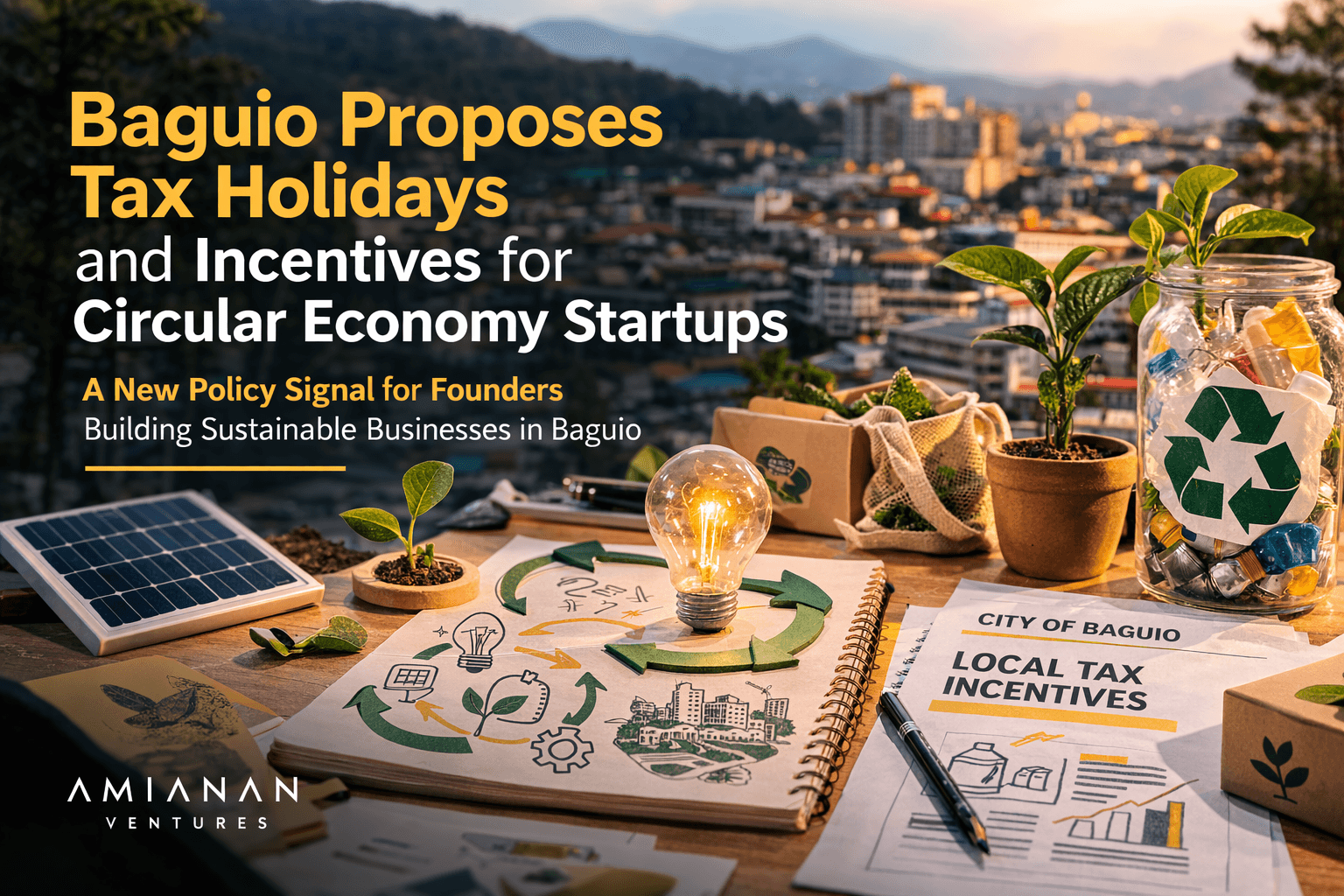
The ordinance is built around the globally recognized 10R framework — a hierarchy that ranks circular strategies from highest to lowest environmental impact. Startups using "short-loop" approaches like Refuse, Rethink, and Reduce receive the longest tax holiday periods. Those using "medium-loop" strategies like reuse and repair get the next tier. Businesses focused on "long-loop" activities like recycling and recovery receive the baseline incentives.
The logic is intentional: preventing waste at the source is harder to build a business around than recycling it, and the ordinance rewards founders who do the harder work with longer and more substantial exemptions from local business taxes and fees.
Beyond tax relief, qualified startups may also access graduated discounts on rental fees for city-owned facilities used for product launches, workshops, exhibitions, and events that promote circular economy initiatives — applying the same tiered structure.
Who Qualifies
To be eligible, a startup must be registered with both the City Government of Baguio and the appropriate national agency, maintain its principal office within the city, and ensure that at least 50% of its workforce are Baguio residents. Core operations must demonstrably promote waste reduction, reuse, repair, remanufacturing, recycling, upcycling, sustainable materials development, or resource recovery — including activities that support compliance with the Extended Producer Responsibility Act of 2022.
The ordinance also includes a transition benefit for scale-up startups between five and eight years from registration. These businesses may qualify for partial exemptions if they meet financial vulnerability thresholds, submit audited financial statements, and commit to reinvesting a portion of net profits into local circular economy research, green infrastructure, or community-based waste diversion programs within the BLISTT area.
Bonus benefits are available for startups that meet at least two additional criteria: formal engagement with the informal waste sector, gender and youth-responsive ownership or management, use of indigenous Cordilleran materials, conduct of community circular literacy workshops, or readiness for green public procurement accreditation. These extras can extend the tax holiday or reduce local business tax further.
How It Will Be Monitored
Implementation will be led by the City Treasurer's Office in consultation with a Local Circular Economy Action Team. Startups must submit annual compliance reports detailing ongoing circular operations and measurable environmental contributions — such as the volume of waste diverted from landfills or partnerships supporting EPR targets. Non-compliance or falsification of documents results in revocation of incentives and liability for unpaid taxes. A multi-sectoral Circular Economy Oversight Committee composed of city government, private sector, academe, and civil society representatives will oversee the program and regularly review its implementing rules.
What This Means for Baguio Founders
Baguio has a genuine circular economy opportunity — in tourism waste, agricultural byproducts from the Cordillera highlands, indigenous materials, and the city's ongoing challenge with solid waste management. What has been missing is a local policy environment that treats circular economy ventures as a distinct category worth supporting, rather than lumping them in with general business incentives. Councilor Salvosa's proposal, if passed, changes that. It also sets a precedent: that Baguio can design local incentive structures around specific innovation priorities, not just wait for national programs to trickle down.
The ordinance is still in committee review. Founders with circular economy ventures already operating or in development in Baguio should follow the progress at the City Council and consider engaging the Committee on Appropriations and Finance Cluster B during the review process. The time to shape implementation details is before the IRR is written, not after.