Founder Story
He Did Not Want to Waste a Single Strawberry. Now He Is Building a Premium Wine Brand That Tastes Like Benguet.
John Glenn Libag is a fourth-year student in La Trinidad who turned a supply problem into Bo-oy Food Products — a circular, zero-waste enterprise built entirely around the strawberry, and one of the most quietly ambitious young ventures in the Cordillera.

Amianan Desk
Amianan Innovation Ventures
The Problem He Could Not Ignore
John Glenn Libag was not looking for a business idea. He was working, watching, and paying attention — and one day he noticed something that bothered him enough to do something about it.
Strawberries in La Trinidad do not always have a buyer waiting for them. When supply is high, prices drop, and a significant portion of the harvest goes unsold or goes to waste. Libag watched this happen and asked a question that would eventually become a business.
What if nothing had to go to waste?
"Kulang kasi 'yung suplay ng strawberry alamang, sabi ng boss ko, mag-create daw ako ng sarili ko to supply 'yung area namin," he recalls. "In 2023, nakita ko 'yung opportunity na we can utilize 'yung strawberry pala, hindi lang sa tradisyunal na strawberry jam."
That realization was the start of Bo-oy Food Products, a food enterprise built around one principle: every part of the strawberry, and every byproduct of processing it, has a use.
Building Beyond the Jam
What Libag built from that starting point is more ambitious than it first appears.
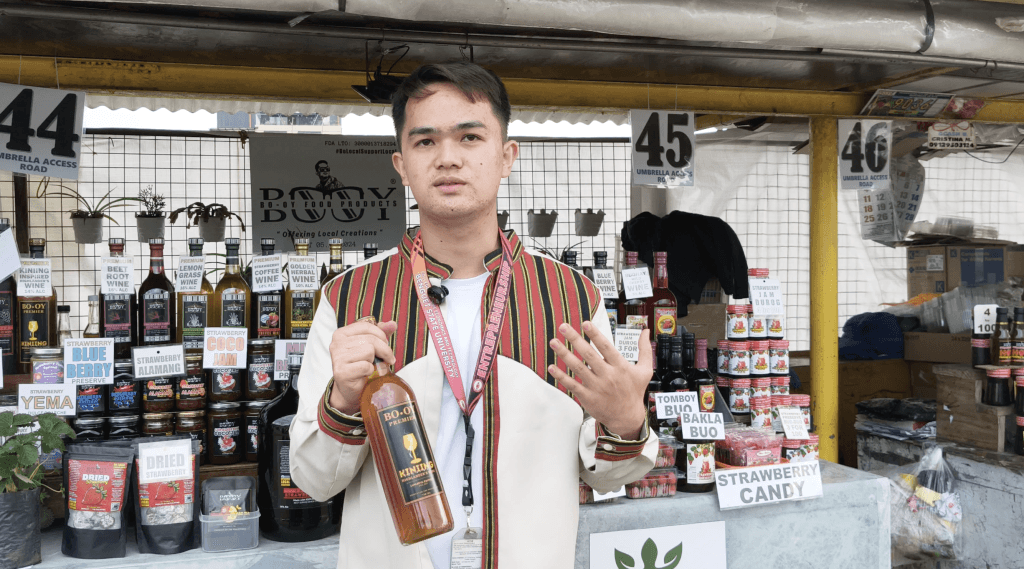
The product line he developed includes strawberry hot sauce, strawberry yema jam, strawberry coffee, strawberry vinegar, and a mixed berries wine. Each product takes the strawberry further from its raw form and closer to something with a longer shelf life, a higher price point, and a market beyond the farm gate.
But the design logic that runs through all of it is what makes Bo-oy Food Products unusual. Libag practices what he calls a circular green economy at the product level — meaning nothing from the processing cycle gets thrown away if it can be transformed into something else.
"For example, in my mixed berries wine, meron siyang byproduct na mixed berries preserve. Instead na itatapon natin 'yung fruit after the processing, ginagawa siyang jam," he explains. "We have 'yung strawberry lemon tea, the peels from the strawberry are used in lemon wines. Imbes na itinatapon natin 'yung lemon peels, dini-dehydrate po natin siya, nagiging powder po."
That level of intentionality in a student-run enterprise is not common. Most early-stage food businesses figure out one product and stop there. Libag has built a system where each product generates inputs for the next one, and very little leaves the process as waste.
The Wine That Carries a Province
Of everything Libag has built, one product stands apart.
He is developing a premium wine he calls the Kiniing-Inspired Highlander's Wine, Lumawig Edition — a heritage product that he describes simply as "Benguet in a bottle." The wine uses strawberry, cabbage, carrot, beetroot, lemongrass, and lemon as primary ingredients, and it is processed using a method inspired by kiniing, the traditional Benguet practice of smoking meat for days over pine wood.
"Gusto kong mag-create ng wine na premium brand na puwede nating ipagmalaki na sariling atin na tatak Benguet," he says.
That sentence carries the full weight of what Libag is attempting. He is not just making wine. He is building a product that represents the Cordillera in a format that can travel — to restaurants, to gift shops, to buyers abroad — and tell the story of where it came from through every ingredient and every step of its production.
His products have already reached buyers outside the country. For a student enterprise operating out of La Trinidad, that is not a small thing.
Starting Without Money, Building With Programs
Libag is the first to say that none of this was easy, especially in the beginning.
"Hindi naging madali ang pagsisimula niya ng negosyo lalo na sa pinansiyal na aspeto," he shares. What changed the pace of his growth was not a windfall or an investor. It was a series of government programs that he was willing to seek out and use.
DTI Baguio-Benguet's One Town One Product Next Generation program helped him register his products with the FDA and secure intellectual property registration for his brand. The same office supported his packaging and labeling. The Department of Labor and Employment provided livelihood assistance. He also joined DTI's Youth Entrepreneurship Program.
"I am very thankful to the Department of Trade and Industry-Baguio-Benguet kasi sila po 'yung nag help sa akin especially for product labelling. Then later on, they pushed me to go FDA registration and finund nila yung IPO for my logo. We have the product testing, 'yung mga nutrifacts, sila din yung nag fund," he says.
Angelica Sebastian, Trade and Industry Development Analyst at DTI Baguio-Benguet, notes that intellectual property registration matters especially at this stage. "Yung IPO kasi, it's a protection of your brand. 'Pag sinabi nating naka-IPO 'yung product or 'yung brand mo, you have the sole right to that brand."
For young entrepreneurs in Benguet and across the Cordillera, the path Libag walked through government programs is a replicable one. The support exists. The question is whether founders know to ask for it.
A Student, a Farmer's Ally, a Future Founder
Libag is currently a fourth-year student of BS Entrepreneurship, Specialized in Food Enterprise at Benguet State University. His business has helped fund his education. When he graduates, he plans to focus on Bo-oy Food Products full time and expand what he has built.
He is also, quietly, a support system for other farmers. Every strawberry he buys from local growers to use in his products is income that would not have existed otherwise. His circular model does not just reduce his own waste. It creates demand for produce that might otherwise go unsold.
"Be local, support local," he says. That advocacy is not a tagline. It is the operating logic of everything he has built.
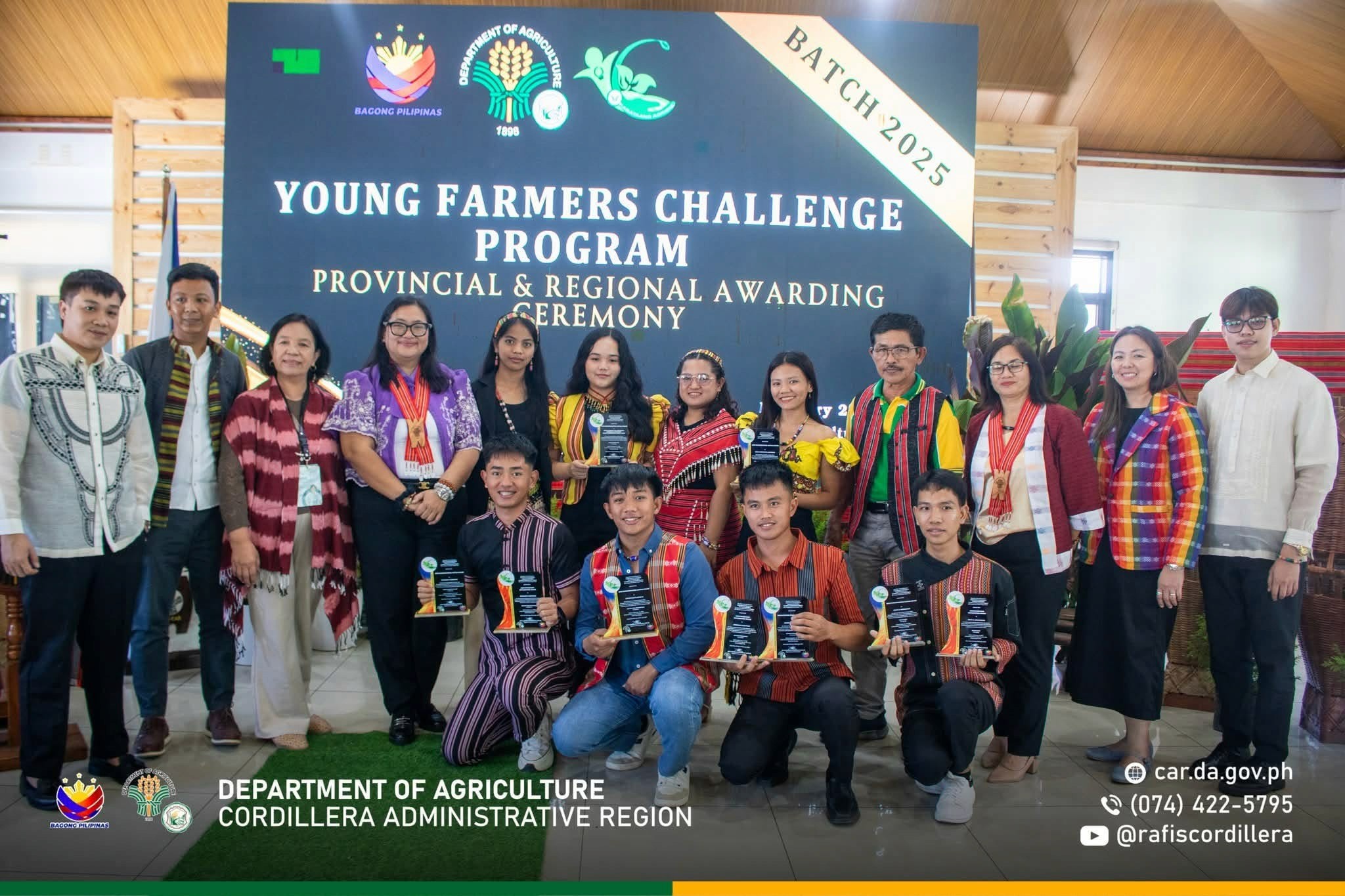
He will represent Benguet at the Regional Young Farmers Challenge organized by the Department of Agriculture, where he will compete with his Kiniing-Inspired Highlander's Wine. Whatever the result, the product he is bringing to that competition is already a statement about what a young founder from La Trinidad believes Benguet is capable of producing.
His advice to other young people thinking about starting a business is direct and unhurried.
"In business, maraming pagsubok pero importante dun kung paano ka bumangon. Always put God first in your business."
Bo-oy Food Products is available at their stall at the La Trinidad Strawberry Farm. For inquiries, visit their Facebook page or contact John Glenn Libag directly.
Key Takeaways for Founders
1. A supply problem is a product opportunity. Libag did not start with a product idea. He started with a waste problem and worked backward to a solution. That approach produces businesses that are grounded in real, persistent needs.
2. Circular design at the product level is a competitive advantage. Building a system where every byproduct becomes an input for the next product reduces costs, reduces waste, and creates a portfolio that is harder to replicate than any single item.
3. Government programs exist to be used. Libag's FDA registration, IP protection, product testing, and packaging support all came from programs he actively sought out. The support is there for founders who ask for it.
4. Local identity is a product feature. The Kiniing-Inspired Highlander's Wine is not just a wine. It is a story about Benguet told through ingredients, process, and name. Founders in the Cordillera have access to cultural and geographic identities that no outside brand can replicate. That is a real advantage.
This article was written based on a story originally reported by Debbie Gasingan for the Philippine Information Agency CAR, published on February 12, 2026. We are grateful for the original reporting that brought John Glenn Libag's story to light.