News
Cordillera
DOST-CAR and CHED-CAR Sign MOU to Launch Cordi INSPIRE, a New Startup Platform for Cordillera's Universities
The February 27 agreement at Saint Louis University formalizes a push to turn Cordillera's higher education institutions into active launchpads for technology-based startups.

Amianan Desk
Amianan Innovation Ventures
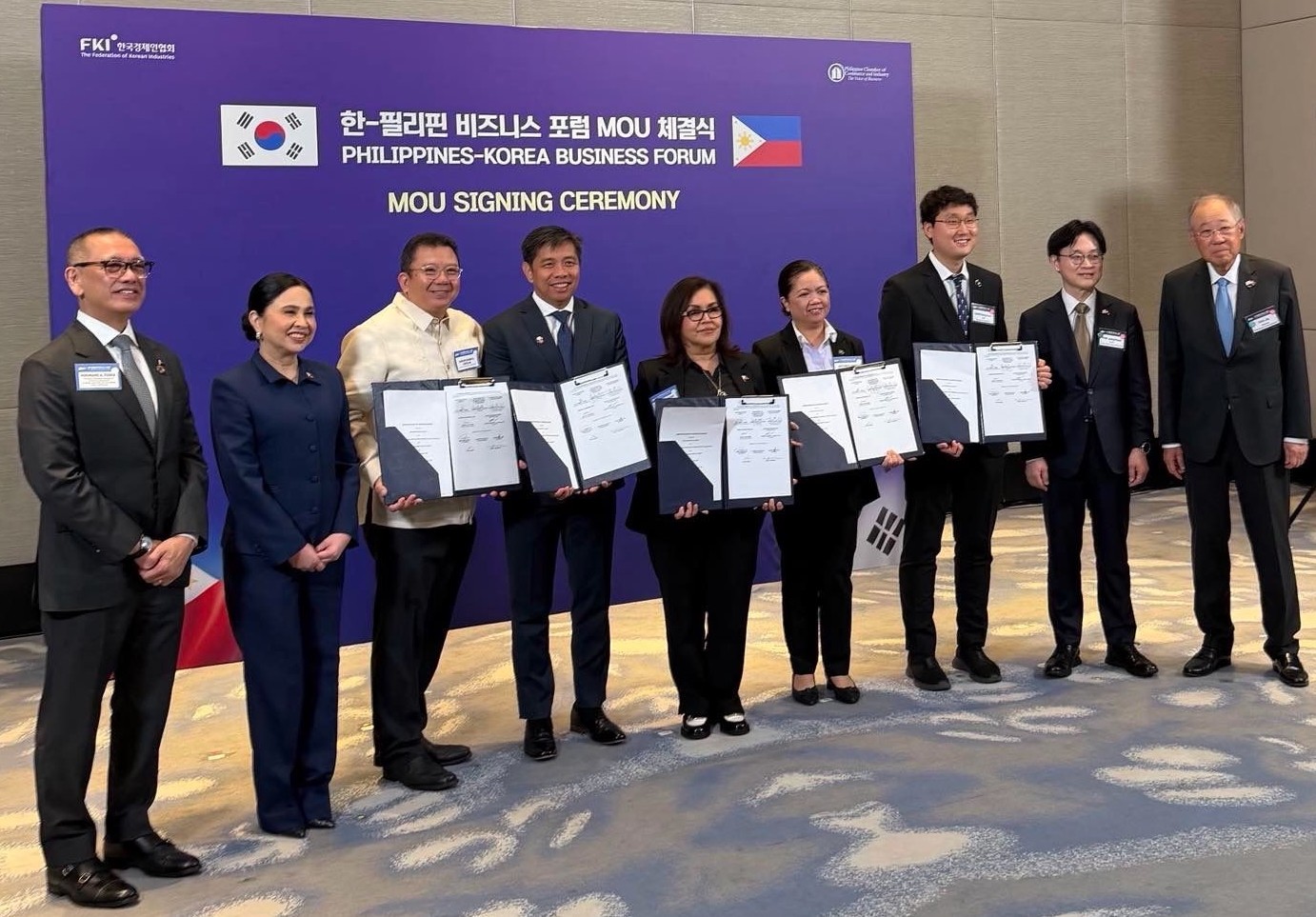
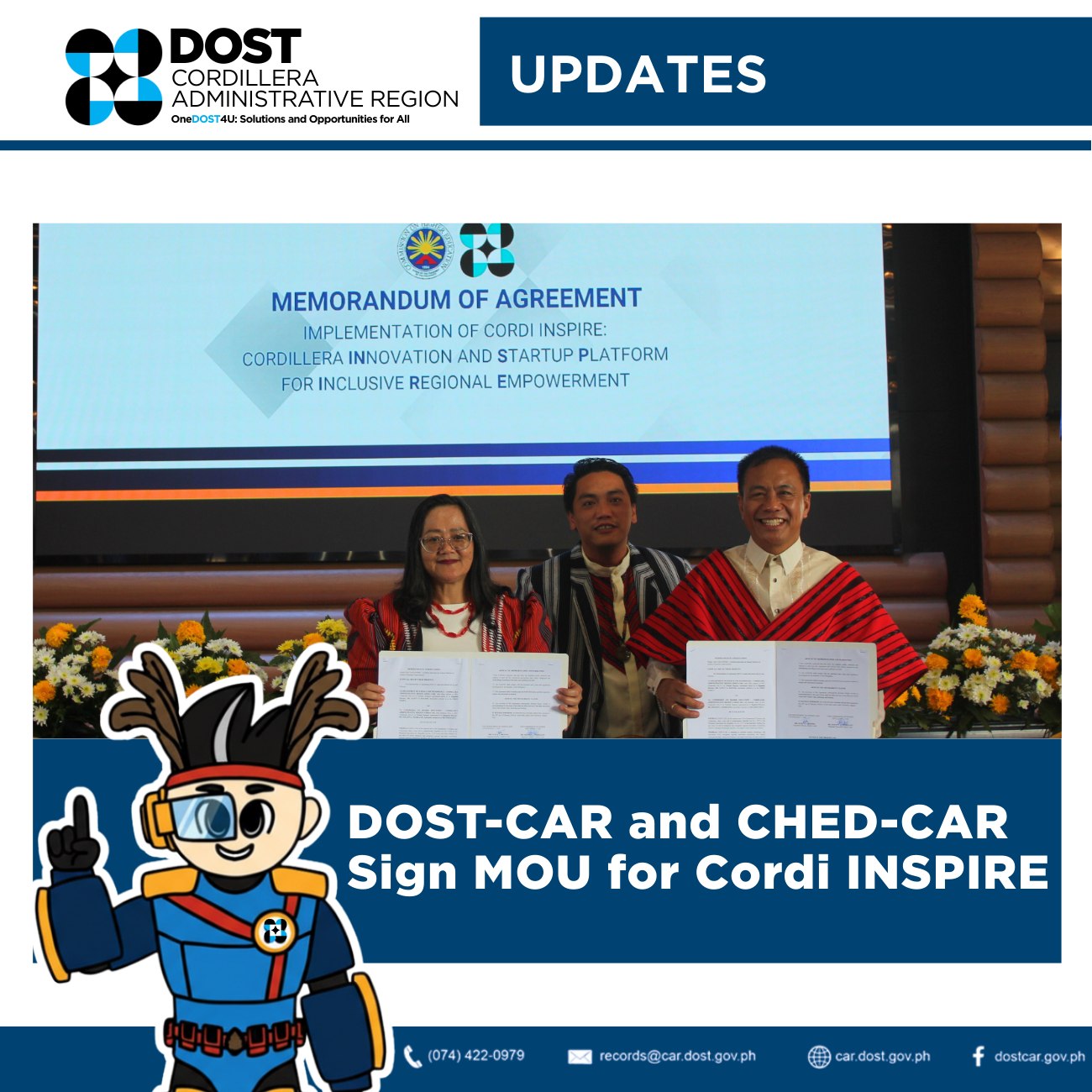
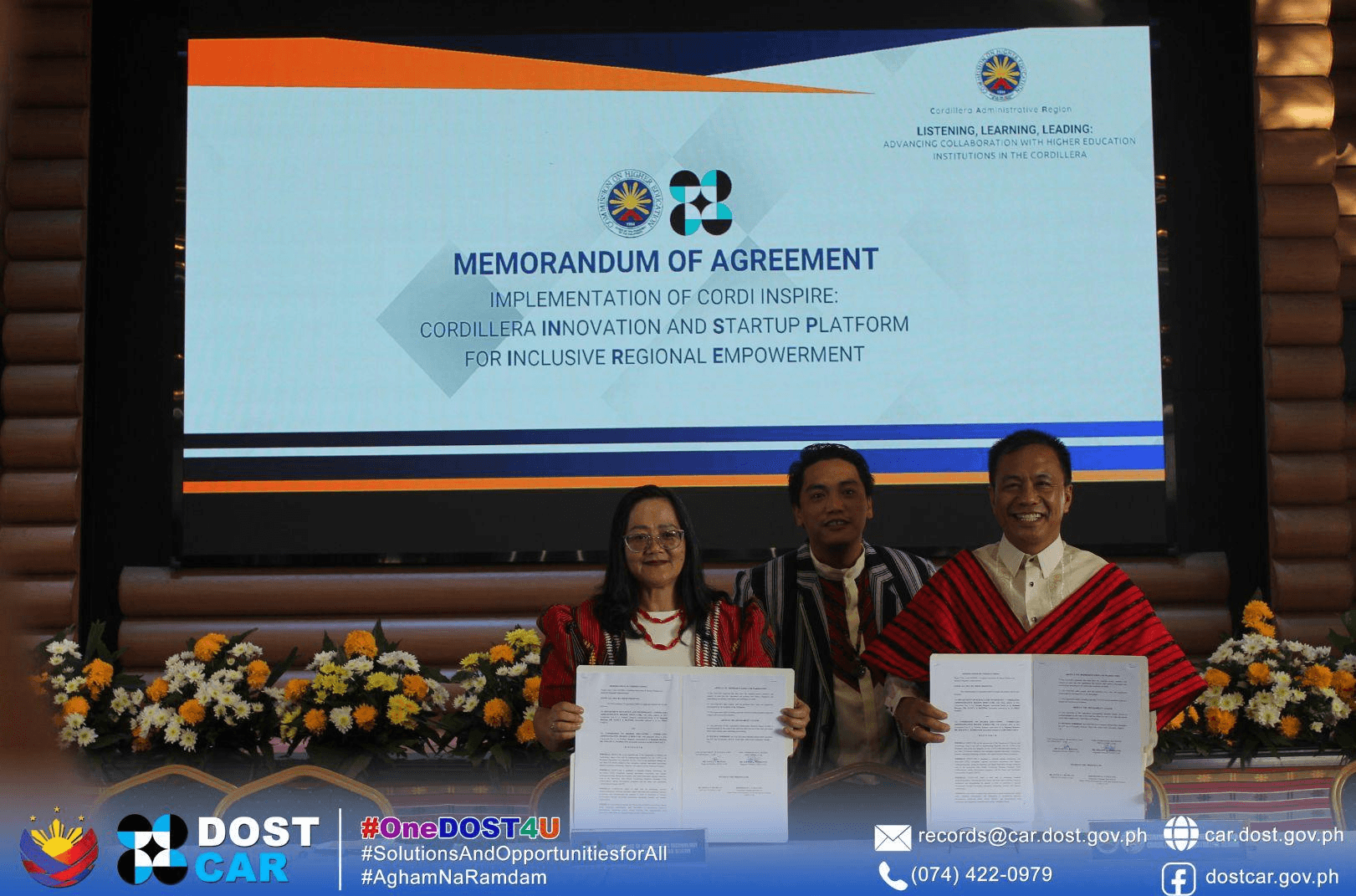
DOST-CAR and CHED-CAR signed a Memorandum of Understanding on February 27, 2026 at Saint Louis University in Baguio City, formalizing the launch of Cordi INSPIRE — the Cordillera Innovation and Startup Platform for Inclusive Regional Empowerment. DOST-CAR Regional Director Nancy A. Bantog and CHED-CAR Regional Director Serafin Ngohayon signed the agreement.
Cordi INSPIRE is a joint initiative to strengthen innovation, technopreneurship, and startup development capacity across Cordillera's higher education institutions — targeting faculty and students, not just existing founders. The program aims to support the development, incubation, and growth of technology-based enterprises in the region.
Why This MOU Is More Than a Formality
MOUs between government agencies are easy to dismiss. This one is harder to ignore. Bringing CHED and DOST together under a single platform means the region's two most direct levers over higher education — accreditation and research funding — are now pointed in the same direction. For TBIs already operating inside universities, like UCIANS and SILBI, a coordinated mandate from both agencies removes one of the most persistent friction points: getting institutional buy-in to treat startup development as a legitimate academic activity, not an extracurricular.
The name is worth unpacking. "Inclusive Regional Empowerment" signals that this isn't only for Computer Science students at major universities. If the implementation follows the framing, Cordi INSPIRE should reach agriculture, health, and social science students — the ones sitting on problems in the region that tech-focused startup programs routinely miss.
What It Means in Practice
The agreement doesn't publish a program calendar or application timeline yet. What it does establish is the formal architecture for both agencies to co-design and co-deliver capacity-building activities across HEIs in the Cordillera. That means workshops, curricula, and possibly cohort-based programs for student and faculty innovators — backed by DOST's technical and funding infrastructure and CHED's reach into every accredited university and college in the region.
For students and faculty already sitting on research with commercial potential, this is the signal to start moving. DOST's existing ecosystem — including iHub and the regional TBI network — provides a ready pipeline from idea to incubation. What's been missing is a structured on-ramp from the classroom to that pipeline. Cordi INSPIRE is meant to be that on-ramp.
The honest question is implementation speed. MOU signings announce intent; program delivery is where most initiatives slow down. The region has seen coordinated announcements before that took months to produce any founder-facing activity. The measure of Cordi INSPIRE won't be the signing ceremony — it'll be how quickly the first workshop, cohort, or student team intake actually runs.
So What
Cordillera's universities are the region's single largest untapped source of early-stage innovation. Thousands of students graduate every year having worked on research, capstones, and projects that never get validated against a real market. Cordi INSPIRE, if executed with urgency, is the most direct institutional attempt to change that pipeline. For Baguio-area founders and enablers, the implication is practical: start building relationships with your university's TBI now, because the institutional support for what you're doing just got a formal upgrade.
Faculty members with research projects and students developing technology-based solutions should watch for Cordi INSPIRE program announcements through their institution's TBI or the DOST-CAR website at car.dost.gov.ph. If you're an enabler — a TBI, LGU, or private sector partner — this is the right time to reach out to either agency about how your programs can align with what's coming.
Source: DOST-CAR