Founder Story
Geneva Gañalon Started a Duck Farm in La Union. Now She Is Building an Agri-Tourism Enterprise That Employs Mothers and Out-of-School Youth.
G's Duckery Food Processing in Bacnotan is what happens when a young farmer decides that a duck farm can be more than a duck farm — and builds a social enterprise around that belief.

Amianan Desk
Amianan Innovation Ventures
A Farm With a Bigger Idea Behind It
Geneva S. Gañalon was not trying to disrupt anything. She was trying to build something sustainable in Bacnotan, La Union, using what she had around her: ducks, local ingredients, a community that needed livelihood opportunities, and a belief that modern farming methods and traditional values do not have to be in conflict.
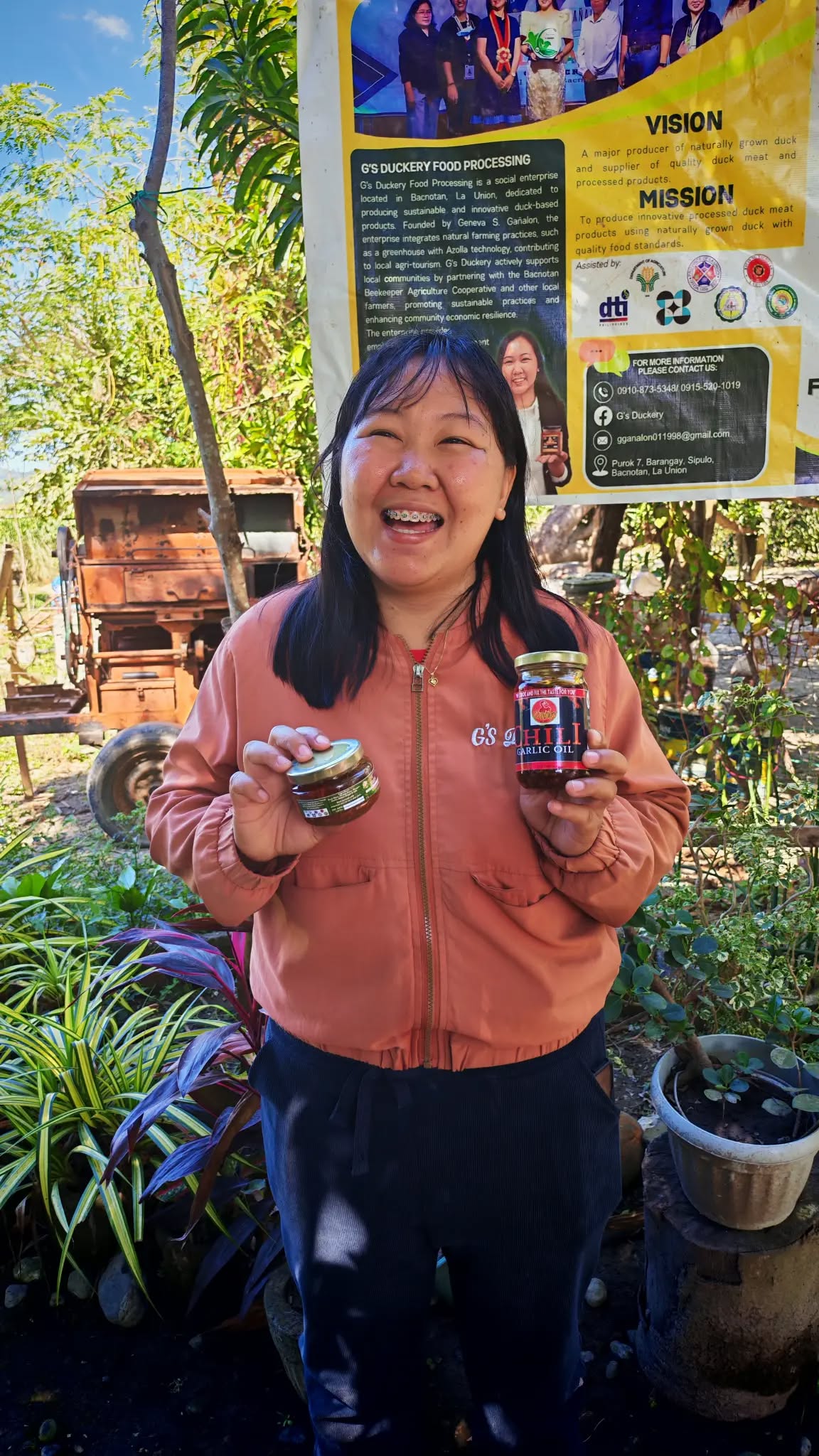
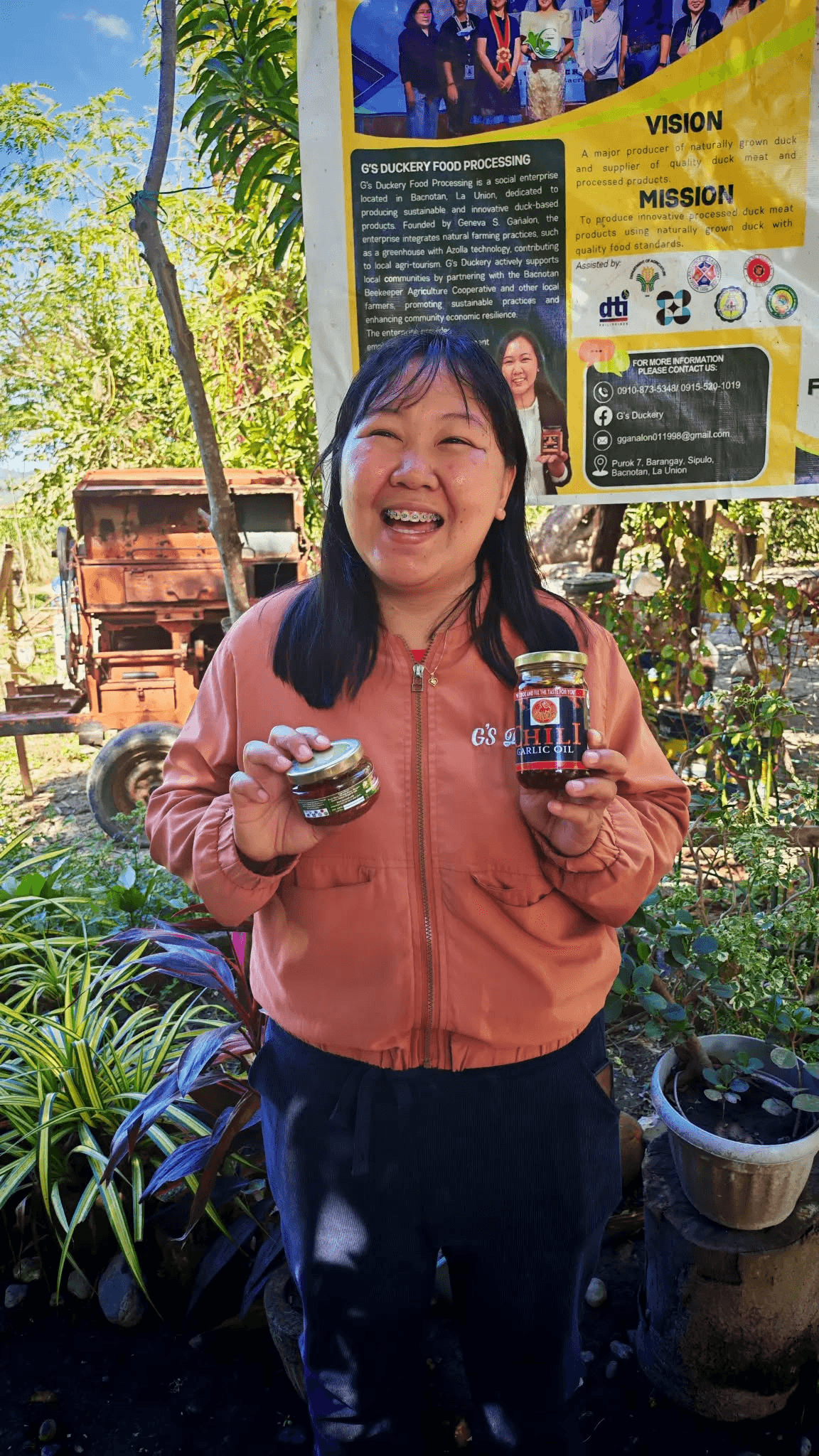
What she built is G's Duckery Food Processing — a social enterprise that produces duck-based food products, practices natural farming through greenhouse and Azolla technology, contributes to La Union's growing agri-tourism sector, and provides employment and skills training to marginalized groups in her community. She is doing all of this in Barangay Sipulo, Bacnotan, at an age when most people are still figuring out what they want to do.
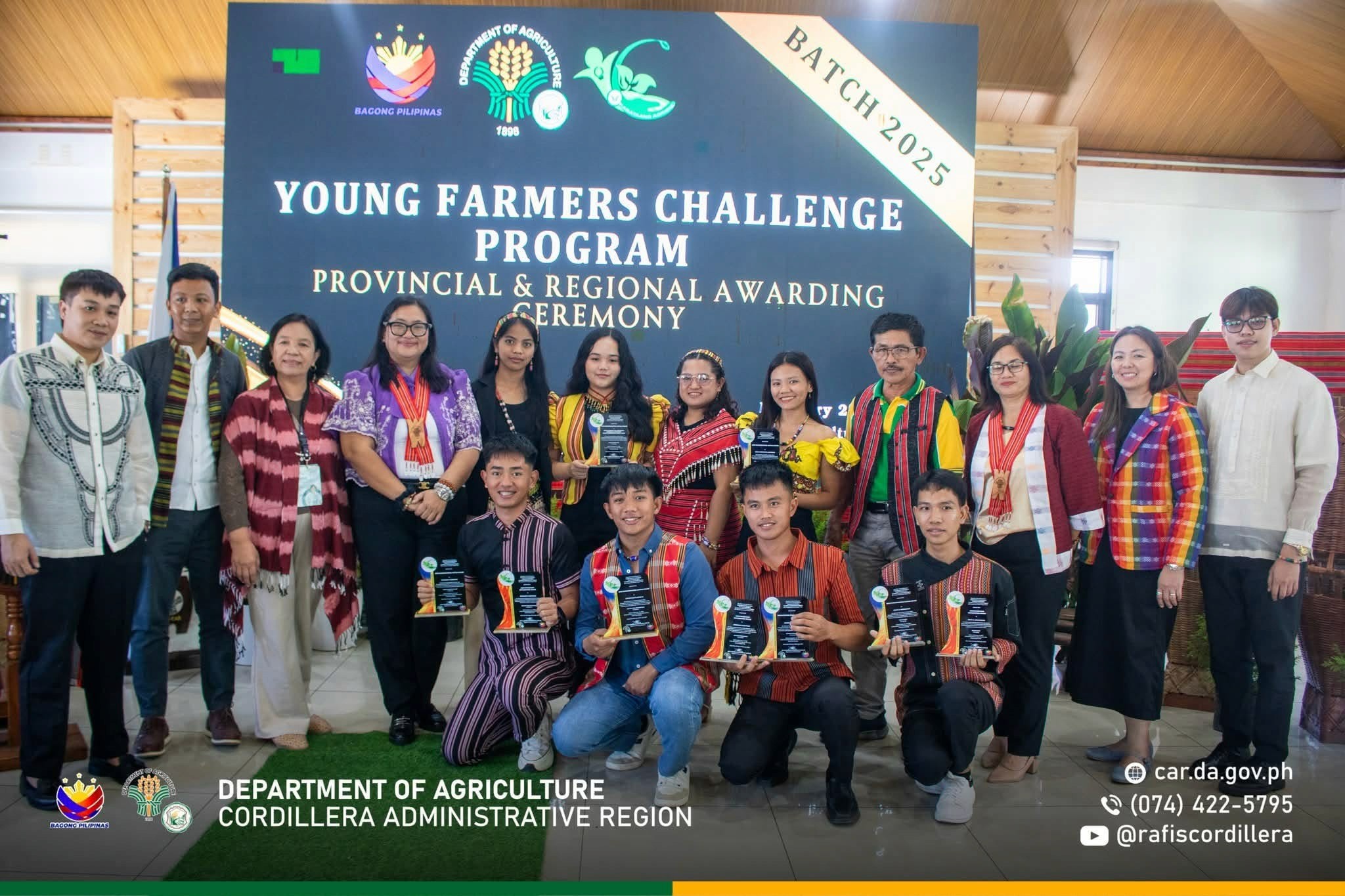
In 2022, the Department of Agriculture recognized her as one of the standout young farmer-entrepreneurs in the Ilocos Region through the Young Farmers Challenge program. That recognition did not change what she was building. It confirmed that what she was building was worth paying attention to.
The Products and the Method
G's Duckery's product line reflects a clear philosophy: use local ingredients, apply natural methods, and create things people actually want to buy.
The farm uses a greenhouse setup with Azolla technology, a natural aquatic plant used as feed supplement that reduces dependence on commercial feeds and supports healthier, more natural duck rearing. The result is a product quality that conventional methods rarely produce at the same scale.
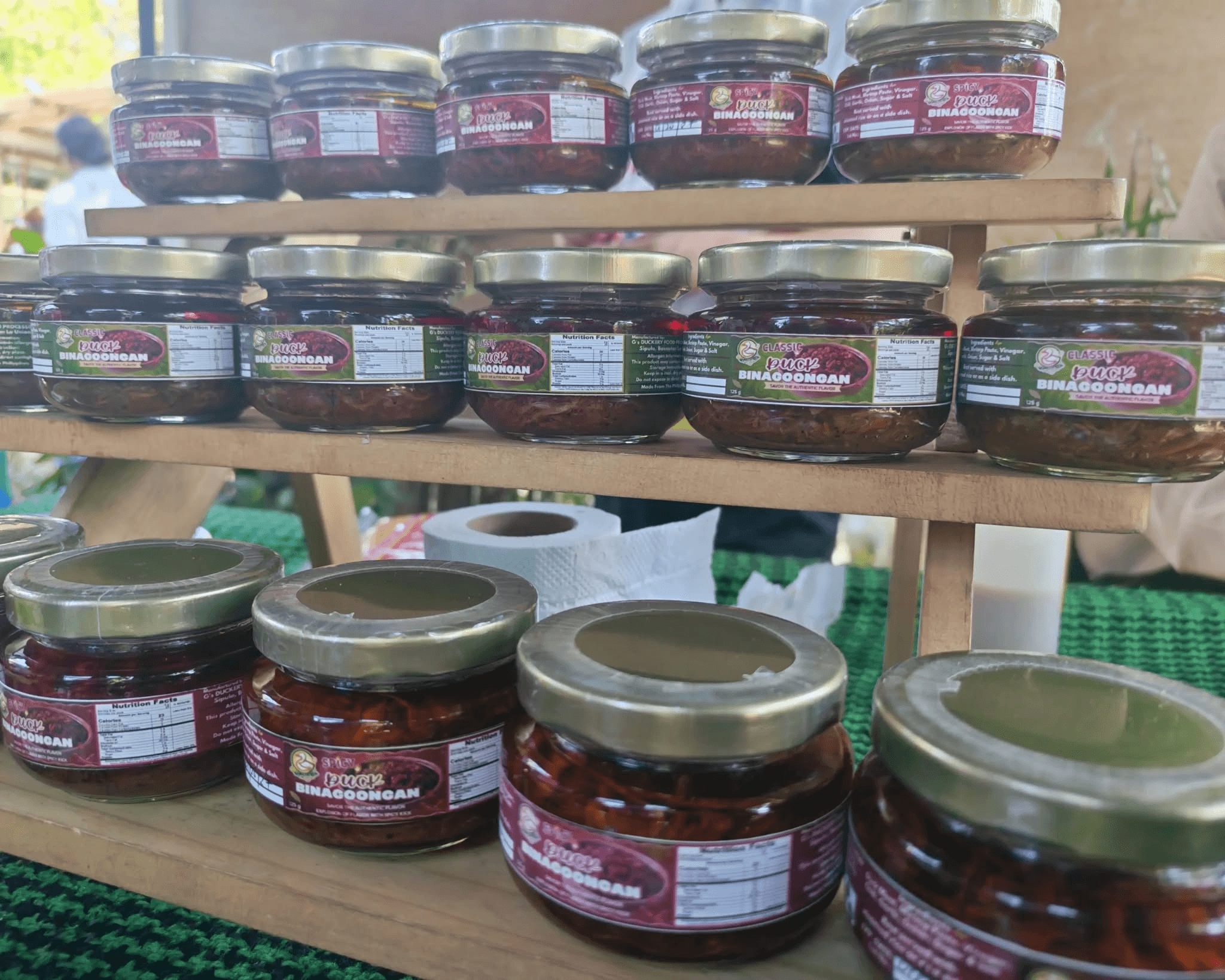
From that foundation, Gañalon has developed a range of processed food products including chicken pastil, chili garlic oil, and duck binagoongan. Each product takes something the farm produces or sources locally and adds a layer of processing that increases its value and shelf life. It is a simple principle applied consistently: do not just sell the raw product, sell the transformed one.
The farm is also positioned within La Union's agri-tourism ecosystem, which has grown steadily as travelers seeking experiences beyond the beach have found their way to the province's interior communities. A working duck farm with quality processed products and a clear story behind it is exactly the kind of destination that agri-tourism runs on.
The Community Behind the Business
What separates G's Duckery from a well-run farm is the deliberate decision to make the enterprise a community resource, not just a commercial one.
Gañalon has built active partnerships with local organizations including the Bacnotan Beekeeper Agriculture Cooperative, creating connections between enterprises that support each other and strengthen the local agricultural economy collectively. These are not token partnerships. They are working relationships between community-based enterprises that share resources, knowledge, and market access.
More directly, G's Duckery employs mothers from Barangay Sipulo and out-of-school youth — two groups that are frequently overlooked by formal employment systems. Gañalon has built the skills development and income generation she wished existed into the structure of her own business. The enterprise is not just providing jobs. It is providing a pathway for people who need one.
That decision to build social impact into the business model rather than treat it as an afterthought is the mark of a founder who understands that a farm embedded in a community has obligations to that community, and that those obligations, when taken seriously, also become competitive advantages.
What Support Has Made Possible
Gañalon has not built this alone. The Department of Agriculture, DTI Philippines, and local government units have all provided support at different stages of G's Duckery's development. The Young Farmers Challenge recognition in 2022 was one marker of that institutional investment. The ongoing DA and DTI support reflects a broader commitment to developing the next generation of farmer-entrepreneurs in the Ilocos region.
That combination — a founder with a clear vision, a community to serve, and government programs that actually reach people like her — is the model that the Northern Luzon innovation ecosystem needs to replicate more consistently. Gañalon did not wait for perfect conditions. She built with what was available and expanded from there.
A Founder Worth Following
Geneva Gañalon is not a tech startup founder. She does not have a pitch deck or an app in development. What she has is a functioning social enterprise in a rural barangay in La Union that produces quality food, employs marginalized community members, contributes to a regional agri-tourism economy, and demonstrates that innovation in agriculture does not require leaving the farm.
For young people in Northern Luzon's rural communities who are watching what is possible from where they are standing, her story is one of the most honest and grounded examples of what building something real actually looks like.
You can reach G's Duckery Food Processing at 0910-873-5348 or 0915-520-1019, visit their Facebook page at G's Duckery, email gganalon011998@gmail.com, or find them at Purok 7, Barangay Sipulo, Bacnotan, La Union.
Key Takeaways for Founders
1. Build with what you have, where you are. Gañalon did not leave Bacnotan to find opportunity. She found it in the ducks, the local ingredients, and the community needs already present in her barangay.
2. Natural methods and modern systems are not opposites. Azolla technology inside a greenhouse is not traditional or modern. It is practical. The best farming enterprises use whatever works.
3. Social impact built into the business model is more durable than social impact added on top of it. Employing mothers and out-of-school youth is not a program. It is how G's Duckery operates. That integration makes it sustainable in ways that corporate social responsibility programs rarely are.