News
Pangasinan
PSU and DOST Inaugurate the ASIN Center in Pangasinan — A ₱93 Million Bet on Reviving the Philippine Salt Industry
The Accelerating Salt Research and Innovation Center, inaugurated on February 17 at PSU's Binmaley Campus, is the most significant institutional investment in the country's salt sector in recent memory — and Northern Luzon universities are at the center of it.

Amianan Desk
Amianan Innovation Ventures
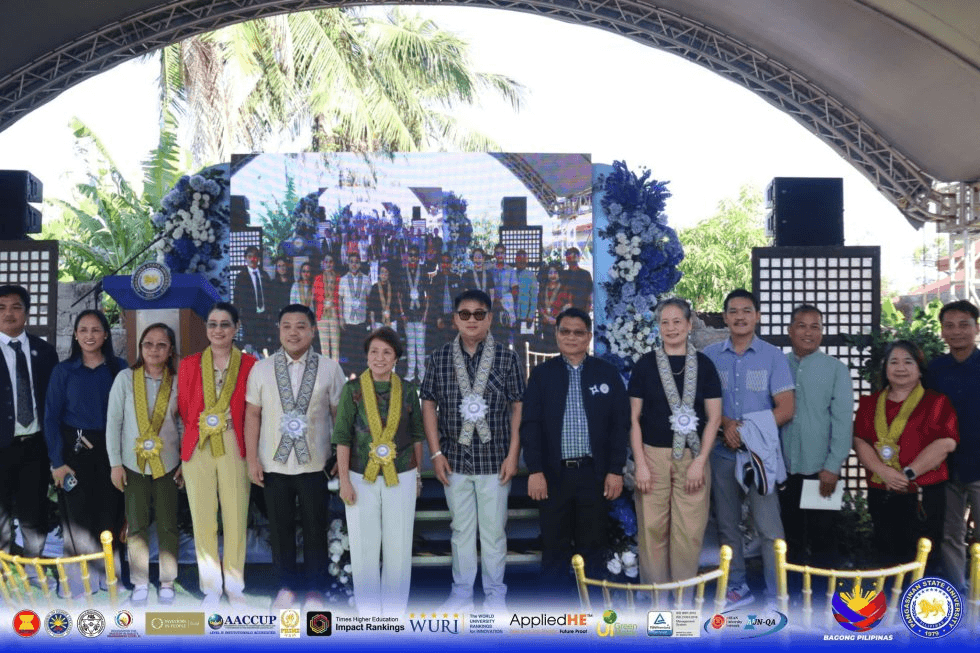
Pangasinan State University and the Department of Science and Technology inaugurated the Accelerating Salt Research and Innovation (ASIN) Center at PSU's Binmaley Campus on February 17, 2026. The facility was built with ₱93 million in DOST funding through the NICER — Niche Centers in the Regions for R&D — program, and its mandate is direct: transform the Philippines' struggling salt industry through standardized production, climate-resilient technology, and the preservation of artisan salt-making traditions.
DOST Secretary Renato U. Solidum Jr. served as keynote speaker. His message to the room of government officials, researchers, and industry partners was unambiguous: "This ASIN Center here in Pangasinan should create employment opportunities and thereby improve the lives of our people."
Four Years in the Making
The ASIN Center didn't arrive overnight. The DOST-PSU partnership traces back to 2022, when PSU's then-president — now Philippine Coconut Authority Administrator — initiated the collaboration. In 2023, the Regional Development Council for Region I approved the center's establishment, and DOST released the ₱93 million grant covering operating expenses, equipment, and capital outlay. Construction ran through 2024, the facility was completed in 2025, and the inauguration followed in February 2026. That four-year arc from agreement to ribbon-cutting is worth noting — not as a cautionary tale about government timelines, but as evidence that this is a fully built, funded, and operational facility, not a concept paper.
PSU President Dr. Elbert M. Galas, who attended a Senate public hearing on salt industry development in 2023 as part of the legislative groundwork, framed the center's purpose plainly: "to transform traditional knowledge into refined science, and science into national sufficiency." The ASIN Center's three priority areas reflect that ambition — Climate-Resilient Salterns and Production Standardization, a Research and Development Hub for Technology and Competence, and Artisan Salt Technology Innovation and Preservation.
A Regional Network, Not Just a Single Facility
What makes the ASIN Center structurally significant is the network built around it. PSU has forged academic partnerships with Mariano Marcos State University, Don Mariano Marcos Memorial State University, President Ramon Magsaysay State University, University of Northern Philippines, Ilocos Sur Polytechnic State College, and Urdaneta City University — covering Northern Luzon's university landscape from Ilocos to Pangasinan. International partnerships with institutions in Japan, India, and Indonesia are also in place, alongside local government units in Iloilo, Guimaras, and multiple Pangasinan municipalities.
The interagency steering committee reads like a full Region I mobilization: DTI, FDA, BFAR, DENR, NEDA, CHED, TESDA, and the National Nutrition Council all have seats at the table. The ASIN Center's program leader, Engr. Rex Basuel, and PSU's Office of the Vice President for Research, Extension, and Innovation under Dr. Razeale G. Resultay drove the operational work that brought the facility to completion.
For a sector long hampered by inconsistent production quality, climate vulnerability, and the slow erosion of traditional salt-making knowledge, that kind of coordinated institutional backing is exactly what has been missing.
What This Means for Northern Luzon
The Philippines currently imports a significant portion of its salt despite having a long coastline and a history of artisan salt production in provinces like Pangasinan. The ASIN Center is a direct attempt to close that gap — by building the research infrastructure, training the next generation of salt technologists, and giving coastal communities access to production methods that can withstand changing weather patterns.
For Northern Luzon, this is a reminder that deep-technology investment in the region doesn't always look like a startup pitch or a software demo. Sometimes it's a ₱93 million R&D center built to solve a problem that coastal communities have lived with for decades. The ASIN Center is also a model for how universities in the region can anchor national research agendas — and the network of HEIs now connected to PSU through this initiative is a research infrastructure that future programs and founders in agri-innovation should know exists.
Researchers, agribusiness founders, and institutions working in food technology, coastal agriculture, or climate-resilient production in Northern Luzon can engage with the ASIN Center through PSU's Office of Research, Extension, and Innovation at the Binmaley Campus. For regional HEIs already in the partnership network, the next step is building active research pipelines into the center — not just signing the agreement and moving on.