
Your cotton, abaca, and bamboo can now become Ilocos‑made yarn: inside Vintar’s Regional Yarn Production and Innovation Center
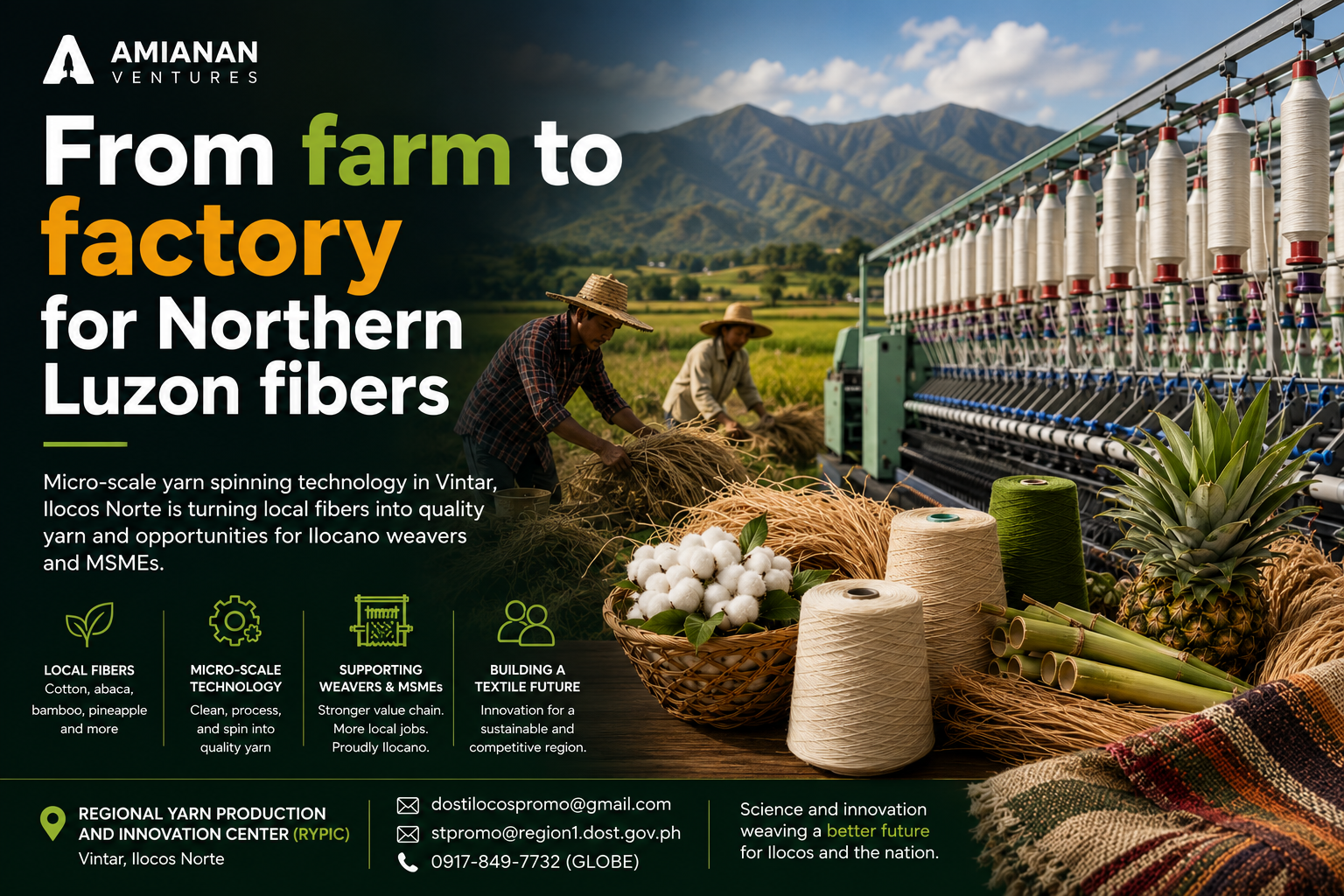
DOST–PTRI and DOST Ilocos Region’s micro‑scale yarn spinning technology at the Regional Yarn Production and Innovation Center in Vintar, Ilocos Norte turns locally sourced natural fibers into high‑quality yarn for weavers and MSMEs.
 Featured Partner
Inv8 Studio
Innovation Partner for Startups & Growing Businesses
From farm to factory for Northern Luzon fibers
In Vintar, Ilocos Norte, the Regional Yarn Production and Innovation Center (RYPIC) is showing how local fibers can travel a full “farm to factory” path without leaving the region. Through micro‑scale yarn spinning technology introduced by the Department of Science and Technology – Philippine Textile Research Institute (DOST–PTRI) in partnership with DOST Ilocos Region, cotton, abaca, bamboo, pineapple, and other natural fibers can be processed into yarn that meets weaving and textile production needs.
What the micro‑scale yarn spinning technology does
The micro‑scale yarn spinning technology at RYPIC allows small batches of locally sourced fibers to be cleaned, processed, and spun into yarn suitable for handloom weaving and other textile applications. Instead of sending raw fiber out of the region or relying on imported yarn, farmers, cooperatives, and local producers can see their raw materials transformed on site into higher‑value textile inputs. The technology is designed for regional centers like Vintar, which can aggregate fiber from surrounding communities and convert it into consistent, usable yarn for local weavers and MSMEs.

Why this matters for Ilocos weavers and MSMEs
By placing yarn production capacity inside Ilocos Norte, RYPIC strengthens the position of local weavers, small textile businesses, and fiber producers in the value chain. When yarn is produced from fibers grown in the region, more of the economic value remains with farmers and community‑based producers instead of being captured by external suppliers. For MSMEs making garments, accessories, or home textiles, access to regionally produced yarn also means more control over fiber mix, color, and quality, which can feed directly into product innovation rooted in Ilocano culture and design.
How to connect with RYPIC and DOST Ilocos Region
DOST–PTRI and DOST Ilocos Region invite interested weavers, cooperatives, and MSMEs to learn more about the micro‑scale yarn spinning technology and how to access services at the RYPIC facility in Vintar. Stakeholders can reach the team through the following contacts for inquiries on visits, technical support, or possible collaborations:
These channels are the primary points of contact for questions about programs, technology access, and opportunities related to the regional yarn production initiative.
Original Source
Market Context
Regional Yarn Production and Innovation Centers are part of DOST–PTRI’s broader effort to build a Philippine textile ecosystem where natural fibers such as cotton, abaca, bamboo, and pineapple are processed locally into textile inputs rather than being exported or sold as low‑value raw material. For Ilocos Norte and the wider Region 1 area, having a yarn production facility in Vintar supports both cultural preservation through weaving and livelihood development for farmers and MSMEs, aligning with national strategies to strengthen local industries through science, technology, and innovation.
Are you a founder, innovator, or community builder in Northern Luzon?
We're always looking for compelling stories from the region's ecosystem. Whether you're launching a startup, running a program, or doing something interesting — we'd love to feature you.