
La Union's Food Entrepreneurs Are Turning Ilocano Cuisine Into a Regional Development Strategy. The Dinengdeng Empanadita Is Just the Beginning.
From cassava-based empanadas and seaweed pizza to carabao burgers and molave sapling adoption programs, food entrepreneurs in La Union are reinterpreting Ilocano culinary traditions into a regionalized food system that connects cultural identity, local agriculture, environmental stewardship, and DOT Ilocos Region's gastronomic tourism circuits.
 Featured
Amianan Ventures
The empanada has been part of Northern Luzon's street food identity for generations. It is one of the most recognized markers of Ilocano culinary culture, sold in markets and roadside stalls from Laoag to La Union. For most of its history, it has been a tradition, something to preserve and replicate faithfully, not something to build a development strategy around.
That framing is changing. In La Union and across the Ilocos Region, a generation of food entrepreneurs is doing something more interesting than preservation. They are using the empanada, and the broader Ilocano culinary tradition it represents, as raw material for innovation that connects local agriculture, coastal resources, upland ingredients, environmental programs, and regional tourism into a single coherent value chain. The result is not fusion cuisine for its own sake. It is a regionalized food system that makes cultural heritage economically productive in new ways.
Reinventing the Staple
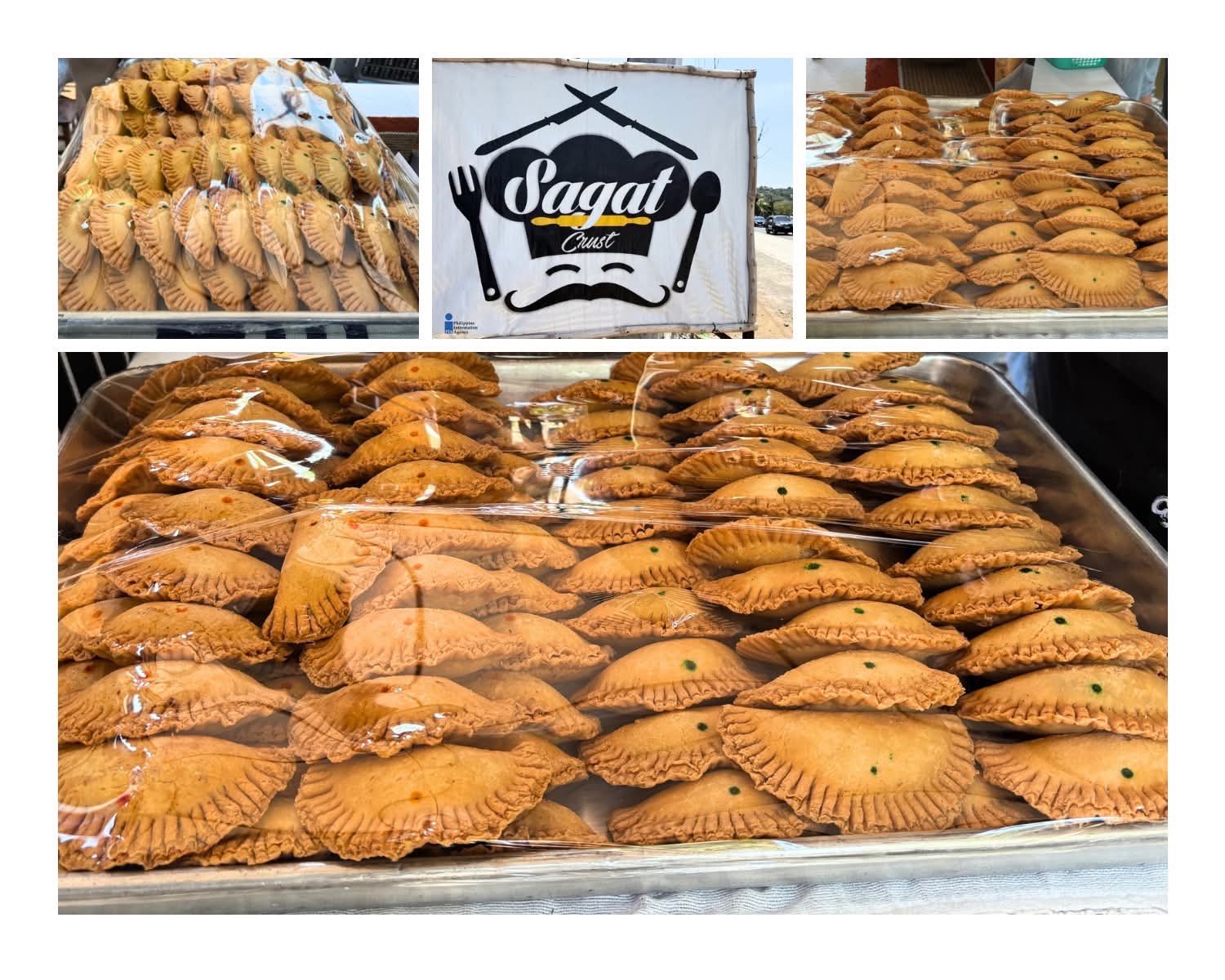
The Dinengdeng Empanadita is the clearest example of what this looks like in practice. Dinengdeng is a traditional Ilocano vegetable dish, simple, nutritious, and deeply embedded in the region's agricultural identity. The Dinengdeng Empanadita takes that dish and adapts it into a compact, portable format that works for contemporary snack markets, food tourism, and the kind of grab-and-go consumption that drives street food economies in growth areas like Agoo and surrounding municipalities.
The Linubian Empanada follows a similar logic, drawing from traditional cassava and banana preparations to reposition heirloom ingredients within a modern snack format. These are not simply novelty products. They are demonstrations that ingredients with deep agricultural and cultural roots in the Ilocos Region can be presented in forms that reach new markets and new consumers without losing the identity that makes them distinctive.
The technical improvements running alongside these product innovations are equally significant. Local producers have refined frying techniques and temperature controls, improving texture and reducing excess oil absorption. Those are the kinds of incremental improvements that the food industry calls process innovation, and they matter for commercial viability as much as the product concept does. A better-textured, less oily empanada is a more competitive product in an increasingly quality-conscious food market.
Beyond the Empanada
The culinary innovation emerging from Rosario and nearby areas in La Union extends well beyond the empanada format. Food entrepreneurs are expanding the use of indigenous and locally sourced ingredients across categories that most consumers associate with global cuisine.
Seaweed-based pizza variants bring La Union's coastal agricultural resources into a format with mass market familiarity. Carabao-based burgers and shawarma-style dishes apply pastoral resources from the region's upland communities to formats that compete directly with global fast food in terms of accessibility and familiarity. Locally rooted coffee pairings, tied to regional production cycles, create product experiences that are inherently place-specific and therefore inherently difficult for outside competitors to replicate.
The unifying principle across all of these innovations is what food industry practitioners call place-based menus: products whose ingredients are sourced within an interconnected system of coastal, upland, and pastoral resources specific to the region. That specificity is not a constraint. It is the product's core competitive advantage. A seaweed pizza from La Union is not just a pizza with seaweed. It is a product that can only be made here, from ingredients grown here, by people who understand the local production system. That is the kind of product that builds loyal customers and that cannot be commoditized by a national chain.
Food as Environmental Practice
One of the most distinctive features of La Union's emerging food culture is the integration of environmental awareness directly into the business model.
The molave tree, locally known as sagat, has become a symbolic reference point for resilience in both culinary narratives and environmental initiatives across the region. Some food establishments have introduced sapling adoption programs that allow customers to participate in native tree propagation efforts aligned with broader reforestation goals. The mechanism is elegant: a customer eating at a restaurant becomes a participant in an ecological restoration program through the simple act of adopting a sapling.
This is what the circular economy looks like when applied to a food enterprise. The business generates revenue. The revenue funds or incentivizes environmental activity. The environmental activity strengthens the natural resource base, the forests, watersheds, and agricultural systems, that the food enterprise depends on for its ingredients. The cycle is self-reinforcing rather than extractive, and it creates a brand identity for the participating businesses that no conventional marketing campaign can manufacture.
For small food enterprises in Northern Luzon, this model demonstrates that environmental responsibility and commercial viability are not trade-offs. They are complementary strategies, particularly in a market where consumers are increasingly choosing businesses whose practices align with their values.
The Tourism Connection
The Department of Tourism's Ilocos Region is not observing these developments from a distance. It is actively integrating the region's localized food innovations into tourism planning and cultural mapping initiatives designed to establish interconnected gastronomic circuits across the Ilocos Region.
DOT Ilocos Regional Director Benjamin Manahan, Jr. laid out the vision directly: "Generally, what we want is really to go around the entire gastronomic circuits of Region 1. Every corner, every area, every undiscovered place, so that we can really promote our local gastronomy. Eventually, we can create a coffee table book and really mass produce it and show the Philippines and the world how beautiful and how delicious our food is here in Region 1."
The gastronomic circuit model is a tourism development strategy with a proven track record in food-destination regions globally. It works by creating a geographic and culinary narrative that motivates visitors to travel across multiple destinations within a region rather than concentrating in a single point. When a tourist knows that every municipality along the La Union and Ilocos coastline offers a distinct, locally rooted food experience, the tourism value of the region multiplies beyond any single attraction.
For MSMEs anchoring these circuits, the DOT's institutional support means inclusion in a promotional infrastructure that no individual food enterprise could build on its own. National marketing campaigns, food tourism maps, gastronomic guides, and cultural documentation all become available to enterprises that are embedded in the circuit rather than operating in isolation.
What La Union Is Demonstrating for Northern Luzon
La Union's evolving food landscape is not a collection of isolated culinary trends. It is a working model of what happens when cultural heritage, agricultural resources, food entrepreneurship, environmental awareness, and tourism strategy are aligned around a coherent regional identity.
The empanada is still the empanada. But it is also now a vehicle for cassava and banana innovation, a platform for vegetable-forward Ilocano cuisine, a carrier of place-based identity that connects the product to the farming communities that grow its ingredients. That expanded meaning is what makes it valuable beyond the price of a single serving.
For the provinces of Northern Luzon watching La Union's food economy develop, the model is replicable. Every province in the region has culinary traditions, indigenous ingredients, coastal or upland agricultural systems, and cultural narratives that have not yet been fully activated as development assets. The approach being demonstrated in La Union, connecting those assets through entrepreneurial innovation, environmental practice, and tourism integration, is available to any community willing to treat its food culture as something worth building a strategy around.
A plate of food has never just been a plate of food in Ilocos. In La Union right now, it is becoming a development platform.
Original Source
Market Context
Food tourism is one of the fastest-growing segments of the global tourism industry, with the World Food Travel Association estimating that food and beverage experiences account for approximately 25 to 35 percent of total tourism spending. In the Philippine context, the Department of Tourism's gastronomic tourism strategy, which includes the development of regional food circuits and culinary mapping initiatives, is one of the primary mechanisms for activating rural and provincial tourism economies beyond the established resort and heritage tourism segments. La Union's position as one of Northern Luzon's most visited provinces, anchored by its surf tourism identity in San Juan, gives its emerging food economy a built-in tourist audience that food entrepreneurs in the province can access without building destination awareness from scratch. For MSMEs in the Ilocos Region, integration into DOT's gastronomic circuits provides the promotional infrastructure and institutional credibility that individual enterprises cannot build on their own, creating a regional food brand that benefits all participating businesses while strengthening the province's tourism competitiveness.
Are you a founder, innovator, or community builder in Northern Luzon?
We're always looking for compelling stories from the region's ecosystem. Whether you're launching a startup, running a program, or doing something interesting — we'd love to feature you.