
Ilocos Norte Just Launched a Smart Agriculture Hub Backed by DOST, TESDA, DTI, and Local Government. Here Is What It Is and Why It Matters.
The North Circular Agri-Hub formally launched on June 4, 2026 in Batac City, anchoring a multi-agency convergence framework designed to bring science-based agriculture, technical-vocational training, and MSME development directly to Ilocos Norte communities.
 Featured
Amianan Ventures
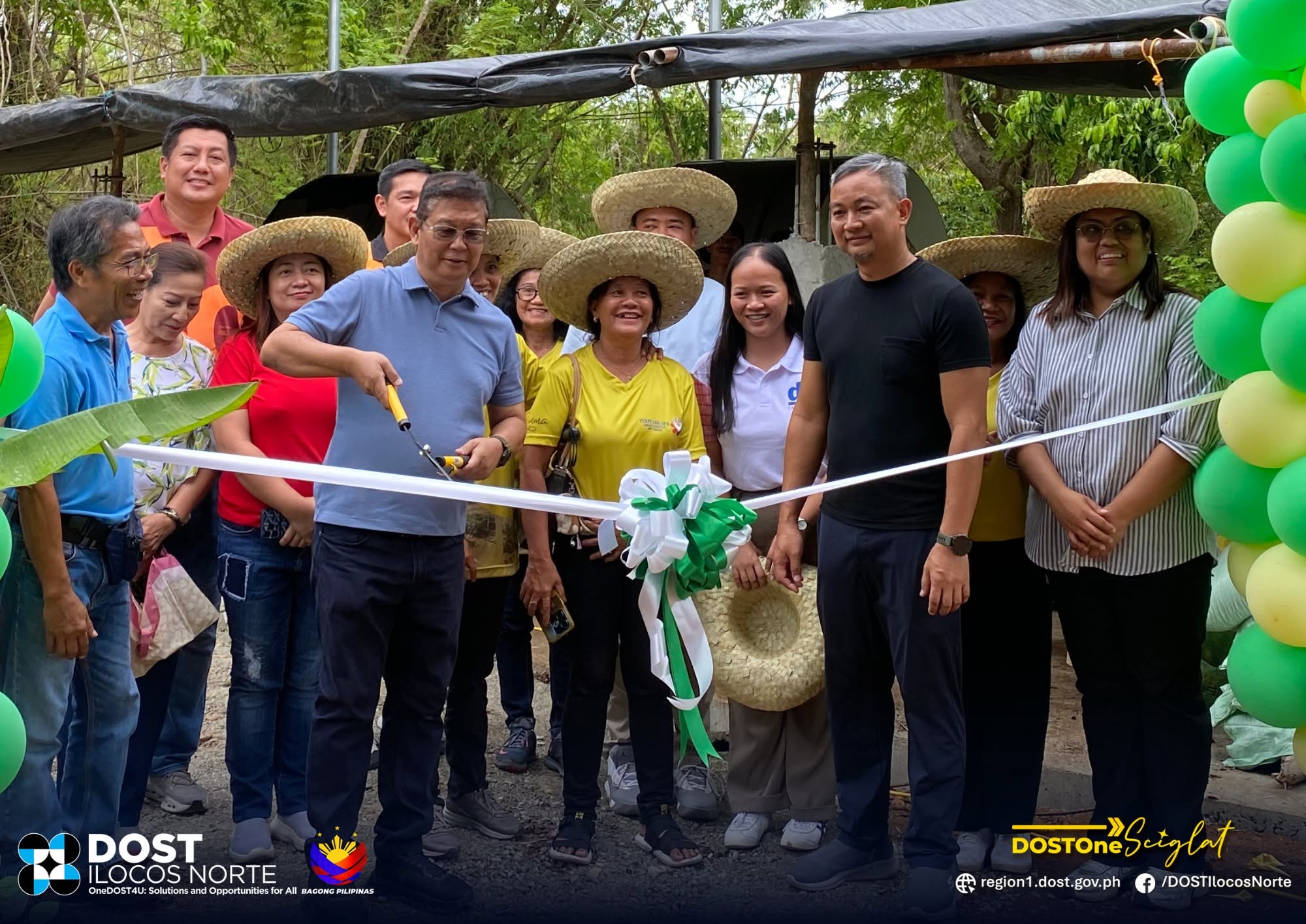
On June 4, 2026, the North Circular Agri-Hub was formally launched at Agapeland Integrated Farm in Barangay 25-S Payao, Batac City, Ilocos Norte. The launch was not just a ceremonial opening. It included the signing of a Framework for Regional Convergence, a formal alignment document binding national government agencies, local government units, academe, and cooperatives to a shared agenda for grassroots agricultural development in the province.
The North Circular Agri-Hub is a collaborative initiative established by Agape Agriventures Corporation, Agapeland Integrated Farm led by Engr. Rogelio M. Balisacan, and the Lumen Green Institute of Technical Excellence and Management. Its guiding philosophy is direct and worth quoting in full: "Cultivating Care, Illuminating Minds, and Closing the Loop." That last phrase is the operational one. A circular agri-hub is not simply a farm or a training center. It is a system designed to close the loop between agricultural production, technical education, enterprise development, and market access, so that value generated at each stage stays within the community rather than leaking outward.
What DOST Ilocos Norte Is Committing To
DOST Ilocos Norte, under Provincial Director Engr. Brian U. Rasco, formally expressed its support at the launch and made specific programmatic commitments rather than general statements of encouragement. Through the Agri-Hub, DOST Ilocos Norte will implement technology transfer and commercialization, smart agriculture integration, capability-building programs, and enterprise development support for MSMEs.
Engr. Rasco framed the Agri-Hub as a convergence point for the deployment of DOST-backed grassroots technologies, a phrase that carries operational weight. Grassroots technology deployment means the agency is not waiting for farmers and enterprises to travel to DOST offices or apply through central channels. It means taking the tools, the training, and the technical support to the communities where the agricultural work is actually happening. That shift in posture, from agency as gatekeeper to agency as deployer, is what makes institutional commitments like this one credible rather than decorative.

Who Else Is in the Room
The breadth of institutional support at the launch is worth naming explicitly, because it signals the actual coalition behind this initiative.
The signing and launch drew participation from the Provincial Government of Ilocos Norte, the City Government of Batac, TESDA, DTI, the Bureau of Soils and Water Management, farmers' cooperatives, and private sector partners. Each of those institutions brings a distinct capability: TESDA brings technical-vocational accreditation and training infrastructure, DTI brings market access and MSME development tools, BSWM brings soil and water resource management expertise, and local government brings the political will and administrative reach to implement programs at the barangay level.
When all of those institutions are in the room at launch, and not just represented symbolically but committed through a signed framework, it reduces one of the most persistent failure modes of agricultural development initiatives in the Philippines: the single-agency program that loses momentum when the lead agency's priorities shift. A multi-agency framework with signed commitments distributes the ownership of outcomes and creates mutual accountability.
What the Agri-Hub Is Designed to Become
The North Circular Agri-Hub is envisioned as a center for three interconnected functions: smart agriculture, technical-vocational excellence, and agribusiness entrepreneurship. Those three functions are not independent programs running in parallel. They are designed to feed into each other.
A farmer who receives smart agriculture technology from DOST needs to know how to use and maintain it. That is where the technical-vocational component from Lumen Green Institute comes in. A farmer or cooperative that increases productivity through better technology and trained operators then needs a pathway to market and enterprise formalization. That is where MSME development support from DTI and agribusiness entrepreneurship programming enters.
The circular logic of the hub is that each stage produces inputs for the next, and the value generated at every stage stays within the Ilocos Norte agricultural economy rather than being extracted by intermediaries or lost to spoilage and inefficiency. For Ilocos Norte farmers and cooperatives, the practical question is whether the programs that follow the launch match the architecture of the framework. The institutional foundation is solid. What comes next is implementation.
What This Means for Northern Luzon
The North Circular Agri-Hub is one of the clearest examples this year of what genuine multi-sectoral convergence looks like in practice in Northern Luzon. It is not a memorandum of understanding filed and forgotten. It is a physical facility, a signed framework, a lead institution with specific programmatic commitments, and a coalition of agencies each bringing distinct capability to a shared mandate.
Ilocos Norte has consistently been one of the stronger provinces in the region for agricultural enterprise development, with its established agri-tourism corridors, garlic and vegetable production base, and a provincial government historically willing to invest in agri-infrastructure. The North Circular Agri-Hub builds on that foundation by adding the science, technology, and skills development layer that turns productive agriculture into competitive agribusiness.
For founders, cooperatives, and MSMEs operating in the Ilocos Region, the Agri-Hub represents a concrete access point for DOST technology programs, TESDA training, and DTI enterprise support, all anchored in a single location in Batac City. That kind of integrated access is rare, and it is worth engaging with early.
Original Source:
Market Context:
Philippine agriculture accounts for approximately 10% of GDP and employs roughly 25% of the national workforce, yet agricultural productivity per worker remains significantly below regional peers in ASEAN due to limited technology adoption, fragmented supply chains, and inadequate post-harvest infrastructure. The DOST's Community Empowerment through Science and Technology program and DTI's Shared Service Facilities have been the two most widely deployed grassroots technology and equipment access programs in rural areas, but their impact is amplified significantly when deployed through integrated hubs like the North Circular Agri-Hub rather than as standalone interventions. Ilocos Norte is among the top garlic-producing provinces in the Philippines and has a growing agri-tourism sector that creates direct market channels for value-added agricultural products. The global circular economy in agriculture is projected to reduce food waste and input costs by 30 to 40% for farms that successfully close the loop between production, processing, and consumption, making the hub's circular model both locally relevant and globally aligned.
Are you a founder, innovator, or community builder in Northern Luzon?
We're always looking for compelling stories from the region's ecosystem. Whether you're launching a startup, running a program, or doing something interesting — we'd love to feature you.