
She Brought a Jar of Pickled Kangkong to the Office. Her Officemates Asked for More. That Was the Beginning of Cherry Pickles.
Cherry Joy Discaya-Garma did not set out to build a food brand. She set out to share a taste of home. What happened next turned a humble kitchen staple into a growing enterprise built on healthy eating, food waste reduction, and the Filipino values of sipag, tiyaga, at galing.
 Featured Partner
Inv8 Studio
Innovation Partner for Startups & Growing Businesses
The idea did not come from a business plan. It did not come from a market study or a startup competition brief. It came from a jar of homemade Pickled Bawang that Cherry Joy Discaya-Garma brought to the office for lunch one ordinary workday.
Her officemates loved it. They asked for more. Then they asked for it again the next meal. And the one after that.
That moment of recognition, the realization that something she had made in her kitchen was stopping people mid-meal and making them ask questions, was the beginning of Cherry Pickles. Not because Cherry Joy immediately saw a business. But because she saw something more important first: a taste of home that connected people, sparked pride, and carried the story of local farmers and local flavors.
From that jar of Pickled Bawang, she built a brand. From her kitchen table, she began a journey toward something she describes as turning a humble household staple into a product that uplifts local communities and celebrates the Filipino spirit of sipag, tiyaga, at galing.
The Problem She Saw That Others Walked Past
Cherry Pickles is built on an observation that most people would have dismissed without a second thought.
When kangkong is harvested and prepared in Filipino households, cooks use the leaves. The stalks, firm and fibrous, get set aside. Most of the time they end up in the garbage. Nobody questions it. It is simply what you do with kangkong stalks.
Cherry Joy questioned it.
The inspiration was also deeply personal. Long before Pickled Kangkong became a product, it was already something she and her foster family regularly prepared and enjoyed at home in Ilocos Norte. What began as a simple family food, something shared around the table and appreciated for its flavor and practicality, planted the seed for a bigger idea.
She recognized that the discarded stalks were nutritious, structurally interesting, and entirely usable. What everyone else saw as waste, she saw as raw material. The result is Pickled Kangkong, now one of Cherry Pickles’ flagship products, made from the parts of the plant that the rest of the market throws away. What was once a homemade family favorite eventually found its way into jars, onto store shelves, and into the business now known as Cherry Pickles.
The logic extends beyond the product itself. Cherry Pickles is built around the principle that fresh produce spoils quickly and that the gap between harvest and consumption creates waste at every step of the food chain. Pickling is one of the oldest technologies for closing that gap. By converting underutilized and locally sourced ingredients into value-added preserved products, Cherry Pickles extends the life of fresh produce, creates additional income opportunities for farmers, and builds a more resource-efficient food system from the ground up.
The problem Cherry Joy is solving is not abstract. It is visible in every Filipino kitchen where kangkong stalks hit the bin, in every market stall where unsold vegetables soften and spoil by the end of the day, and in every household where eating healthy feels like an effort rather than a natural part of the meal.
What Cherry Pickles Actually Builds
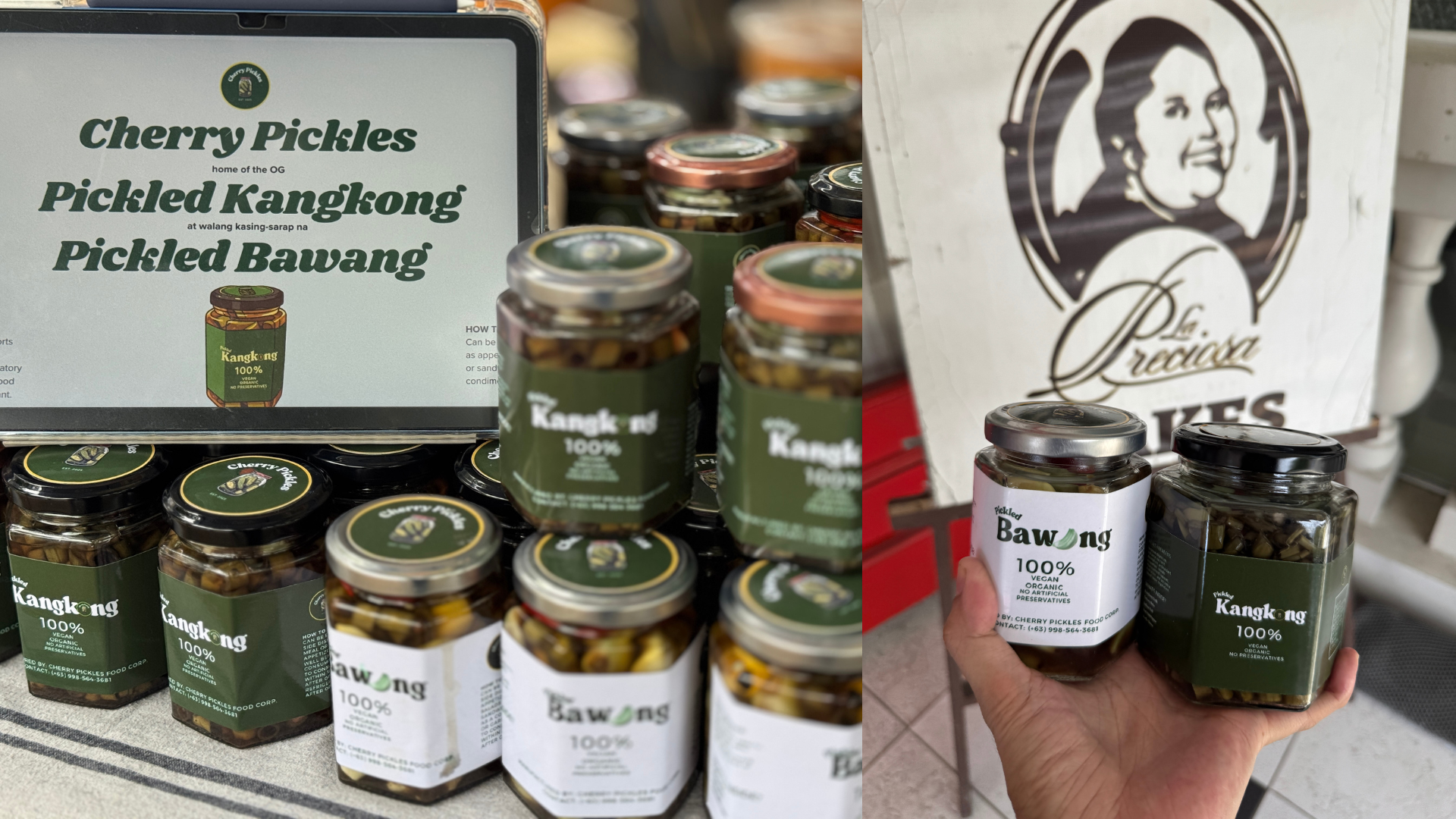
The product line is straightforward and intentionally focused. Pickled Kangkong. Pickled Garlic. Ready-to-eat. Flavorful. Nutritious. Designed to sit on the table alongside the everyday Filipino meal and make it both better and more complete.
The commercial proposition is equally clear. Many Filipino consumers know that vegetables and garlic are good for them. Most struggle to find ways to eat them regularly in a form that is convenient, consistent, and genuinely enjoyable. Cherry Pickles removes that friction by doing the preparation work and delivering the result in a jar that is ready the moment you open it.
That simplicity is a competitive strength, not a limitation. The best food products solve a daily problem in a way that feels natural rather than effortful. Cherry Pickles fits into the rhythm of the Filipino meal without disrupting it. It makes healthy eating easier by making it tastier and more accessible rather than by asking consumers to change what they eat.
The Milestones Built in One Year
In the span of roughly a year, Cherry Joy has moved Cherry Pickles from a kitchen project to a recognized enterprise with institutional support, retail partnerships, and national distribution.
The flagship products, Pickled Kangkong and Pickled Garlic, have been developed and commercialized. Retail and display partnerships are in place with Hotel Luna, La Preciosa, and other local partner outlets. Cherry Pickles became an incubatee of the Sagut ti Bawang Incubation Center, giving the brand direct exposure to tourist and walk-in customers at one of the region's most visible agri-enterprise platforms.
A grant from the Taiwan Technical Mission provided capital to support business expansion. The brand earned recognition as Runner-Up in the Best EntrepreNew Food Category of the PGIN Awards, a validation from the provincial government innovation ecosystem that the product is not just marketable but genuinely significant. Cherry Joy completed the DTI Kapatid Mentor ME Program, building her business capacity across strategic planning, marketing, finance, and operations with experienced mentors guiding the work.
National distribution is now underway. Trade fair participation has expanded the brand's visibility beyond its home province. Each of these milestones compounds the others, creating a foundation that a year ago existed only as a jar of Pickled Bawang on an office table.
The Challenge Nobody Warns You About
The hardest part of building Cherry Pickles has not been sourcing ingredients or managing production. It has been changing what people believe is possible.
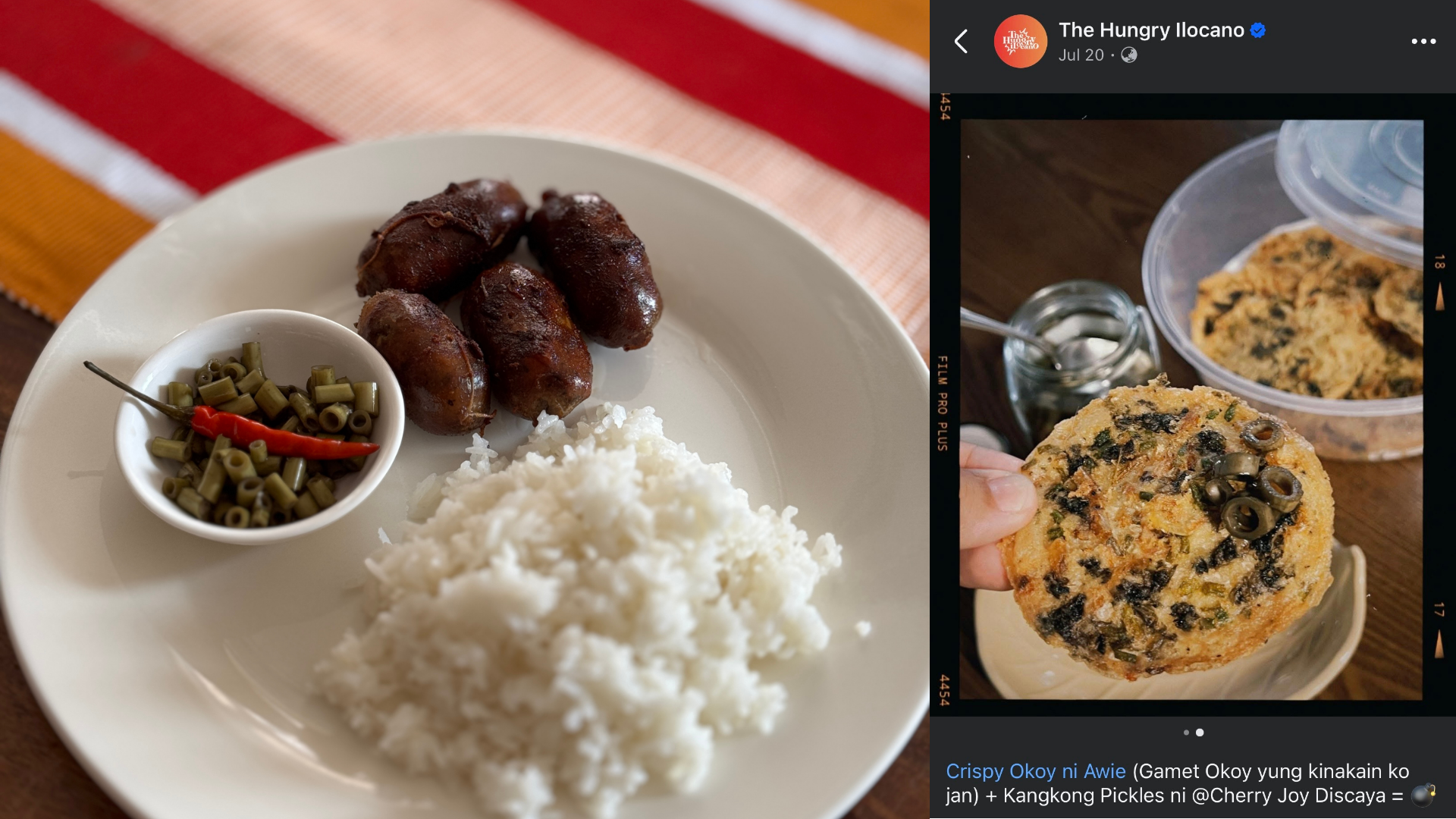
Pickled Kangkong is a new concept for most Filipino consumers. The idea that the stalks they have been throwing away for their entire lives can become a premium, delicious, nutritious product requires a shift in perception that cannot be achieved with a single label or a social media post. It takes sampling. It takes patience. It takes consistent education delivered one curious customer at a time.
Cherry Joy has built that education effort into the business model rather than treating it as a burden. Every sample she hands out, every conversation she has at a trade fair booth, every customer who takes a jar home skeptically and comes back enthusiastic, is the brand's most powerful marketing tool. The product converts skeptics into advocates more effectively than any campaign because the taste does the work once the barrier of unfamiliarity is lowered.
The secondary challenge is the one that every growing small enterprise recognizes: the tension between production capacity, market expansion, and operational management with limited resources. Cherry Pickles is navigating that tension the same way most honest founders do, imperfectly, continuously, and with the understanding that the constraints themselves are an invitation to build better systems.
What Keeps Her Going
Cherry Joy gives a direct answer to the question of motivation. It is not the revenue. It is not the recognition. It is the knowledge that every jar of Cherry Pickles represents a healthier food option, less food waste, and proof that overlooked things have value.
And it is the fact that this is a family business in the most literal sense.
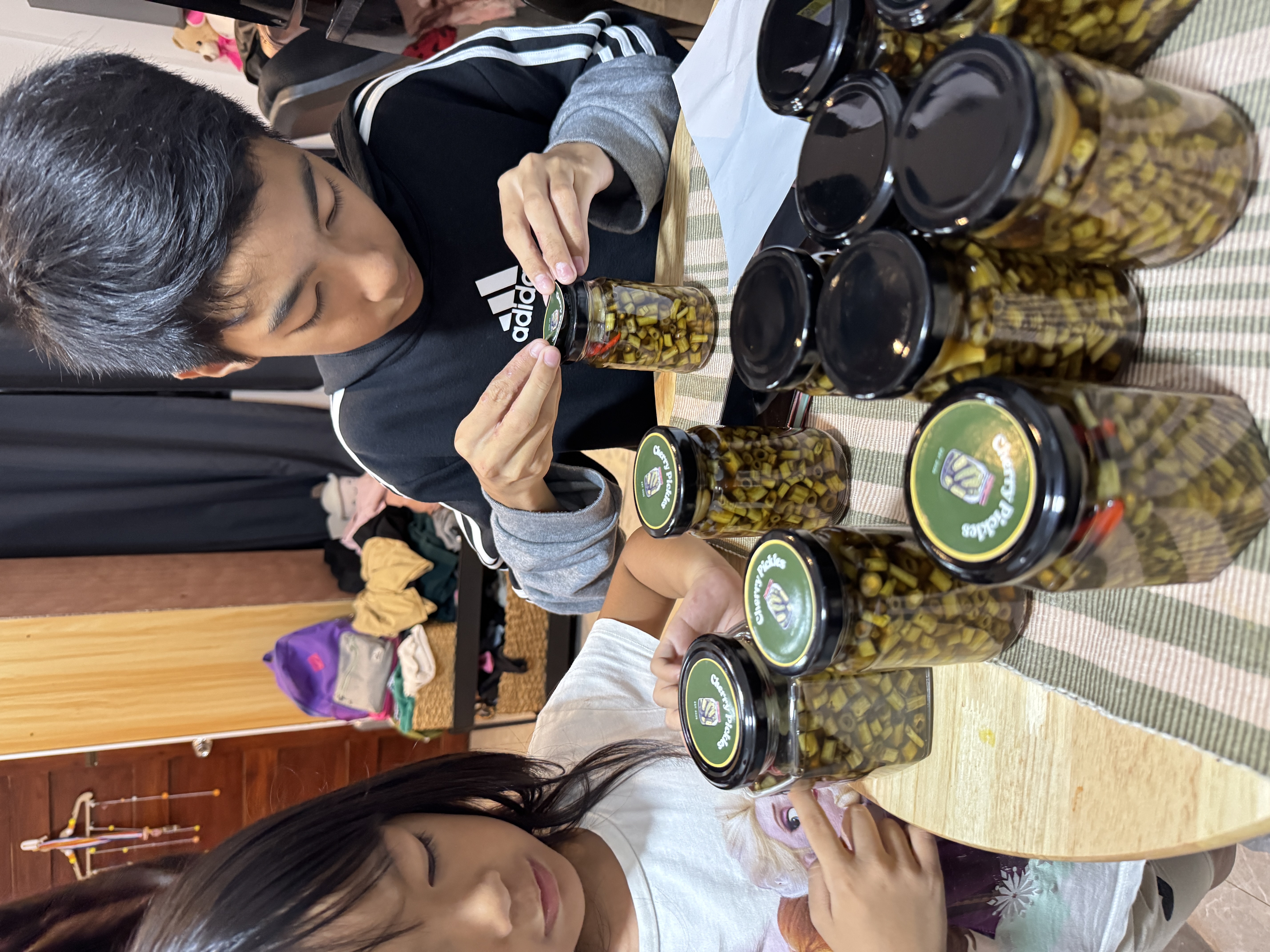
Her children are part of Cherry Pickles. They label jars. They pack orders. They celebrate every sale. They are learning, at an age when most children are simply consuming, what it means to build something. Cherry Joy describes watching her children's excitement and pride in what they are creating together as one of her primary sources of energy on the days when building is hard.
That framing, building a legacy that her children can be proud of alongside building a brand that the market needs, is what gives Cherry Pickles its emotional architecture. The business is not separate from the family. It is the family's project, shaped by the same values of hard work, perseverance, and care for community that the product itself embodies.
The Next 6 to 12 Months
Cherry Joy's near-term roadmap is focused on scaling without losing the quality and mission that the brand was built around.
Market reach is the first priority, expanding into pasalubong centers, local retail stores, hotels, restaurants, and online platforms. Production capacity needs to grow alongside market demand. Packaging, branding, and food safety standards are all being upgraded to make Cherry Pickles competitive in larger markets where buyers have higher compliance expectations.
Product innovation continues in parallel. The discipline of finding value in what others overlook is not exhausted by kangkong stalks and garlic. There are more underutilized ingredients in the local agricultural supply chain, more opportunities to extend shelf life, reduce waste, and create products that are both nutritious and distinctly Filipino in their origin story.
Her Advice to Founders Starting in the Region
Cherry Joy's advice to aspiring entrepreneurs is the most honest version of the guidance that most startup programs deliver in more complicated form.
Start with a problem worth solving, not a product you want to sell. The problem does not need to be complicated. It does not need to be technical. It does not need to require a mobile app or a research grant to identify. It might be sitting in your kitchen right now, in the part of the vegetable you were about to throw away.
Pay attention to everyday problems. Listen to what consumers actually need. Start with what you have. Test the idea. Learn from every customer who responds, positively or negatively. Keep improving.
Cherry Pickles is the proof of concept for that advice. It started with a jar of homemade pickled garlic brought to the office. It grew because of what people said when they tasted it. It is becoming a brand because Cherry Joy paid attention to a problem that everyone else had learned to ignore.
Great things do not always start with grand ideas. Sometimes they start with seeing potential where others see none, and choosing to act on it.
A Message from Cherry Joy
"I would like to encourage everyone to support local products and local entrepreneurs. Behind every small business is a story of hard work, resilience, and a dream to create something meaningful for the community. As consumers, we have the power to make a difference through the choices we make. By supporting locally made products, we help create jobs, support farmers and producers, strengthen local economies, and encourage innovation within our own communities.
I also hope to inspire others who have been thinking of starting a business. Don't be afraid to begin, even if your idea seems simple. Opportunities can come from the most ordinary things around us. What matters is finding a real problem, creating a solution, and having the courage to take the first step.
Great things do not always start with grand ideas. Sometimes, they start with seeing potential where others see none and choosing to act on it."
Try Cherry Pickles or Connect with Cherry Joy
If Cherry Joy's story resonated with you and you want to try Pickled Kangkong, Pickled Garlic, or any of Cherry Pickles' products, you can reach her directly through her Facebook page.
Whether you are a consumer curious about the products, a retailer interested in carrying them, a fellow entrepreneur looking to connect, or simply someone who wants to show support for a founder building something meaningful in Northern Luzon, Cherry Joy welcomes the conversation.
📌 Facebook: Cherry Joy Discaya-Garma
Supporting Cherry Pickles is not just buying a jar of pickled vegetables. It is supporting a farmer who grew the ingredients, a family that built the product together, and a founder who saw value where everyone else saw waste.
What Cherry Pickles Teaches Every Founder
1.Pay attention to what people keep coming back for.
Cherry Pickles did not begin with a market research report or a carefully crafted business plan. It began when Cherry Joy brought homemade Pickled Kangkong to the office and people kept asking for more. Then they asked again. And again. Too many founders start by asking, “What should I build?” A better question is, “What are people already telling me they value?” Markets often reveal themselves through behavior long before they appear in spreadsheets. Repeated demand is one of the strongest signals a founder can receive. Learn to recognize it when it appears.
2. The best opportunities are often hiding inside ordinary routines.
Pickled Kangkong was not born in a laboratory or innovation center. It came from a food that Cherry Joy and her foster family had been making and enjoying at home in Ilocos Norte for years. The insight was not in creating something entirely new. It was in recognizing that something familiar, useful, and meaningful could create value for more people. Founders often search for extraordinary ideas while overlooking the opportunities sitting in their kitchens, workplaces, and communities. The next business breakthrough is not always a new invention. Sometimes it is a better way of sharing what already works.
3. If customers need education, make education part of the business model.
One of Cherry Pickles’ biggest challenges was convincing people that kangkong stalks, a part of the vegetable many Filipinos throw away, could become a delicious and nutritious product. Instead of seeing that skepticism as a barrier, Cherry Joy treated it as part of the journey. Every sample, every conversation, and every trade fair became an opportunity to teach the market. Many founders assume customers will immediately understand their product. Most do not. When you are introducing something unfamiliar, your job is not just to sell. Your job is to help people understand why it matters. The founders who succeed are often the ones willing to have that conversation thousands of times.
Are you a founder, innovator, or community builder in Northern Luzon?
We're always looking for compelling stories from the region's ecosystem. Whether you're launching a startup, running a program, or doing something interesting — we'd love to feature you.