
La Union Charts Innovation-Led Growth Through Its 2035 Provincial Development Plan
The Provincial Government of La Union is updating its Provincial Development and Physical Framework Plan (PDPFP) 2026–2035, positioning the province to become the Ilocos Region’s center of innovation and growth by 2035. The long-term roadmap integrates innovation, climate resilience, inclusive governance, and sustainable economic development to guide investments and improve the quality of life for communities across the province.
 Featured Partner
Inv8 Studio
Innovation Partner for Startups & Growing Businesses
A Long-Term Vision for an Innovative and Inclusive La Union
Innovation is becoming an increasingly important driver of local development, not only through technology but also through better planning, stronger institutions, and more inclusive governance.
Recognizing this, the Provincial Government of La Union is updating its Provincial Development and Physical Framework Plan (PDPFP) 2026–2035, establishing a long-term roadmap that aims to position the province as the Ilocos Region’s center of innovation and growth by 2035.
The updated PDPFP will serve as La Union’s highest development plan, guiding socioeconomic development, land use, infrastructure, and investment decisions over the next decade while ensuring that growth benefits communities across the province.
Building a Province Around Innovation and Resilience
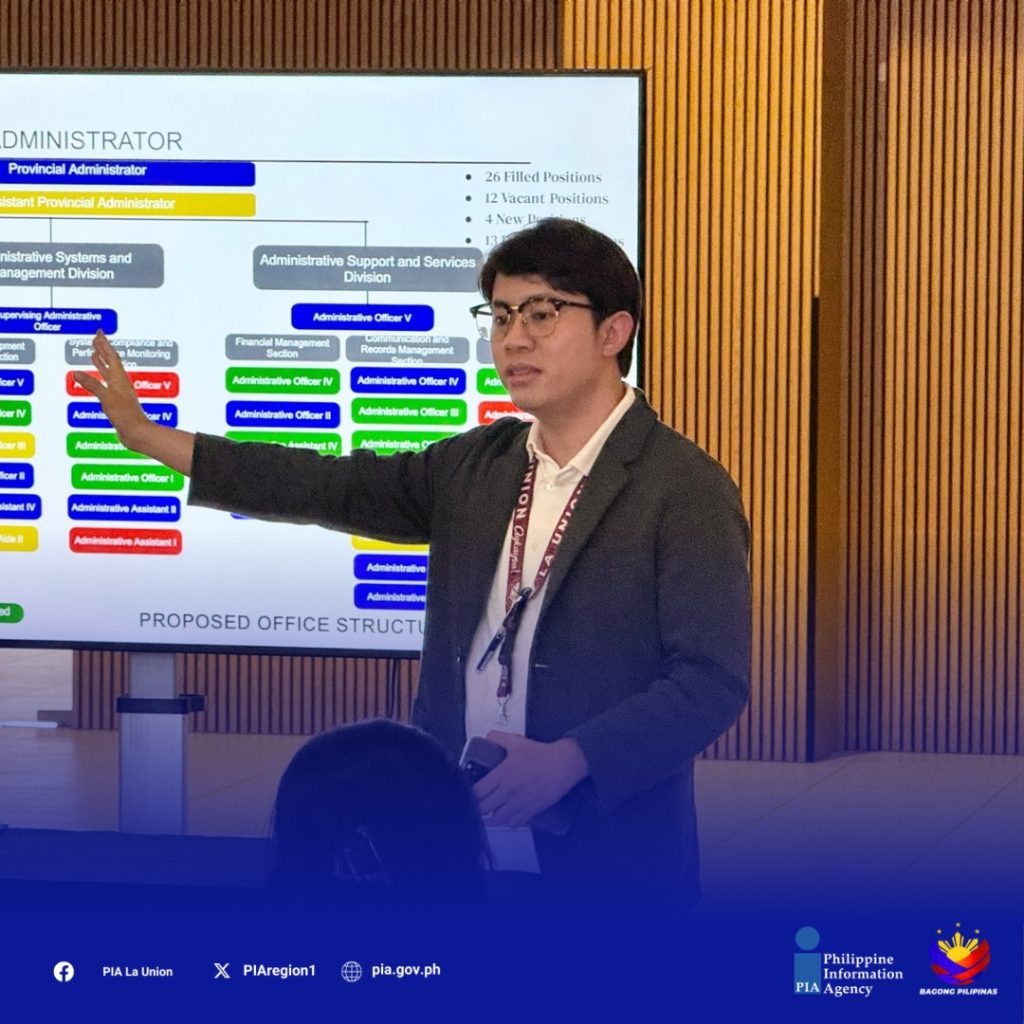
During a planning workshop held on July 17 at the Speaker Pro Tempore Francisco I. Ortega Convention Center in San Fernando City, Provincial Administrator Ramon B. Torres described the PDPFP as an integrated and forward-looking framework that aligns programs, investments, and development priorities across different sectors.
Anchored on the Local Government Code of 1991, the plan adopts a watershed ecosystem management approach, recognizing the interconnected relationship between upland, lowland, and coastal communities.
This integrated planning approach aims to balance economic development with environmental protection while strengthening the province’s resilience to climate-related risks.
Beyond physical planning, the framework also seeks to improve public service delivery, strengthen accountable governance, and raise the overall quality of life for La Union residents.
Communities Help Shape the Province’s Future
A key feature of the updated development plan is its emphasis on participatory planning.
To ensure that the PDPFP reflects local needs and aspirations, the provincial government conducted five town hall consultations involving representatives from all 29 local government units in La Union.
The consultations gathered 723 participants representing 303 civil society organizations, including farmers, fisherfolk, youth organizations, women’s groups, cooperatives, business associations, and environmental advocates.
By engaging communities directly in the planning process, the province aims to develop policies and investments that respond to local priorities while creating more inclusive and sustainable development outcomes.
Four Strategic Priorities Will Guide Development Through 2035
The updated PDPFP is anchored on four major development priorities:
Accessible and Responsive Social Development
Strengthening healthcare, education, public services, and community well-being to build safer, healthier, and more empowered communities.
Productive and Climate-Resilient Agriculture
Modernizing agriculture, fisheries, and rural development while improving resilience to climate change and environmental risks.
Sustainable and Competitive Tourism
Supporting responsible tourism that generates economic opportunities while protecting the province’s cultural and natural assets.
Effective and Inclusive Governance
Strengthening institutions, encouraging public participation, promoting transparency, and improving coordination across government sectors.
Together, these priorities are intended to create an integrated development framework that supports long-term economic competitiveness while ensuring that opportunities reach both urban centers and rural communities.
What This Means for Northern Luzon’s Innovation Ecosystem
La Union’s updated development plan reflects a broader shift taking place across Northern Luzon, where innovation is increasingly being integrated into long-term public policy rather than treated as a standalone initiative.
Instead of viewing innovation solely through the lens of technology startups, the PDPFP positions it as a cross-cutting strategy that influences agriculture, tourism, governance, climate resilience, infrastructure, and investment planning.
This systems-level approach is becoming increasingly important as provinces compete not only for investments but also for talent, industries, and sustainable economic opportunities.
For entrepreneurs, startups, researchers, and innovation organizations, a clear long-term development framework creates greater certainty around future priorities, making it easier to align new ventures and technologies with the province’s strategic direction.
As more local governments adopt innovation-driven planning, Northern Luzon continues to strengthen its position as a region where economic growth, environmental sustainability, and inclusive development can advance together.
Planning for innovation begins long before new businesses are created or technologies are deployed. It starts with a shared vision, informed by communities and supported by long-term policies that create the conditions for innovation to thrive. Through its updated PDPFP 2026–2035, La Union is laying that foundation for the decade ahead.
Original Source
Market Context
Around the world, regions that sustain long-term economic growth often rely on integrated development strategies that align land use, infrastructure, innovation, environmental sustainability, and investment planning. Increasingly, local governments are embedding innovation into comprehensive development frameworks to improve public services, strengthen resilience, and attract high-value industries. In the Philippines, Provincial Development and Physical Framework Plans (PDPFPs) serve as strategic roadmaps that guide policy and investment decisions over the long term. For Northern Luzon, La Union’s updated PDPFP reflects how provincial governments are adopting innovation-led planning to build more competitive, climate-resilient, and inclusive regional economies.
Are you a founder, innovator, or community builder in Northern Luzon?
We're always looking for compelling stories from the region's ecosystem. Whether you're launching a startup, running a program, or doing something interesting — we'd love to feature you.