
MMSU Students Built an AI Joint Detection System, Studied Inabel's Survival, and Researched Bamboo as Diabetes Treatment. The University Just Recognized the Best of Them.
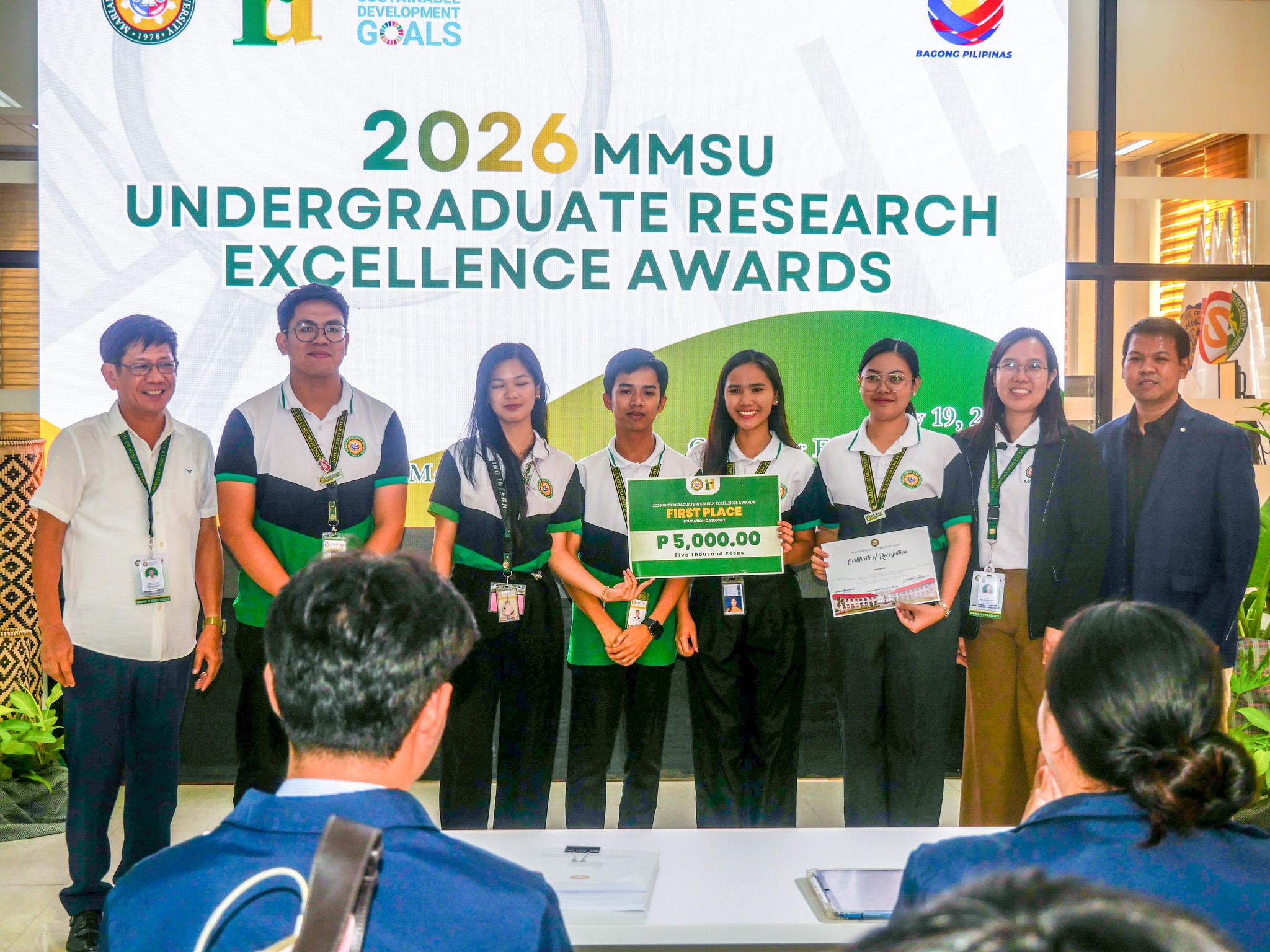
Mariano Marcos State University held its Undergraduate Research Excellence Awards 2026 on May 19, recognizing top student research across four categories: Education, Life and Health Sciences, Physical Sciences and Engineering and IT, and Social Sciences and Humanities and the Arts, with winning studies addressing community health, heritage preservation, agricultural science, and digital innovation.
 Featured Partner
Inv8 Studio
Innovation Partner for Startups & Growing Businesses
The best undergraduate research does not live in a library. It addresses something real: a health condition affecting a community, a cultural practice at risk of disappearing, a logistical problem that technology can solve, a fishing technique that could be made more efficient. At Mariano Marcos State University, a graduating cohort of student researchers just proved that standard holds in Ilocos Norte.
The Undergraduate Research Excellence Awards 2026, held on May 19 at the MMSU Center for Flexible Learning, recognized outstanding thesis projects from across the university's colleges in four categories. Organized by the Research Directorate, the event gathered researchers whose completed studies had already passed the rigor of academic review, and selected the ones that best combined intellectual quality with real-world relevance.
RD Director Dionisio Bucao was direct about what the program expects from student research: "Research should address real community needs and social issues." The studies recognized on May 19 held up to that standard across every category.
Physical Sciences, Engineering, and Information Technology
The top award in this category went to a study that sits at the intersection of medical diagnostics and artificial intelligence. "Automated Measurement of Range of Motion and Detection of Joint Abnormalities in the Bilateral Upper Extremities Using Convolutional Neural Network," by Simon Zane Asis, Albert Castillo, Jayden Dale Geronimo, and Justin Viernes of the College of Engineering, applies CNN-based machine learning to automate a clinical assessment process that is typically manual, time-consuming, and subject to inter-rater variability. In a province where access to specialist rehabilitation and orthopedic services is limited, automated range-of-motion assessment has practical diagnostic value beyond the academic context.
Second place went to "Development of AI-Based Document Tracking and Management System" by Goldwynne Maeyr Villar, Precious Pia Yodico, Althea Margharette Caranto, and Isagani Andres of the College of Computing and Information Sciences, a practical administrative solution with direct applicability to government offices, educational institutions, and enterprises managing high document volumes. Third place was awarded to "Notiface: Face Recognition-Based Parent Notification System," a school safety and communication tool developed by a team from the College of Industrial Technology.

Life and Health Sciences
First place in this category went to a genetics study examining mutations in the Beta Globin gene promoter and their effects on transcription and hematological parameters, by Yousef Abdulrahman Lawal and Norman Garvida of CAS. The study addresses blood disorder research at the molecular level, a foundational line of inquiry with implications for understanding hemoglobin-related conditions in Filipino populations.
Second place recognized work on bamboo shoots enriched with Lactobacillus hilgardii as a potential antihyperglycemic agent, tested both in vitro and in vivo, by a team from the College of Health Sciences. The study investigates a locally abundant crop as a functional food for managing blood sugar, a line of research with direct relevance to diabetes management in communities where Bambusa spinosa grows widely. Sharing third place were a fisheries study on lure color and octopus catch efficiency in Burgos, Ilocos Norte, and a microbiology study on probiotic bacteria isolated from onion rhizosphere.
Social Sciences, Humanities, Culture, and the Arts
The most culturally significant award of the evening went to "Loom to Legacy: Assessing the Sustainability of Inabel Weaving in Pinili, Ilocos Norte Amid Generational Decline," by a twelve-member team from the College of Business, Economics, and Accountancy. Inabel weaving is one of Ilocos Norte's most iconic cultural heritage practices, and the study examines the real and measurable forces threatening its continuity across generations. At a time when Ilocos Norte's weaving industry is gaining international attention through the work of National Living Treasures like Magdalena Gamayo, a rigorous academic assessment of what is at risk and why is not just culturally relevant. It is practically necessary for anyone designing interventions to keep the craft alive.
Second place recognized a quasi-experimental study on the effectiveness of Pandanggo Ilocano dance in improving gait speed and balance among elderly participants, a study that bridges cultural practice and geriatric health outcomes in a way that validates indigenous movement as therapeutic intervention. Third place went to "Development of an Interactive Filipino Sign Language Learning Application," a digital accessibility tool that addresses communication inclusion for the deaf and hard-of-hearing community.
Education
First place in the Education category went to a study testing a colored card game called WhoKnows? for improving Grade 9 students' proficiency in writing conditional sentences, from the College of Teacher Education. Second place recognized research on Ilokano mothers' lived experiences in supporting early childhood English language learning. Third place went to ConnecTunes, a musical approach to teaching transitional words in informative essay writing to Grade 7 students.
What This Cohort Signals
Winning studies are eligible to represent MMSU in regional research competitions and may qualify for publication in the university's Science and Technology Journal. That pipeline from undergraduate thesis to regional competition to publication is not standard at every university. At MMSU, it is the intentional infrastructure through which student research becomes a contribution to the broader knowledge base rather than a graduation requirement that stops at submission.
Vice President for Academic Affairs Aris Reynold Cajigal, delivering the message of MMSU President Virgilio Julius Manzano Jr., highlighted the role of research in preparing students to become professionals, critical thinkers, and problem-solvers. The studies recognized on May 19 show that preparation is working: from AI-powered clinical diagnostics to the generational survival of Ilocano weaving, MMSU's student researchers are engaging with the problems their communities actually face.
Are you a founder, innovator, or community builder in Northern Luzon?
We're always looking for compelling stories from the region's ecosystem. Whether you're launching a startup, running a program, or doing something interesting — we'd love to feature you.