
DOST Turns Apayao’s Wild Grass Into a New Livelihood Opportunity Through Science and Innovation
A new runo processing facility in Pudtol combines technology, skills training, and community partnerships to transform an underutilized forest resource into high-value products that support rural livelihoods.
 Featured
Amianan Ventures
A Native Wild Grass Is Becoming the Foundation of a Community Enterprise
A plant that has long grown naturally across Apayao is now being transformed into a source of livelihood through science, technology, and innovation.
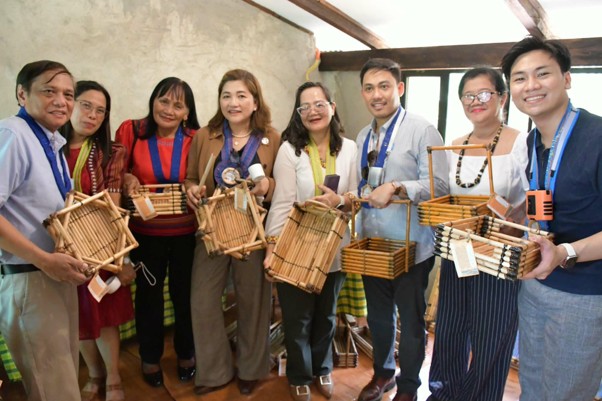
On May 18, 2026, the Department of Science and Technology – Forest Products Research and Development Institute (DOST-FPRDI) joined the inauguration of the Runo Processing Facility and Showroom at the Agguimangan Agro-Eco Tourism Farm in Swan, Pudtol, Apayao. The facility forms part of a broader initiative that aims to convert runo (Miscanthus sinensis Andersson), a locally abundant wild grass traditionally used in handicrafts, into higher-value commercial products that can create sustainable livelihood opportunities for local communities.
The project demonstrates how research institutions and local communities can work together to unlock the economic potential of natural resources that have often been overlooked.
Science and Technology Are Helping Communities Create More Value From Local Resources
At the heart of the facility is an Eco-dryer, a technology developed by DOST-FPRDI to improve the processing of runo. Compared with traditional drying methods, the technology significantly reduces drying time while improving dimensional stability, preservative retention, and product consistency, helping artisans produce higher-quality materials suitable for commercial markets.
Recognizing that technology alone is not enough, DOST-FPRDI also conducted technical training for local artisans covering Eco-dryer operations, runo preservation, machine operations, advanced finishing techniques, and mixed-media product development.
These interventions strengthen the entire value chain by combining technology transfer with skills development, enabling communities to produce products that meet higher market standards rather than simply increasing production capacity.
Innovation Begins by Seeing Untapped Potential in Local Materials
During the inauguration, Renato U. Solidum Jr. emphasized that many communities possess resources with significant but underutilized economic potential.
He noted that through science, technology, and strong local partnerships, these resources can be transformed into sustainable enterprises that create jobs, strengthen local economies, and improve people’s lives.
Maria Teresa B. De Guzman added that Apayao should be recognized not only for its forests, rivers, and recognition as a UNESCO Biosphere Reserve, but also for communities that actively create economic opportunities while working in harmony with nature.
Meanwhile, Rico J. Cabangon described the new facility as a model for community-based forest enterprises, highlighting how collaboration among government agencies, local leaders, and communities can generate sustainable livelihoods from underutilized forest resources.
The Project Combines Research, Technology Transfer, and Enterprise Development
The processing facility forms part of the project “Revitalizing and Unlocking the Potential Economic Opportunity (RUNO) of Handicrafts in Apayao through Science, Technology and Innovation.”
Supported through the Department of Science and Technology – Philippine Council for Industry, Energy, and Emerging Technology Research and Development> Women’s Helping Women: Innovating Social Enterprises (WHWise) Program, the initiative provides equipment, technical expertise, and capacity-building support that help rural enterprises transform local resources into market-ready products.
The inauguration was attended by Debbie Glynn V. Manangkil and Nancy Bantog, reflecting the collaboration between national research institutions and regional science and technology offices in supporting countryside innovation.
What This Means for Northern Luzon’s Innovation Ecosystem
Apayao’s runo initiative highlights an important shift in how innovation is being applied across Northern Luzon. Rather than introducing entirely new resources, many emerging innovations focus on creating greater value from materials that communities already possess.
For entrepreneurs, this represents an opportunity to rethink what constitutes innovation. Competitive businesses do not always begin with new technologies or imported raw materials. Sometimes, innovation starts by applying research, better processing techniques, and product development to resources that have existed locally for generations.
This approach is particularly relevant for Northern Luzon, where agriculture, forestry, and biodiversity remain among the region’s greatest assets. By combining scientific research with enterprise development, communities can create higher-value products, strengthen rural industries, and generate more sustainable sources of income without increasing pressure on natural resources.
Projects like this also demonstrate how government research institutions can play a more active role in venture creation by helping communities move beyond raw material production and into value-added manufacturing.
The launch of the Runo Processing Facility is more than the opening of a new building. It represents how science and technology can transform overlooked natural resources into enterprises that generate livelihoods, strengthen local industries, and create new opportunities for inclusive countryside development.
Original Source
Market Context
The Philippines’ forest and non-timber forest products sector presents significant opportunities for rural enterprise development, particularly through value-added processing rather than raw material extraction. Technologies that improve processing efficiency, product quality, and commercialization help communities capture more value from locally available resources while promoting sustainable resource management. For Northern Luzon, where biodiversity and natural resources remain economic strengths, science-driven innovations like the runo processing initiative demonstrate how research institutions can support community enterprises that balance environmental stewardship with inclusive economic growth.
Are you a founder, innovator, or community builder in Northern Luzon?
We're always looking for compelling stories from the region's ecosystem. Whether you're launching a startup, running a program, or doing something interesting — we'd love to feature you.