
Kalinga Is Getting a Rice Processing System and a Food Hub with Cold Storage. The DA Secretary Made the Commitment in Person.
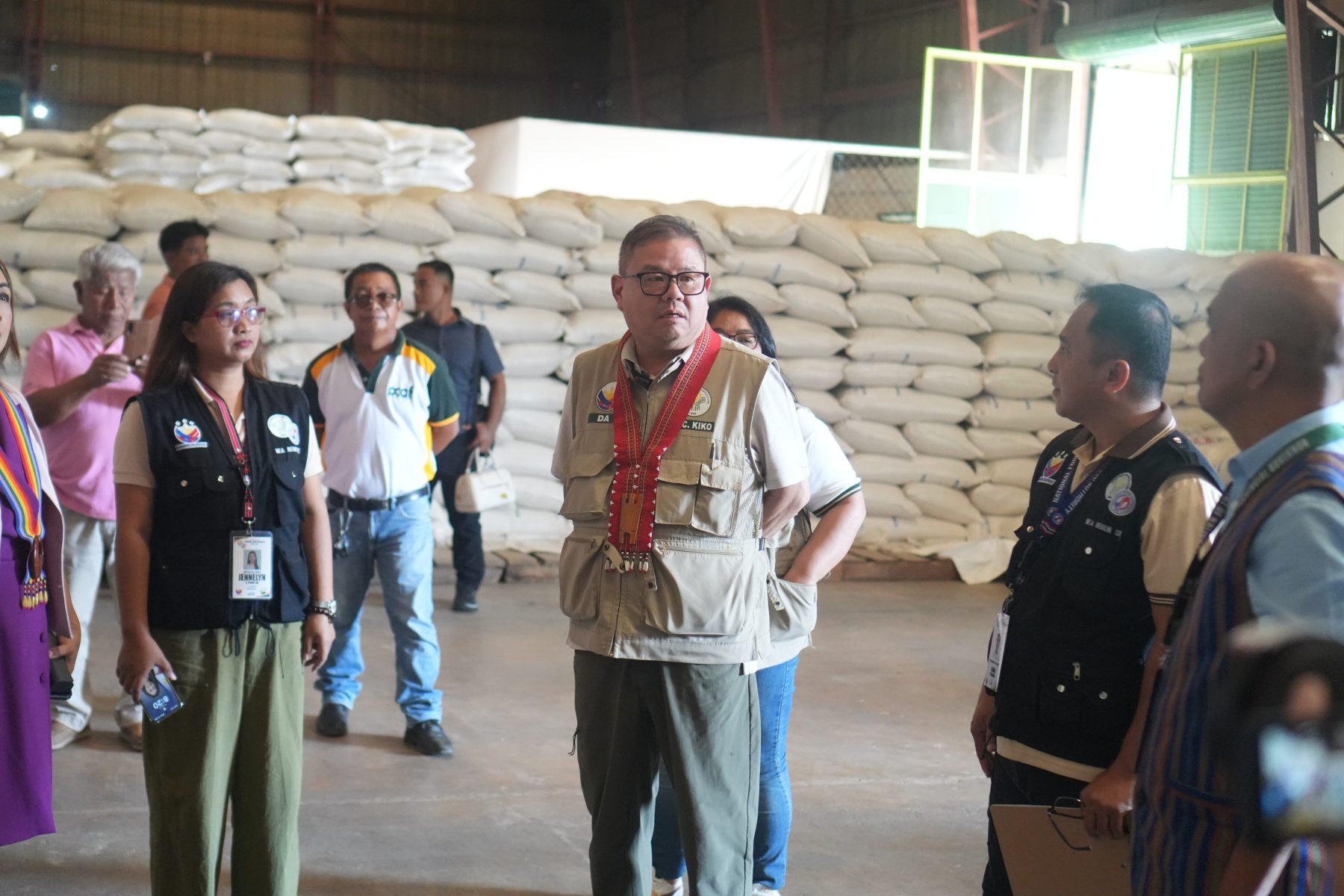
DA Secretary Francisco Tiu Laurel Jr. committed during a May 22, 2026 visit to Kalinga to build a Rice Processing System 3 and a food hub with cold storage facilities on a 50-hectare property in Rizal, Kalinga, with the rice processing system targeted to begin construction this year and the food hub aimed for completion by 2028.
 Featured
Amianan Ventures
Kalinga is the Cordillera region's top rice-producing province. Its farmers grow the crop. Traders and middlemen have long controlled what they earn from it. DA Secretary Francisco Tiu Laurel Jr. traveled to Tabuk City on May 22, 2026 with a commitment to change that equation, and he made it directly to the governor, the congresswoman, the vice governor, and the farmers themselves.
Two facilities. One 50-hectare property in the municipality of Rizal. A rice processing system that begins construction this year. A food hub with cold storage that the DA is planning to complete by 2028. Together, they represent the most significant agricultural infrastructure investment committed to Kalinga in recent years, and a direct response to the structural problem that has suppressed farmer income in the province for decades.
The Rice Processing System: Breaking the Middleman Advantage
The core problem Tiu Laurel was responding to is not a production problem. Kalinga farmers grow rice. The problem is what happens at the point of sale.
During harvest season, when farmers need to move their palay quickly and have no storage alternatives, traders and middlemen buy at depressed farmgate prices. Farmers with no ability to hold their crop have no leverage. They sell when the buyer dictates, at the price the buyer offers.
A Rice Processing System changes that structural imbalance. A state-of-the-art drying and milling facility gives farmers the ability to store their crop longer, dry it properly to prevent spoilage, and wait for better market conditions before selling. The quality of the processed rice also improves, commanding better prices in the market.
"Para hindi na mahawakan ng traders ang mga magsasaka dito. Para kaya nilang itago ang kanilang palay nang mas matagal, at hindi nila kailangang ibenta kaagad," Tiu Laurel said. The facility committed is Rice Processing System 3, described as the largest available model, targeted to begin construction this year with a completion target of next year.
The Food Hub and Cold Storage: The Logistics Layer
Alongside the rice processing system, Tiu Laurel committed to a food hub with cold storage facilities on the same 50-hectare property in Rizal. The food hub addresses a different but equally important constraint: the logistical and market access barriers that prevent Kalinga farmers from selling their crops at competitive prices beyond local buyers.
Cold storage is the infrastructure that makes it possible to hold perishable agricultural products at quality long enough to reach better markets. Without it, the economics of post-harvest value are dictated entirely by the distance between the farm and the nearest buyer willing to take the product that day. With it, farmers can access markets in Baguio, Manila, and beyond that pay significantly more for quality produce.
"I think it's also appropriate that we put in that 50-hectare property a food hub with cold storage, so paplanuhin natin yan and hopefully, we will implement that next year naman, sana matapos by 2028," Tiu Laurel said.
What the Province Is Committing In Return
Governor James Edduba welcomed the commitments and affirmed the Kalinga provincial government's support for implementation. "With humility and hope, we appeal for your support in turning this vision into reality. We believe that through strong collaboration between the national government and local government units, we can bring lasting progress and opportunities to our farmers and future generations."
The 50-hectare property in Rizal that the provincial government has designated for the rice and corn complex is the LGU's concrete contribution to making the national investment viable. Site availability is frequently the bottleneck that delays agricultural infrastructure projects after commitments are made. Kalinga has removed that bottleneck in advance.
Why This Matters for the Cordillera Agricultural Ecosystem
The commitments made in Tabuk City on May 22 are part of a broader pattern of agricultural infrastructure investment being directed toward Northern Luzon and the Cordillera. The region's highland geography gives it a distinct agricultural profile: rice varieties suited to mountain terrain, vegetable production that supplies markets across the north, and cacao and coffee crops gaining national and international attention.
What has consistently limited the economic return on that agricultural productivity is infrastructure: the post-harvest, storage, and logistics systems that determine whether what farmers grow translates into income they can control. A rice processing system in Rizal, Kalinga, paired with a food hub and cold storage, does not just help Kalinga farmers. It strengthens the agricultural supply chain of the entire Cordillera region by adding a significant processing and logistics node where none currently exists at this scale.
Source: Philippine Information Agency CAR | Article by Iryll O. Sicnao | May 25, 2026
Are you a founder, innovator, or community builder in Northern Luzon?
We're always looking for compelling stories from the region's ecosystem. Whether you're launching a startup, running a program, or doing something interesting — we'd love to feature you.