
Ilocos Norte Now Has a Yarn Production Center. Local Weavers Are Already Calling It a Game Changer.
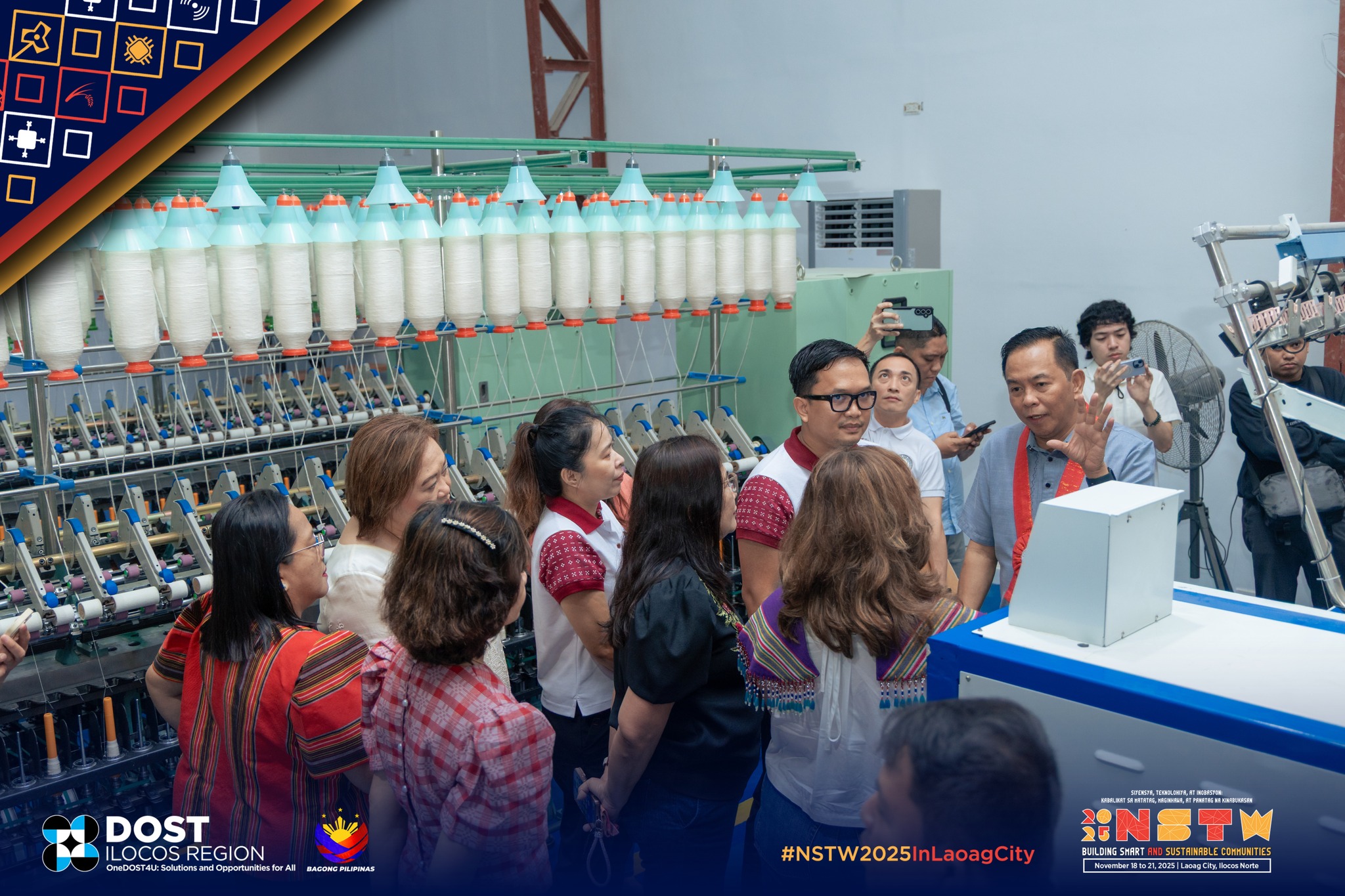
The Regional Yarn Production and Innovation Center in Barangay Parut, Vintar, Ilocos Norte has begun operations, transforming locally sourced cotton, bamboo, abaca, banana, pineapple, and jute fibers into high-quality yarn for handloom weavers, designers, and textile-based MSMEs across the region, with a daily production capacity of up to 150 kg of cotton yarn.
 Featured Partner
Inv8 Studio
Innovation Partner for Startups & Growing Businesses
For handloom weavers in Ilocos Norte, sourcing quality yarn has always been a constraint. The threads exist in the land around them, in cotton fields, bamboo groves, abaca plants, and pineapple farms, but the processing infrastructure to turn those raw fibers into workable yarn has not been locally available. That gap is now closing.
The Regional Yarn Production and Innovation Center in Barangay Parut, Vintar, Ilocos Norte has begun operations, marking the first facility of its kind in the province. Operated and managed by the DOST Philippine Textile Research Institute and staffed by textile engineers, technicians, and scientists, the center is already producing yarn from locally sourced natural fibers and training local weavers to integrate the new supply into their craft and workflow.
What the Center Produces
The facility is designed to process a range of locally available fibers into high-quality yarn for weaving and knitting:
Cotton — the primary output, with daily production capacity of up to 150 kg, a first for Ilocos Norte
Bamboo — a fast-growing, sustainably harvested fiber with strong textile applications
Abaca — a traditional Philippine fiber with deep roots in Ilocos weaving culture
Banana and pineapple — agricultural byproduct fibers increasingly recognized in sustainable fashion markets
Jute (saluyot) — a locally abundant fiber with broad textile potential
The diversity of fiber inputs is not incidental. It reflects a deliberate strategy to build a yarn supply chain rooted entirely in what the Northern Luzon landscape already produces, rather than importing synthetic or processed materials from outside the region.

What Weavers Are Already Saying
The impact is immediate and tangible for the weavers who have already accessed the center's output. Caroline Sabado, a handloom weaver from Lower Surong Valley, put it plainly: "We are so happy about the center's operation. We now have access to soft, natural threads that are easier to work with than synthetic ones."
That shift from synthetic to natural fiber is not just a quality preference. It is a competitive repositioning. In a global market where buyers in sustainable fashion and heritage textile segments are actively seeking handwoven products made from traceable, natural materials, Ilocos Norte weavers who can say their yarn came from locally grown cotton or abaca processed in their own province are telling a story that commands a premium. That story was not available to them before this center opened.
The Bigger Industry Picture
DOST-PTRI Director Dr. Julius L. Leaño Jr. framed the center's significance within a national and global context. "By providing locally sourced threads, we aim to strengthen the handloom industry and promote homegrown textile production," he said, adding that with government support, private investment, and rising demand, Philippine textiles are positioned to thrive in the global sustainable fashion market.
That confidence is grounded in real market data. The global yarn market is being reshaped by sustainability requirements, with recycled fibers, blended yarns, and specialty functional yarns among the fastest-growing demand categories. Cotton yarn remains dominant, but the premium end of the market is increasingly defined by provenance, natural sourcing, and cultural authenticity, precisely the qualities that Ilocos Norte handwoven products carry.
The center also directly supports the Philippine Tropical Fabrics Law, which encourages the use of local fibers in government textiles and uniforms, creating an institutional demand channel for locally produced yarn that did not exist at scale before.
What This Means for the Northern Luzon Textile Ecosystem
The RYPIC is not just a production facility. It is infrastructure for an entire value chain. By increasing the supply of locally sourced, naturally processed yarn, the center strengthens the position of handloom weavers, textile-based MSMEs, designers, social enterprises, and apparel manufacturers across Ilocos Norte and neighboring provinces simultaneously.
For the broader Northern Luzon ecosystem, the center represents a model of how regional production infrastructure, backed by DOST technical expertise and local government partnership, can address a structural gap that individual weavers or small enterprises could never close on their own. The Vintar town government's support for the facility reflects exactly the kind of LGU engagement that transforms a national agency programme from a pilot into a community-rooted institution.
Leaño reaffirmed that sustainability, circularity, and cultural appreciation will be the forces that drive industry growth in the years ahead. In Barangay Parut, Vintar, that future is already spinning.
Are you a founder, innovator, or community builder in Northern Luzon?
We're always looking for compelling stories from the region's ecosystem. Whether you're launching a startup, running a program, or doing something interesting — we'd love to feature you.