News
Baguio City Held a Two-Day Summit on March 30 to Rethink How Tourism Grows Without Breaking What Makes the City Worth Visiting
The Baguio Circular Tourism Summit, backed by UNDP, the EU, and the Government of Japan, brought together government, businesses, and communities to build a circular tourism economy, with action plans, policy reform, and a new sustainability framework at the center.

Amianan Desk
Amianan Innovation Ventures
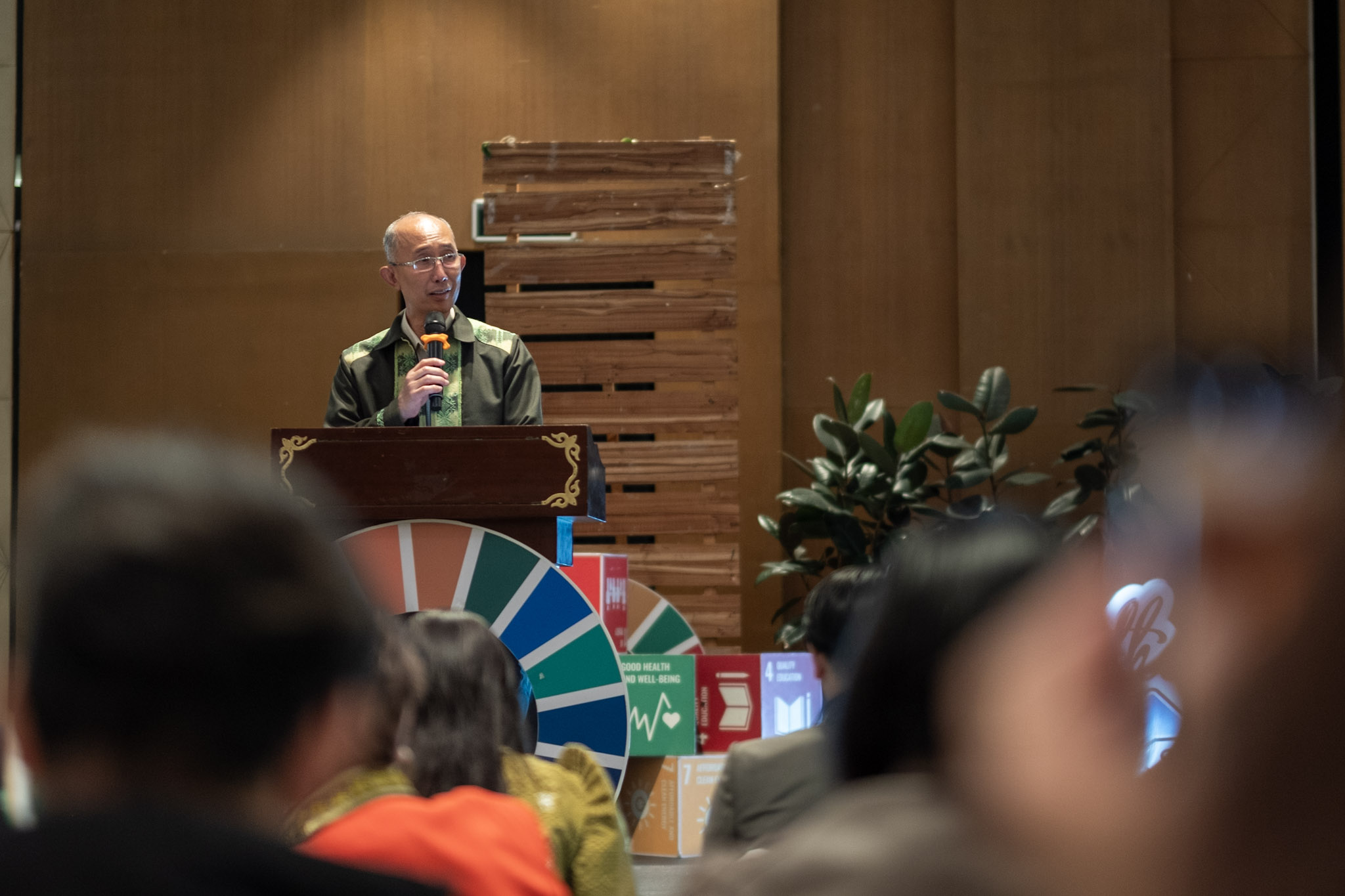
On March 30 and 31, 2026, the Baguio City Government convened the Baguio Circular Tourism Summit at a moment the city could not afford to ignore. Tourism generates Baguio's economic lifeblood. It also generates an estimated 290 tons of waste per day, with tourists contributing nearly 20% of that volume during peak events. The two-day Summit, themed "Baguio Weave: Weaving a Circular Tourism Ecosystem," brought together government offices, MSMEs, development partners, and community groups to start building the systems that replace volume-driven tourism with something more durable.
The Summit was led by the Baguio City Government and supported by UNDP Philippines through the Global Plastics Innovation Programme (GPIP-II), and the EU-PH Green Economy Partnership, backed by the Government of Japan and the European Union respectively. That funding combination, UN, EU, and Japan alongside a local government, signals that Baguio's circular tourism agenda has international credibility behind it, not just local aspiration.
What Circular Tourism Actually Means Here
Circular tourism moves a destination away from the linear "take-make-waste" model toward one that keeps resources in use, reduces costs, and builds resilience against energy and supply chain shocks. For a city like Baguio, where daily waste disposal is projected to climb from 290 to 420 tons per day by 2034 without intervention, this is not a branding exercise.
Baguio's transition is anchored on Pansa-nopen Tayo, a framework integrating indigenous Cordilleran wisdom with modern governance, embedding circular principles across sectors and aligning local action with national sustainability goals. The framework is significant because it is not imported. It draws on the region's own resource stewardship traditions, which makes community buy-in more achievable than a purely top-down policy push.
Mayor Benjamin Magalong framed the stakes directly at the Summit: "These conversations are important as they allow us to learn from each other, challenge old systems, create solutions that are practical and sustainable."
What the Summit Produced
Participants did not just attend panels. They began drafting Circular Tourism Action Plans, supported by a Circular Tourism Self-Assessment tool and a Circular Solutions Guide developed for the Summit. Mayor Magalong also led a dedicated Economic Continuity Planning Workshop focused on managing risks from rising energy and fuel costs, a practical acknowledgment that circular practices and economic resilience are not separate conversations.
Businesses shared models already in motion: refill systems, zero-waste kitchens, farm-to-table supply chains, food waste circularity technologies, and compostable packaging. Circular solutions providers showcased plastic-free products and incentive-based waste recovery systems. Business matching and problem-solution roundtables ran alongside the main programme.
The policy track was equally concrete. Discussions covered Baguio's proposed Sustainable Tourism Code and Tourism Development Plan, both of which would embed circular economy principles into the legal framework governing how tourism operates in the city.
Why This Matters Beyond Baguio
Philippines tourism is projected to contribute ₱5.9 trillion to the economy in 2025, a 13.5% increase from 2019 pre-pandemic levels, supporting 11.7 million jobs nationally. But that growth is carrying a cost: tourism water consumption rose 8.7%, energy consumption grew 20.9%, and CO2 emissions from tourism increased 25.2% in a single year. The country's circular economy baseline, documented by UNDP in 2024, found only 17 nationally recognized circular products and 22 experimental initiatives across all sectors. Baguio is moving faster than the national average.
UNDP Philippines Deputy Resident Representative Edwine Carrié was pointed about what is at stake: "The challenge is no longer just attracting visitors but managing a nature-positive tourism within the city's limits."
What This Means
Baguio producing a circular tourism framework with international backing and a two-day working Summit, rather than a roadshow, puts it ahead of most Philippine cities on this issue. For MSMEs in Baguio and across Northern Luzon in tourism supply chains, food service, packaging, and waste recovery, the Summit's action plans are the entry point. The businesses that show up for the next stage of implementation, when the Sustainable Tourism Code moves toward enactment and financing mechanisms take shape, will be better positioned than those waiting to see how it develops.
Acting Tourism Officer Engineer Aloysius Mapalo summed it up: "We have seen it during the pandemic, we were the very first city to have a resilience and recovery plan, and that plan came out from the tourism stakeholders supporting the city government. Now, we are at it again."
Businesses and MSMEs in Baguio wanting to connect to the next phase of the circular tourism agenda can reach the Baguio City Tourism Office directly or follow updates from UNDP Philippines.
This article is based on original reporting by UNDP Philippines, published April 12, 2026.