
Sugpon, Ilocos Sur Has an Abundance of Ube and a Plan to Turn It Into Purple Gold. DOST Just Gave Local Processors the Skills to Do It.
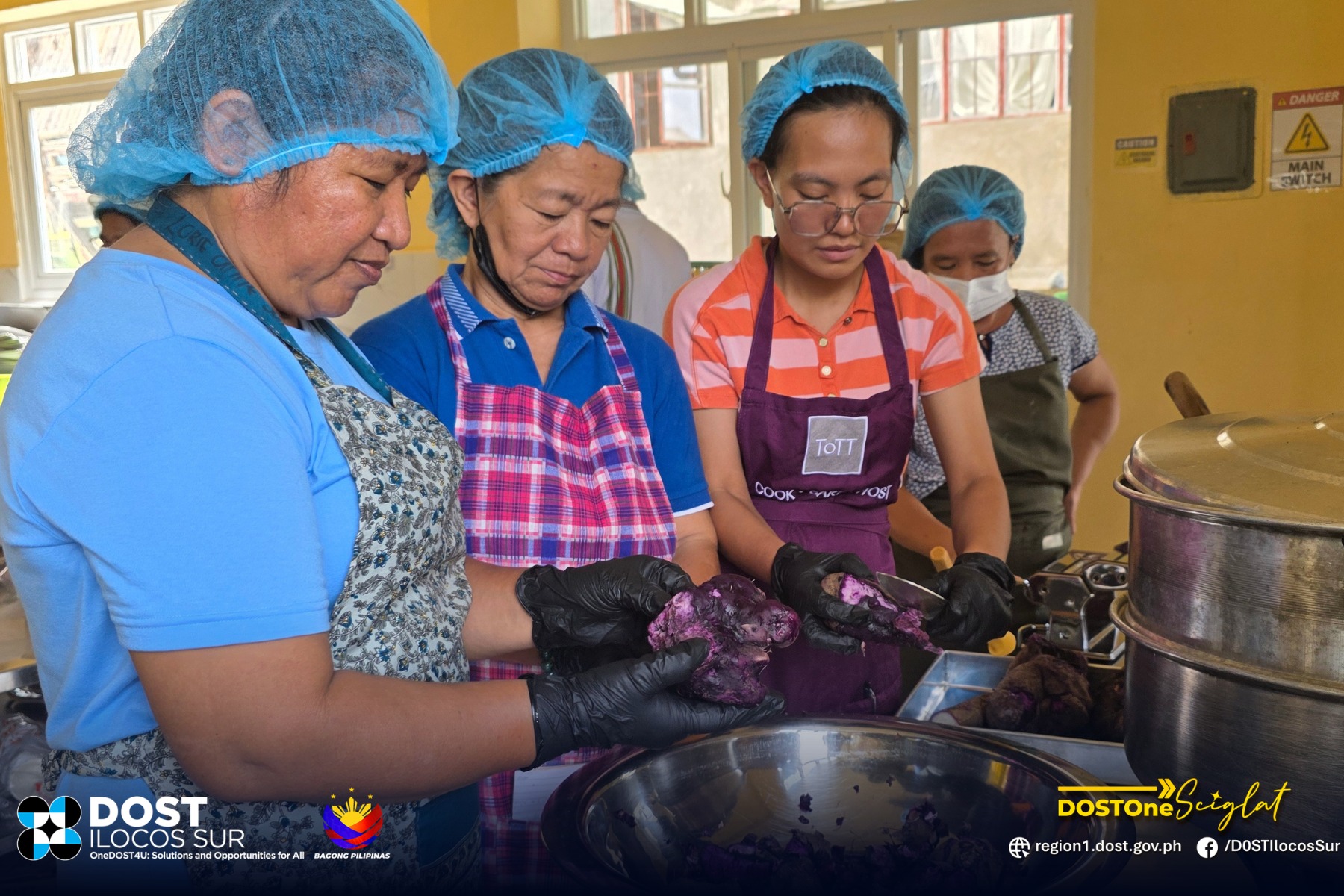
DOST Ilocos Sur concluded a three-day training on food safety, quality enhancement, and ube value-adding in Brgy. Balbalayang, Sugpon on May 22, 2026, equipping local farmers and processors with the techniques to produce ube noodles, ube sauce, and ube pocket pie at a standard that can compete in local and international markets.
 Featured
Amianan Ventures
Ube is having a global moment. The purple yam from the Philippines has found its way into specialty cafes in New York, dessert menus in Tokyo, and premium food aisles across Southeast Asia, driven by its distinctive visual appeal, its unique flavor profile, and a global consumer appetite for naturally vibrant, plant-based ingredients. The demand is real. The premium is real.
In Sugpon, Ilocos Sur, the ube is already growing. What was missing was the technical capacity to turn that abundance into products that meet the quality and food safety standards required to access the markets paying premium prices for it. DOST Ilocos Sur closed that gap from May 20 to 22, 2026.
What the Three-Day Training Covered
The training, titled "Enhancing Food Safety Practices and Improving Quality: Optimizing Value-Adding of Ube for Expanded Market Opportunities," was conducted in Barangay Balbalayang, Sugpon, led by DOST Ilocos Sur Provincial Director Engr. Jordan L. Abad in partnership with the Local Government Unit of Sugpon. Resource Speaker Ms. Mary Grace P. Caburnay of DOST Ilocos Sur facilitated the technical sessions for local farmers and processors.
To maximize learning across the three days, participants were divided into groups and tasked with simultaneously producing three distinct ube-based products:
Ube Noodles — focusing on flavor and texture consistency, a product category that taps into both the local carbohydrate staple market and the growing novelty food segment
Ube Sauce — covering balancing of ingredient ratios and stability, a versatile product with applications in both food service and retail
Ube Pocket Pie — a ready-to-eat, portable format that targets the growing demand for convenient, locally distinct snack products
The parallel processing setup was deliberate. Rather than learning one product sequentially, each group developed deep technical competency in a specific product's requirements while observing the cross-cutting principles of food safety, process standardization, and quality control that apply across all three.
Why Standardization Is the Strategic Priority
The training's emphasis on process standardization is the detail that separates it from a basic livelihood skills session. Flavor and texture consistency, stable ingredient ratios, and quality adjustments are not just craft refinements. They are the prerequisites for market entry beyond the barangay level.
An ube product that tastes different from batch to batch cannot be listed in a supermarket. A sauce with inconsistent viscosity cannot be pitched to a food service buyer. A pocket pie with variable shelf life cannot pass the FDA review process required for wider distribution. Standardization is what transforms a producer's skill into a product that buyers can rely on at scale.
By building that discipline into the training from the start, DOST Ilocos Sur is not just teaching Sugpon's processors to make ube products. It is teaching them to make ube products that can move through a commercial supply chain.

Sugpon's Opportunity in the Global Ube Market
Ube has been described internationally as "purple gold," and the characterization is commercially accurate. Global demand for ube-based food products has grown rapidly as the ingredient moved from Filipino community stores to mainstream specialty retail in North America, Europe, and East Asia. That demand pull creates a real export market opportunity for Philippine ube producers who can meet quality and food safety requirements.
Sugpon's position within that opportunity is specific and advantageous. The municipality has an established ube production base, a local government that has partnered with DOST to invest in processor capacity, and now a cohort of trained producers who understand both the product requirements and the food safety standards needed for expanded market access.
DOST Ilocos Sur's framing of Sugpon as a potential hub for high-quality ube products in Ilocos Sur is not just a promotional aspiration. It is a supply chain development strategy: concentrate production competency, raise the quality floor, build a shared identity around a premium local ingredient, and position the municipality as a reliable, quality-consistent source for the buyers willing to pay for provenance and quality.
For the broader Northern Luzon agri-enterprise ecosystem, Sugpon's ube development is a model worth watching. It starts with a genuine local agricultural asset, identifies the technical gap between what producers can currently make and what the market demands, and delivers the specific training needed to close that gap. That is agricultural value chain development done correctly.
Are you a founder, innovator, or community builder in Northern Luzon?
We're always looking for compelling stories from the region's ecosystem. Whether you're launching a startup, running a program, or doing something interesting — we'd love to feature you.