
RTWPB-CAR Brought a Practical Digital Transformation Session to Baguio's MSME Innovation Summit. No Jargon. Just Tools Entrepreneurs Can Use Now.
The Regional Tripartite Wages and Productivity Board CAR led a breakout session on digital innovation for small business owners, livelihood associations, and entrepreneurial students at the 2026 MSME Innovation Summit held at the University of the Cordilleras on May 30, covering AI basics, digital readiness, and immediate action planning.
 Featured Partner
Inv8 Studio
Innovation Partner for Startups & Growing Businesses
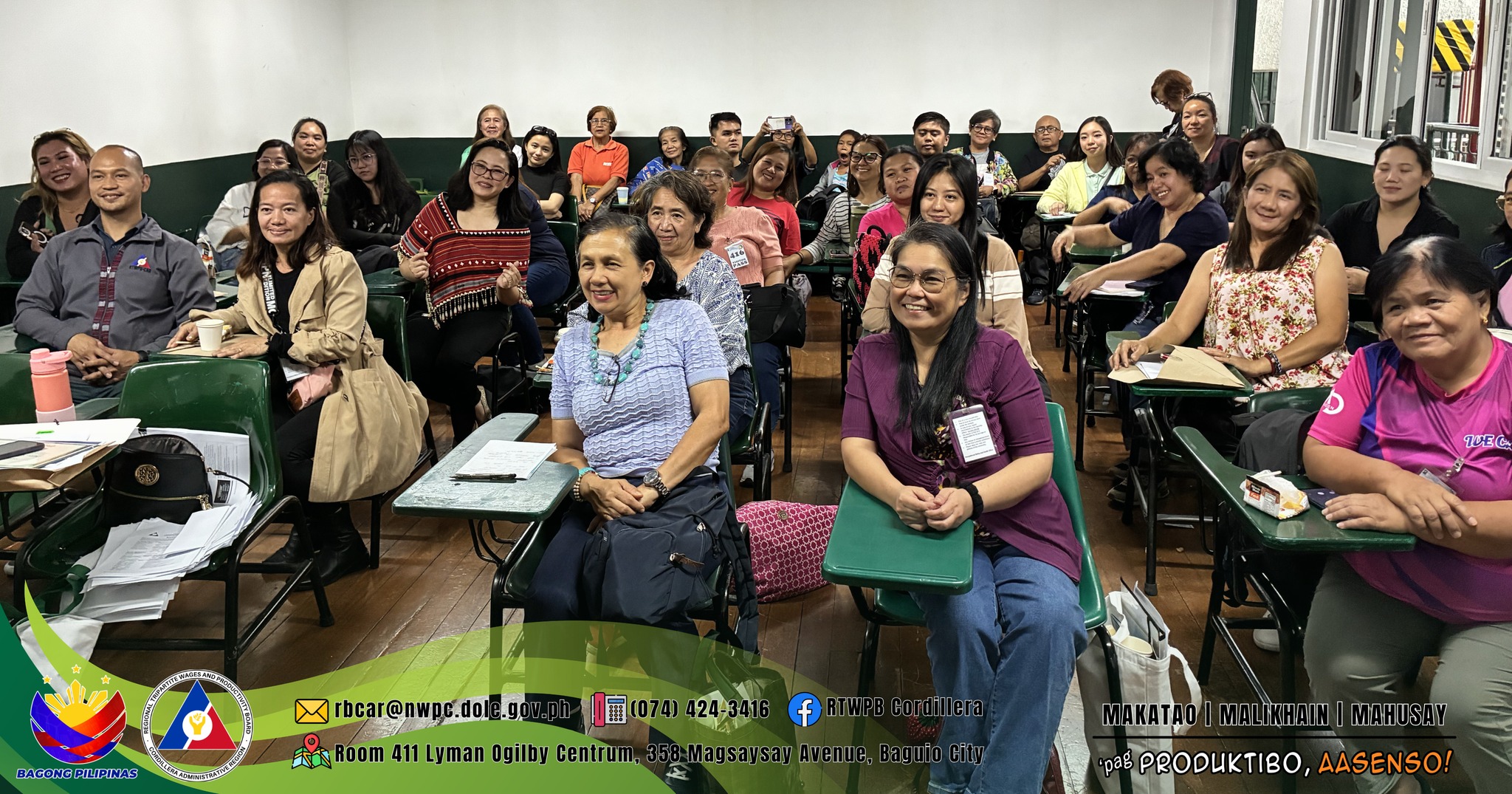
The Regional Tripartite Wages and Productivity Board for the Cordillera Administrative Region ran a practical digital transformation session for Baguio and Benguet entrepreneurs on May 30, 2026, at the University of the Cordilleras, as part of the two-day 2026 MSME Innovation Summit. The session, titled "Smart Productivity: Transforming MSMEs Through Digital Innovation," was one of several breakout sessions at a summit organized jointly by the City Government of Baguio, the Department of Trade and Industry, and the University of the Cordilleras.
The event brought together small business owners, livelihood associations, and entrepreneurial students under one roof with government agencies and financial service providers. The RTWPB-CAR session was the one that focused on what entrepreneurs can actually do on Monday morning.
What the Session Covered
RTWPB-CAR speakers Atty. Carolina Lim-Gamban and Mr. Israel Boleyley structured the session around five practical areas, each designed to give participants something actionable rather than theoretical.
Digital readiness covered the shift from manual to digital methods in daily business operations, starting with the basic inventory, scheduling, and record-keeping processes that most small businesses in the region still manage by hand. The framing was practical: not why digital tools matter in the abstract, but how a specific manual process can be replaced with a simpler digital one that saves time and reduces errors.
Technology as a productivity tool addressed the use of free and low-cost digital solutions to reduce operating costs and free up time. For small business owners whose margins are thin and whose days are already full, the entry point into digital transformation is not a major platform investment. It is one tool that removes one bottleneck.
AI and safety basics gave participants an accessible introduction to AI tools and covered the fundamentals of protecting business data online. Cybersecurity and AI are two topics that overwhelm most small business owners when presented in technical terms. The session framed both in terms of immediate, practical risk and immediate, practical benefit.
The human factor addressed how to prepare and support team members through digital changes, recognizing that the biggest obstacle to digital adoption in small businesses is often not the technology itself but the resistance, confusion, or discomfort of the people who have to use it. Change management at the scale of a 5-person enterprise is a real skill, and the session treated it as one.
Action planning closed the session by helping each participant build a simple roadmap to adopt one or more digital tools immediately. Leaving a training session with a specific next step is the difference between a useful workshop and one that is forgotten by the following week.

Why This Matters for the Baguio and Benguet MSME Ecosystem
The 2026 MSME Innovation Summit is a collaborative product of three institutions that each bring a distinct contribution. The City Government of Baguio brings the convening authority and the local policy environment. DTI brings market access programs, business registration support, and connections to national MSME development initiatives. The University of the Cordilleras provides the venue, the academic infrastructure, and a built-in pipeline of entrepreneurial students who are both future founders and future employees of the businesses in the room.
RTWPB-CAR's participation adds a fourth dimension: productivity and wages policy translated into practical business guidance. The board's mandate covers working conditions and productivity standards, which means it sits at the intersection of how businesses operate and how workers experience those operations. Digital transformation, framed through that lens, is not just a cost-saving exercise. It is a way of building businesses that can pay better wages because they operate more efficiently.
For the small business owners and livelihood association members who attended, the combination of government support, financial services access, and practical digital skills training in a single two-day event is exactly the kind of integrated support that the Baguio and Benguet MSME ecosystem needs more of. Attending one summit and leaving with a digital action plan, a DTI contact, and access to financial services is a better outcome than three separate visits to three separate offices on three separate days.
The Broader Signal
RTWPB-CAR choosing to present a session on digital transformation at an MSME summit reflects a wider shift in how government productivity agencies are approaching their mandate. The traditional focus on wages and labor standards is expanding into business competitiveness and digital readiness, because those things are now directly connected. An enterprise that cannot manage its operations digitally is increasingly at a structural disadvantage in accessing markets, processing payments, managing records, and meeting the compliance requirements of larger buyers and partners.
For entrepreneurs in Baguio and Benguet who have been putting off the shift to digital tools because the learning curve felt steep or the cost felt unclear, the session offered a starting point with no jargon and no large upfront investment required. The roadmap starts with one tool, one process, and one decision to try something different.
That is, as the earlier article in this publication put it, exactly what innovation looks like in this region.
Original Source
This article is based on the announcement published by the Regional Tripartite Wages and Productivity Board CAR (RTWPB-CAR) regarding the "Smart Productivity: Transforming MSMEs Through Digital Innovation" session held on May 30, 2026, at the University of the Cordilleras, as part of the 2026 MSME Innovation Summit organized by the City Government of Baguio, DTI, and the University of the Cordilleras. We are grateful for the original reporting that brought this story to light.
Market Context
Philippine MSMEs account for over 99 percent of all registered businesses in the country and employ roughly 63 percent of the national workforce, yet digital adoption among small enterprises remains significantly below the levels seen in medium and large firms. A 2024 DTI report identified digital skills gaps and the cost of technology adoption as the two most cited barriers to digitalization among MSMEs in provincial areas. In the Cordillera, where many small enterprises operate in tourism, agriculture, and artisanal production, digital tools that improve inventory management, online market access, and payment processing represent direct income opportunities rather than abstract modernization goals. Government-led digital productivity programs like the RTWPB-CAR session at the MSME Innovation Summit are among the most cost-effective ways to accelerate adoption, because they reach entrepreneurs in a trusted, peer-supported environment with zero cost of attendance.
Are you a founder, innovator, or community builder in Northern Luzon?
We're always looking for compelling stories from the region's ecosystem. Whether you're launching a startup, running a program, or doing something interesting — we'd love to feature you.