
Baguio's Water Problem Is No Longer Just About Supply. It Is About Whether the City Remains Livable.
The City Environment and Parks Management Office has flagged water security as one of Baguio City's most urgent long-term challenges, citing illegal wastewater discharge, degraded watersheds, aging sewage treatment infrastructure, and the compounding pressure of El Niño, while announcing feasibility studies completed for facility rehabilitation and a new partnership with the Philippine Disaster Resilience Foundation under the BRIDGE project supported by Global Affairs Canada.
 Featured Partner
Inv8 Studio
Innovation Partner for Startups & Growing Businesses
Baguio City has always had a complicated relationship with water. The city sits on a mountain ridge with limited natural water storage, a watershed system under sustained pressure from decades of development, and a population and tourism load that has outpaced the infrastructure built to serve it. For most of the city's history, the dominant concern was supply: whether there was enough water to meet demand.
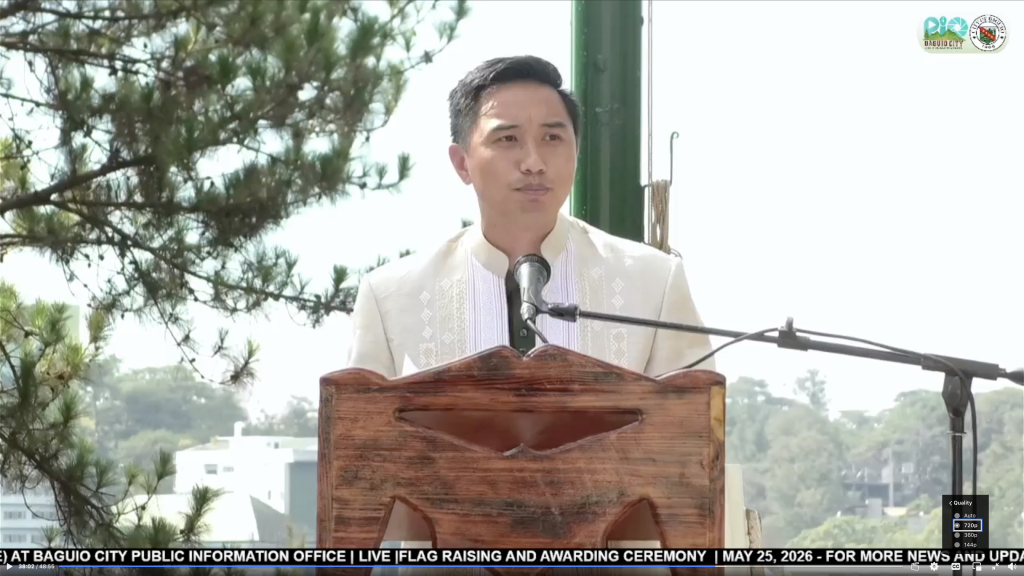
City Environment and Parks Management Officer Rhenan Diwas is reframing the problem. "Water security now directly affects public health, environmental stability, tourism, disaster resilience, economic growth, and the future livability of Baguio City," he said. The challenge is no longer about water supply. It is about the sustainability of the city itself.
The Wastewater Crisis Underneath the Supply Problem
While the conversation about Baguio's water challenges has historically focused on Baguio Water District supply constraints, Diwas named a different and arguably more urgent dimension: wastewater management.
"The city continues to face serious, serious waste water management concerns," he said. Inspections of water waste in tributaries have consistently revealed illegal discharge of untreated wastewater, improper septic systems, illegal dumping, and environmental violations that are contributing to river and creek contamination, foul odors, and ecological degradation across the city's watershed system.
These are not isolated incidents. They are systemic failures in the city's wastewater management infrastructure, occurring regularly enough that inspection and enforcement activities have resulted in the issuance of numerous notices of violation and the imposition of penalties on responsible parties. The LGU has intensified its inspection and enforcement work, but enforcement alone cannot solve a problem rooted in inadequate treatment infrastructure and a regulatory environment that has historically allowed violations to accumulate.
The downstream consequences extend beyond environmental damage. Contaminated rivers and creeks affect the quality of water sources, create public health risks for communities near affected waterways, and damage the city's reputation as a clean, green, and livable destination that its tourism economy depends on.
The Science-Based Response
The LGU's long-term response is grounded in technical work that is already completed and waiting for implementation financing. City engineers and technical personnel have finished the technical and organic feasibility studies for the rehabilitation and upgrading of Baguio City's sewage treatment plants, supplemented by feasibility studies conducted by the Asian Development Bank.
"The city continues to pursue long-term and science-based approaches toward integrated water resource management and waste water rehabilitation," Diwas said. The completed feasibility studies are not just planning documents. They are the foundation for sourcing financial support and technical assistance from national government agencies and development partners, giving the city a credible, technically validated proposal to bring to funding conversations rather than a preliminary concept.
The distinction matters for how quickly implementation can begin. A city that has completed feasibility studies and secured ADB analysis is positioned to move directly to procurement and financing conversations. A city still at the concept stage is years behind. Baguio is in the former position, which means the pace of progress now depends on funding mobilization rather than technical preparation.
The BRIDGE Partnership
On the institutional and climate resilience side, Baguio has secured a significant new partnership. The city has joined the BRIDGE project, a collaboration with the Philippine Disaster Resilience Foundation supported by Global Affairs Canada, focused on establishing an integrated water resource management framework for Baguio City.
The BRIDGE project is built around three interconnected objectives: climate resilience, participatory risk mapping, and institutional strengthening for sustainable water governance. The inclusion of participatory risk mapping is particularly significant. Integrated water resource management in a city as topographically and socially complex as Baguio requires community-level knowledge of where risks are concentrated, which communities are most vulnerable, and how informal settlements, agricultural areas, and commercial zones interact with the watershed system. Top-down technical planning without that participatory layer consistently misses the local conditions that determine whether interventions actually work.
The gender-responsive dimension of the partnership also reflects a more sophisticated understanding of how water insecurity affects different populations differently. Women and children in communities with unreliable or contaminated water access bear disproportionate costs in time, health, and economic productivity. A framework that explicitly accounts for gender-differentiated impacts is better designed to address those inequities rather than inadvertently replicating them.
What This Means for the City's Future
Diwas's framing of water security as a livability question rather than a supply question is the most important conceptual shift in this conversation. A city that cannot manage its wastewater, cannot rehabilitate its sewage treatment infrastructure, and cannot govern its watershed sustainably will eventually find that its tourism appeal, its public health outcomes, its disaster resilience, and its economic growth all degrade together.
Baguio is at a juncture where the technical work is done, the partnerships are being built, and the policy commitment is in place. The remaining variable is the pace and scale of financial mobilization for the rehabilitation of sewage treatment infrastructure. The feasibility studies are complete. The ADB analysis exists. The BRIDGE partnership provides the governance framework. What the city now needs is the funding that converts those planning assets into operational infrastructure.
For a city whose identity, economy, and environmental reputation all depend on the quality of its water and the health of its watershed, that funding is not a line item in a capital budget. It is an investment in whether Baguio remains the city it claims to be.
Are you a founder, innovator, or community builder in Northern Luzon?
We're always looking for compelling stories from the region's ecosystem. Whether you're launching a startup, running a program, or doing something interesting — we'd love to feature you.