
Isabela Just Launched a Banana Fiber Innovation Hub. DOST Is Projecting P9 Million in Annual Income and a New Link in Northern Luzon's Textile Value Chain.
The Natural Textile Fiber Innovation Hub in Benito Soliven, Isabela was formally inaugurated on May 18, 2026, backed by P6 million worth of DOST equipment and managed by a local cooperative, with a daily fiber production target of 10 to 40 kilos of spinnable banana fiber valued at over P2,600 per kilo.
 Featured
Amianan Ventures
Banana farms generate enormous volumes of agricultural waste. Stalks, pseudostems, and byproducts that have no market value after the fruit is harvested are typically left to decompose or are discarded. In Benito Soliven, Isabela, that waste is now raw material.
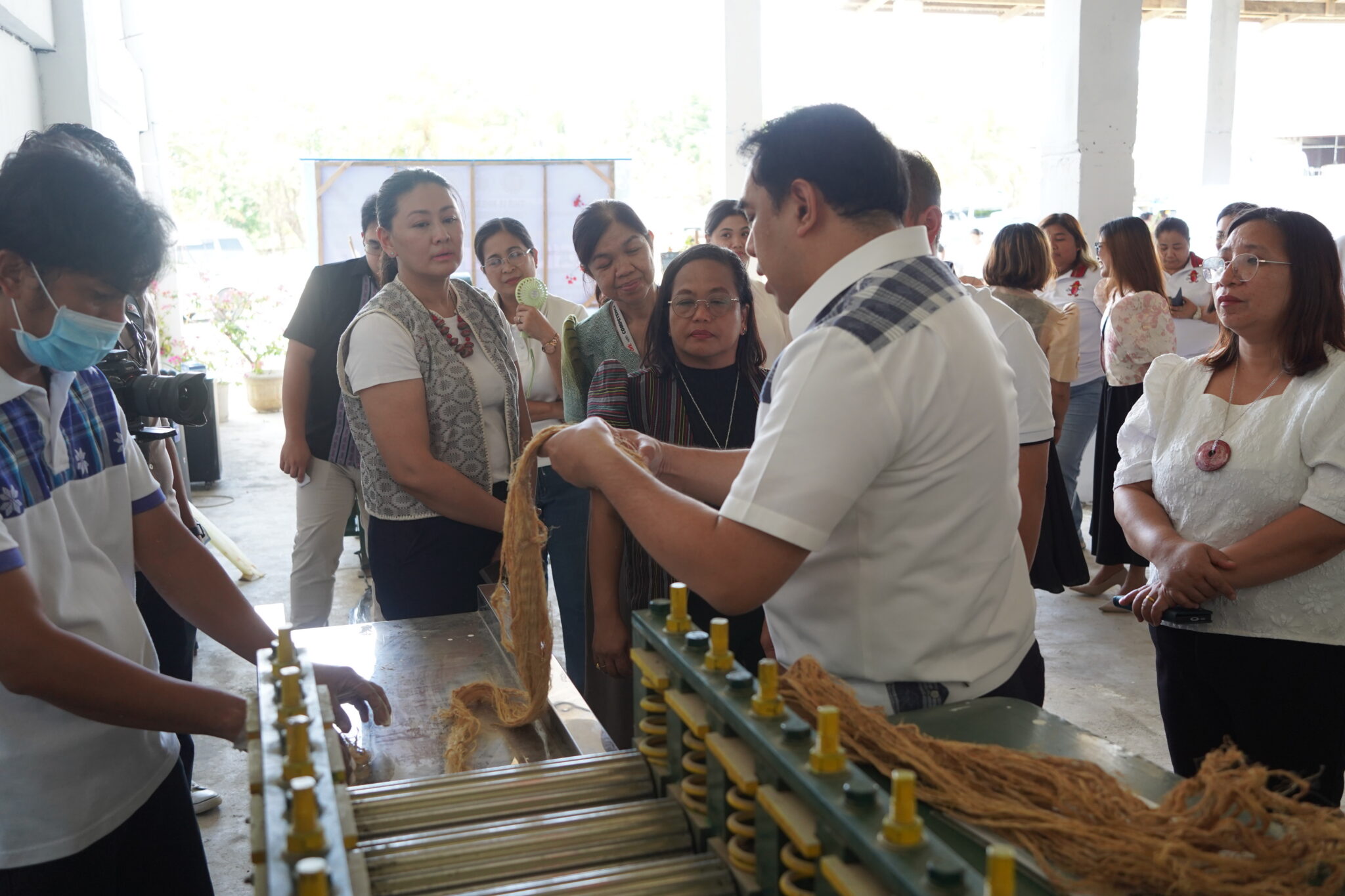
The Natural Textile Fiber Innovation Hub in District 2, Benito Soliven was formally inaugurated on May 18, 2026, with DOST Cagayan Valley regional director Virginia Bilgera and local executives presiding over the launch. The facility processes raw banana byproducts into natural textile fibers suitable for fabric production, tapping the abundance of banana farms in Benito Soliven and surrounding areas. DOST projects the hub will generate up to P9 million in annual income while creating direct livelihood opportunities for around 30 community members.
What the Hub Does and What It Produces
The facility is equipped with P6 million worth of DOST-provided machinery: a decorticating machine, mechanical softening machine, degumming equipment, and a hard fiber opener. Together, these machines transform raw banana byproducts into treated, spinnable fiber that can enter the textile value chain as yarn feedstock.
Daily production capacity ranges from 10 to 40 kilos of treated fiber, with an estimated market value of P2,613.88 per kilo. At the upper end of that daily production range, the facility's output justifies the P9 million annual income projection and establishes a commercially meaningful supply for buyers along the textile chain.
DOST-PTRI Director Dr. Julius Leaño Jr. confirmed that the processed banana fiber will be converted into yarn suitable for weaving and material testing to determine its strength and quality before being released for wider use. The science and technology-based processing pipeline ensures that what leaves the facility meets the quality standards required for textile applications, not just craft or niche uses.
The Cooperative Behind the Hub
The facility is managed by the Solivenian Agricultural Business Association, known as SABA, a local cooperative established in 2023 that has been working on banana byproduct livelihood products since its founding. Before the hub, SABA was already producing handmade paper and eco-friendly paper lunch boxes from banana stalks sourced from an estimated 1,200-hectare plantation area, despite working with limited machinery, high processing costs, and the absence of large-scale paper manufacturers in the country.
SABA President Aleli Globio noted that the cooperative has long understood the economic potential of agricultural waste but lacked the infrastructure to scale that understanding into a viable enterprise. The hub changes that equation directly.
Around 30 community members are expected to benefit from the facility: five technical operators for machine processing and approximately 25 workers involved in raw material collection, fiber preparation, logistics, and support services. As production scales, DOST Cagayan Valley director Bilgera said the hub will forge partnerships and encourage more farmers to engage in banana farming to ensure a steady supply of raw materials, creating upstream economic activity alongside the processing jobs the facility generates.
Where This Fits in Northern Luzon's Textile Infrastructure
The Benito Soliven hub does not stand alone. Leaño positioned it explicitly as a complement to Northern Luzon's growing textile value chain, alongside two other facilities already in operation: the Regional Yarn Production and Innovation Center in Isabela and the Bamboo Textile Fiber Innovation Hub at the Isabela State University in Ilagan City.
Read together with the recent launch of the RYPIC in Vintar, Ilocos Norte, which began processing cotton, bamboo, abaca, banana, pineapple, and jute into yarn, the picture that emerges is a deliberate, multi-node textile infrastructure being built across Northern Luzon. Each facility addresses a different raw material, a different processing stage, or a different geographic supply pocket, but they are designed to work together as an integrated regional value chain.
That integration is what separates this from a collection of isolated DOST projects. A banana fiber hub in Isabela that produces spinnable fiber, connected to a yarn production center that can process that fiber into usable thread, connected to weaving communities and textile-based MSMEs looking for locally sourced, naturally derived materials, is not just an agricultural livelihood programme. It is a supply chain. And supply chains, when they are complete, create the conditions for an industry.
"This will contribute to the expansion of the country's textile industry," Leaño said. The infrastructure being assembled across Northern Luzon is making that contribution concrete, one hub at a time.
Source: Inquirer Luzon | Article by Villamor Visaya Jr. | DOST Cagayan Valley | May 19, 2026
Are you a founder, innovator, or community builder in Northern Luzon?
We're always looking for compelling stories from the region's ecosystem. Whether you're launching a startup, running a program, or doing something interesting — we'd love to feature you.