News
Six Agencies Trained Over 40 Young Entrepreneurs in Digital and AI Skills Across Cordillera
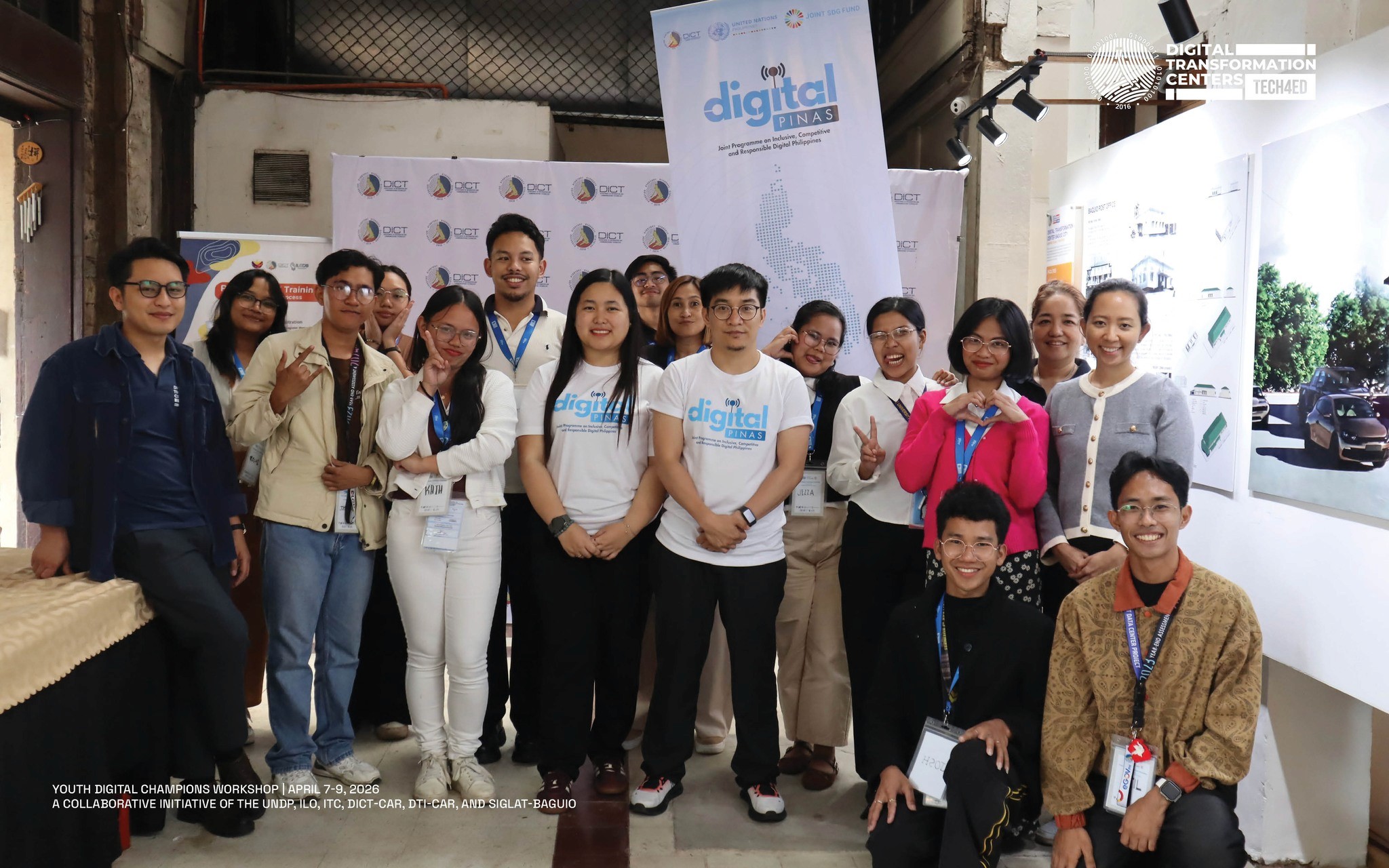
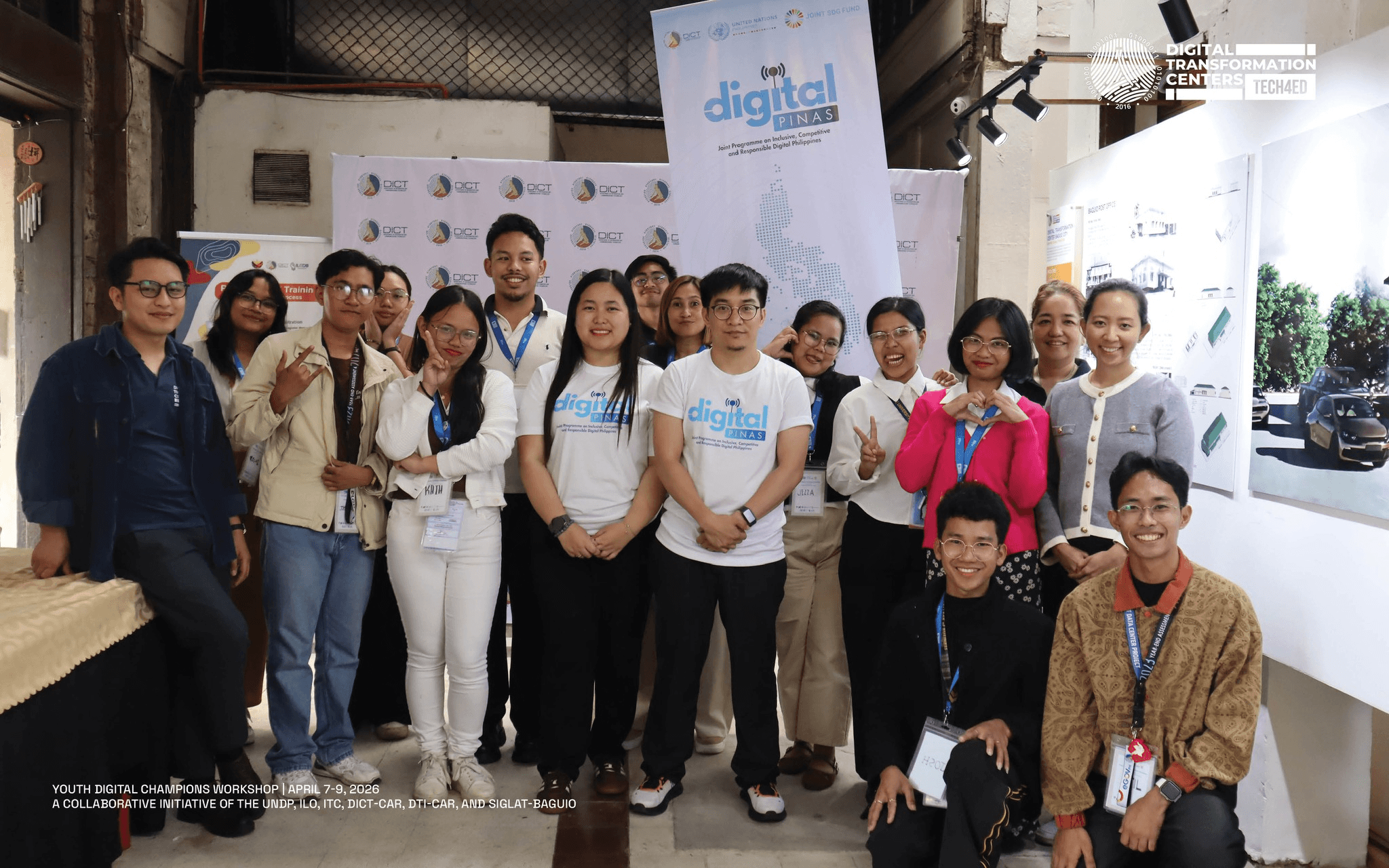
The Youth Digital Champions Workshop ran from April 7 to 9 at the Baguio Digital Transformation Center, Abra, Benguet, and Kalinga at the same time — part of a six-week Digital PINAS program teaching young entrepreneurs AI tools, digital marketing, and business digitalization skills.

Amianan Desk
Amianan Innovation Ventures
The United Nations Development Programme, International Labour Organization, International Trade Center, DICT-CAR, SIGLAT Baguio Youth Innovation Hub, and DTI-CAR jointly conducted the Youth Digital Champions Workshop from April 7 to 9, 2026, training over 40 young entrepreneurs across four simultaneous sites in the Cordillera Administrative Region. The venues — the Digital Transformation Center in Baguio City, La Paz Tech4ED Center in Abra, Kapangan Tech4ED Center in Benguet, and Balbalan Negosyo Center in Kalinga — ran the three-day program in parallel, bringing digital and AI skills training to communities that are rarely served by the same program at the same time.
The multi-site simultaneous format is the most significant design choice in this workshop. Running the same program concurrently in Baguio, Abra, Benguet, and Kalinga means the Cordillera's most geographically dispersed communities receive the same quality of training without requiring participants to travel to a central venue — a barrier that has historically limited who benefits from regional programs.
What the Workshop Covered
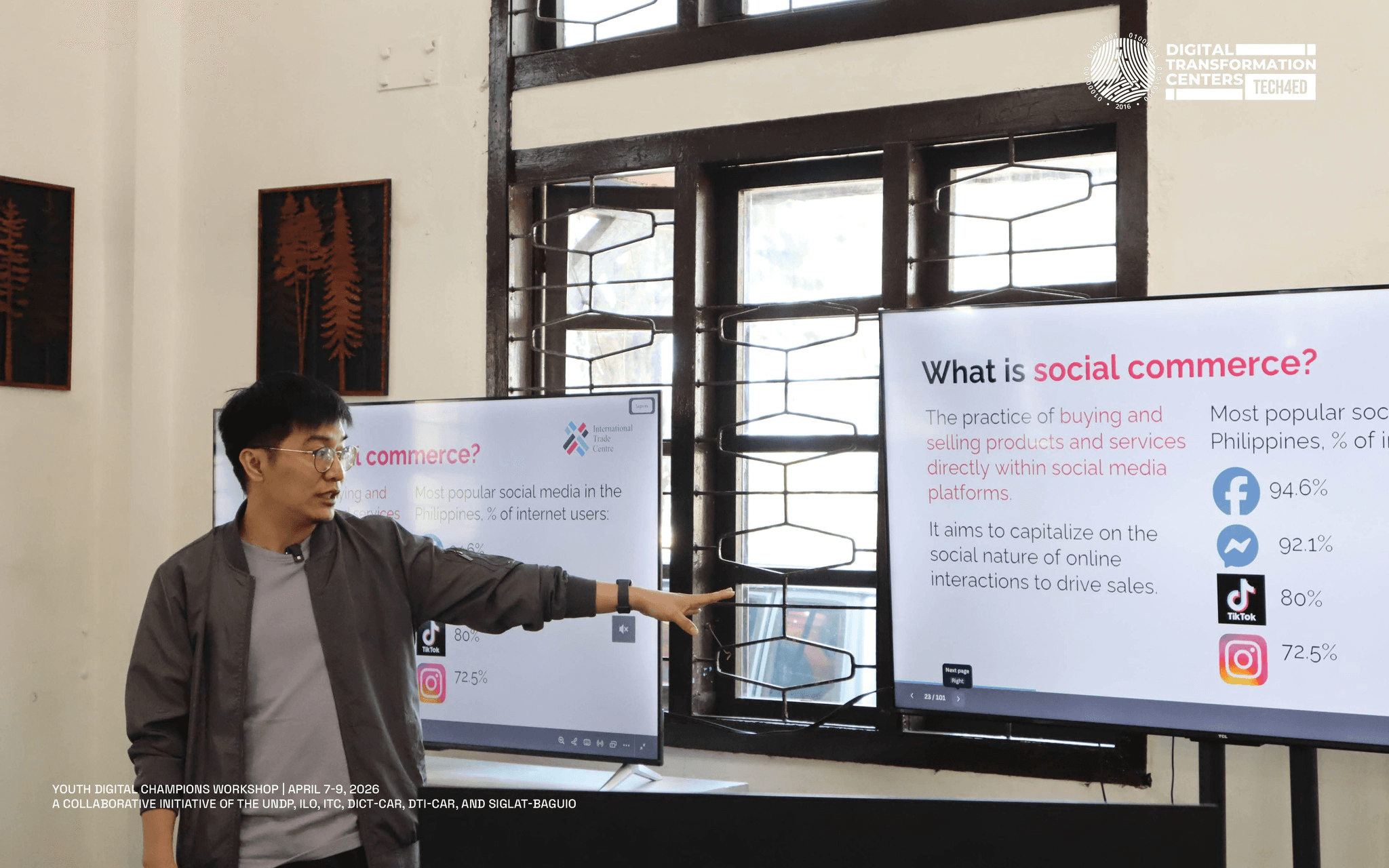
The three-day program was built around three core tracks. Entrepreneurship and communications gave participants the foundation for presenting their business ideas and reaching customers effectively online. Business digitalization skills covered practical tools for moving a small enterprise into digital channels — including online selling, digital marketing, and financial management. The basics of AI services introduced participants to artificial intelligence tools for business ideation, using structured analytical frameworks including SCAMPER, Porter's Five Forces, and SWOT analysis.
That last track is worth noting. Introducing AI not as a standalone technology but as a tool applied through established business frameworks — SCAMPER for idea generation, Porter's Five Forces for market analysis, SWOT for strategic planning — grounds the technology in business thinking rather than presenting it as an abstract capability. For young entrepreneurs who may be encountering formal business analysis tools for the first time alongside AI, that integration is more useful than treating the two as separate subjects.
The workshop is part of a broader six-week programme under Digital PINAS — the Joint Programme on Inclusive, Competitive and Responsible Digital Philippines — a multi-agency initiative aimed at strengthening digital inclusion and competitiveness among MSMEs across the country.
The Partnership Behind the Delivery
The institutional lineup behind this workshop is unusually broad. UNDP and ILO bring international development frameworks and funding. ITC brings trade competitiveness expertise. DICT-CAR provides the digital infrastructure and Tech4ED network that made the multi-site delivery possible. SIGLAT, the Baguio Youth Innovation Hub, contributes the local youth entrepreneurship ecosystem connections. DTI-CAR anchors the MSME development mandate.
Each institution fills a specific gap the others cannot address alone — and the result is a training that combines international standards with local delivery infrastructure in a way that purely national or purely international programs rarely achieve. The Tech4ED Centers in La Paz, Kapangan, and Balbalan are particularly important here. These government-operated digital access points in remote municipalities are exactly the kind of last-mile infrastructure that makes simultaneous multi-site delivery in a geographically complex region like the Cordillera logistically possible.
What This Means for Northern Luzon
The Cordillera's geography has always been one of the most significant barriers to equitable access to training and skills development. Programs that run in Baguio City reach Baguio participants. Programs that reach Kalinga and Abra at the same time as Baguio are structurally different — they signal that the design intent is genuinely inclusive, not just nominally so.
Over 40 young entrepreneurs trained across four provinces in three days is a meaningful number for a region where this kind of coordinated multi-site delivery is rare. But the more important number will be what percentage of participants apply what they learned — how many are selling online in the next month, how many are using AI tools in their business workflows, how many go on to the remaining weeks of the six-week Digital PINAS programme. The workshop is the beginning of a six-week arc, not the end of a program.
For young entrepreneurs in the Cordillera who missed this batch, the Digital PINAS programme is ongoing. DICT-CAR, SIGLAT, and DTI-CAR are the right points of contact for upcoming training opportunities under the programme. For LGUs and institutions in other Northern Luzon regions watching this model, the Tech4ED network and the SIGLAT partnership provide a replicable delivery infrastructure worth exploring for similar simultaneous multi-site training programs.