News
PNRI and DOST-CAR Brought a Nuclear Technology Forum to Baguio — and the Cordillera's Mining Communities Are the Main Audience
The Philippine Nuclear Research Institute, in partnership with DOST-CAR, held a knowledge transfer forum in Baguio City on March 26 covering nuclear applications in mining, agriculture, healthcare, and environmental remediation — a timely conversation for a region still navigating the legacy of extractive industry.

Amianan Desk
Amianan Innovation Ventures
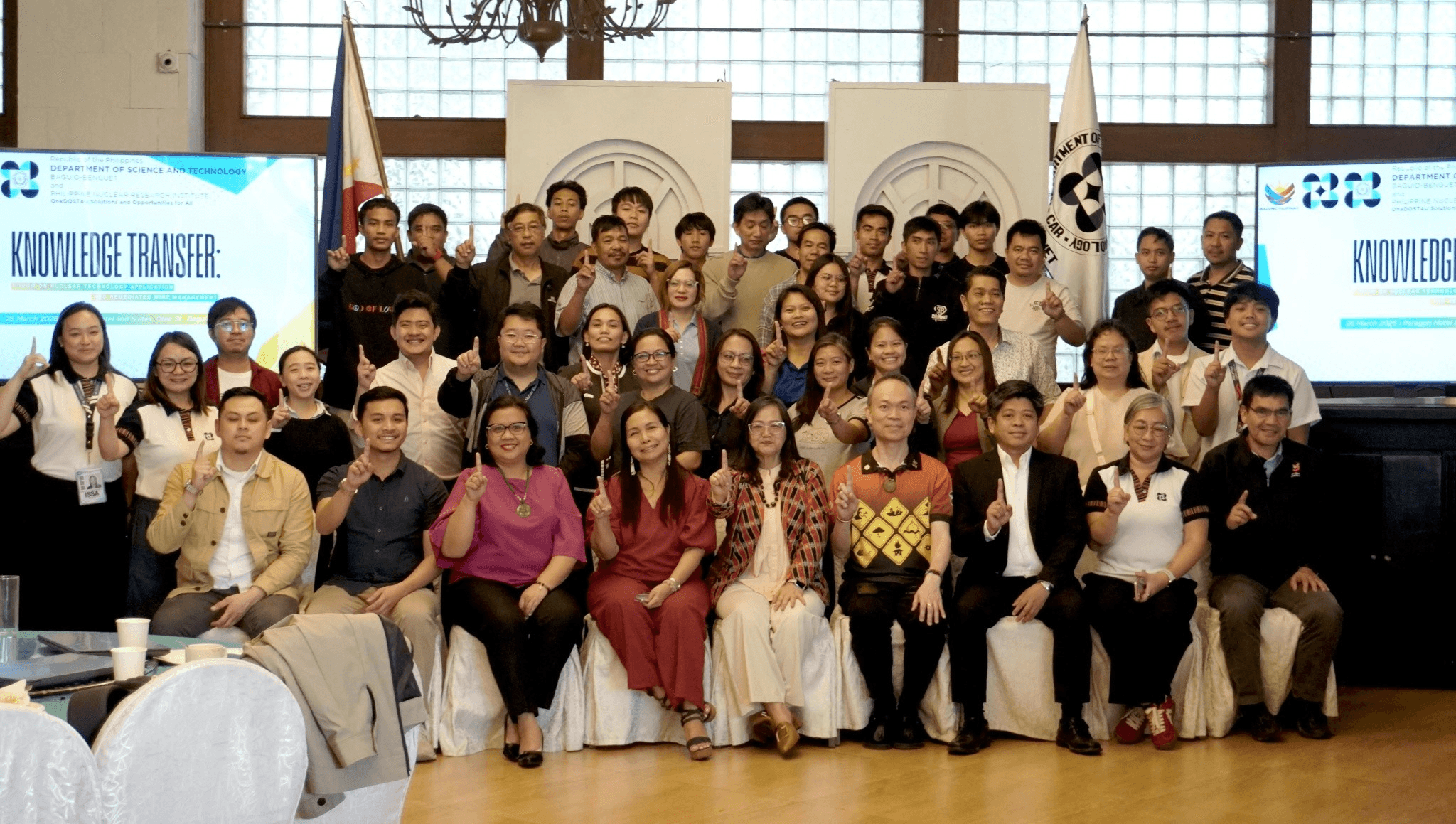
The Philippine Nuclear Research Institute, in partnership with the Department of Science and Technology Cordillera Administrative Region through its Benguet Provincial Science and Technology Office, conducted a Knowledge Transfer Forum on Nuclear Technology Applications and Remediated Mine Management in Baguio City on March 26, 2026. Representatives from local government units, academic institutions, and regional stakeholders attended the forum, which covered nuclear science fundamentals, environmental applications, mining remediation, and practical technologies already in use across agriculture, healthcare, and industry.
For a region with the Cordillera's history of mining activity and its ongoing challenge of balancing resource development with environmental protection, a forum like this is less academic exercise and more operational briefing.
What the Forum Covered
The presentations moved from foundational science to applied practice. The basics of the atom, radiation, and radioactivity gave participants a working vocabulary for the rest of the discussions. From there, the forum addressed nuclear applications in mining — including the use of nuclear technology for mine rehabilitation and environmental monitoring — and a presentation on turning rocks into carbon sinks, which touches directly on the Cordillera's post-mining landscape challenge.
Additional presentations covered practical nuclear applications already in use: plant growth promoters, radiation process hemostats, and plastic upcycling through PREX — PNRI's radiation processing technology. The forum also outlined opportunities available through PNRI in terms of business partnerships, training programs, and career pathways — opening the door for institutions and enterprises in the Cordillera to engage directly with the agency beyond the one-day event.
Why the Cordillera Is the Right Audience
DOST-CAR Regional Director Nancy Bantog framed the forum's relevance with precision. The Cordillera is a region rich in natural resources that faces the dual challenge of harnessing those resources for development while protecting the environment and the well-being of communities that live alongside them. That tension is not abstract in the Cordillera. It is visible in abandoned mine tailings, in river systems affected by decades of extraction, and in communities that have lived with the consequences of mining activity that preceded modern environmental standards.
Bantog noted that the forum aims to demystify nuclear science and highlight its practical applications — from environmental monitoring and mine rehabilitation to agriculture, healthcare, and industry — and to show how these technologies quietly but meaningfully improve lives, protect ecosystems, and support sustainable development. The framing is important: nuclear technology in this context is not about energy generation or weapons. It is about tools that already exist and are already working, applied to problems the Cordillera actually has.
What PNRI Offers Beyond the Forum
The Philippine Nuclear Research Institute is an underutilized resource for provinces and institutions dealing with environmental remediation, agricultural productivity challenges, and industrial processing needs. The PREX radiation processing technology, for instance, has applications in food irradiation, materials improvement, and waste management — areas directly relevant to the Cordillera's agriculture and tourism-linked food economy. The plant growth promoter technology has direct applications for the highland vegetable and strawberry sectors that define Benguet's agricultural identity.
The forum's explicit presentation of PNRI's business, training, and career opportunities signals that the agency is not just sharing information — it is looking for partners and practitioners in the region who can apply its technologies to local problems. For LGUs managing post-mining territories, universities with environmental science programs, and agribusinesses looking for productivity tools, that invitation is worth following up on.
What This Means for Northern Luzon
The Cordillera's relationship with mining is long, complex, and unresolved in many communities. Approaches to mine rehabilitation that are grounded in scientific rigor — rather than political negotiation alone — are exactly what the region needs more of. PNRI's nuclear applications for environmental monitoring and mine remediation offer tools that can support that work with data and measurable outcomes. Getting those tools in front of LGU officials, academics, and regional stakeholders in a single forum in Baguio City is a practical first step toward the kind of applied science partnerships that could make a real difference in affected communities.
LGUs, academic institutions, and enterprises in the Cordillera interested in PNRI's programs, training opportunities, and technology applications can follow up directly with the Benguet Provincial Science and Technology Office or DOST-CAR. The forum's presentations are a starting point — the real value comes from the partnerships built after the event ends.
Source: DOST-CAR / Philippine Information Agency Cordillera