News
Cagayan State University Is Building Electric Vehicles for the Philippines — and the Roads of Northern Luzon Could Be First to Show What That Looks Like
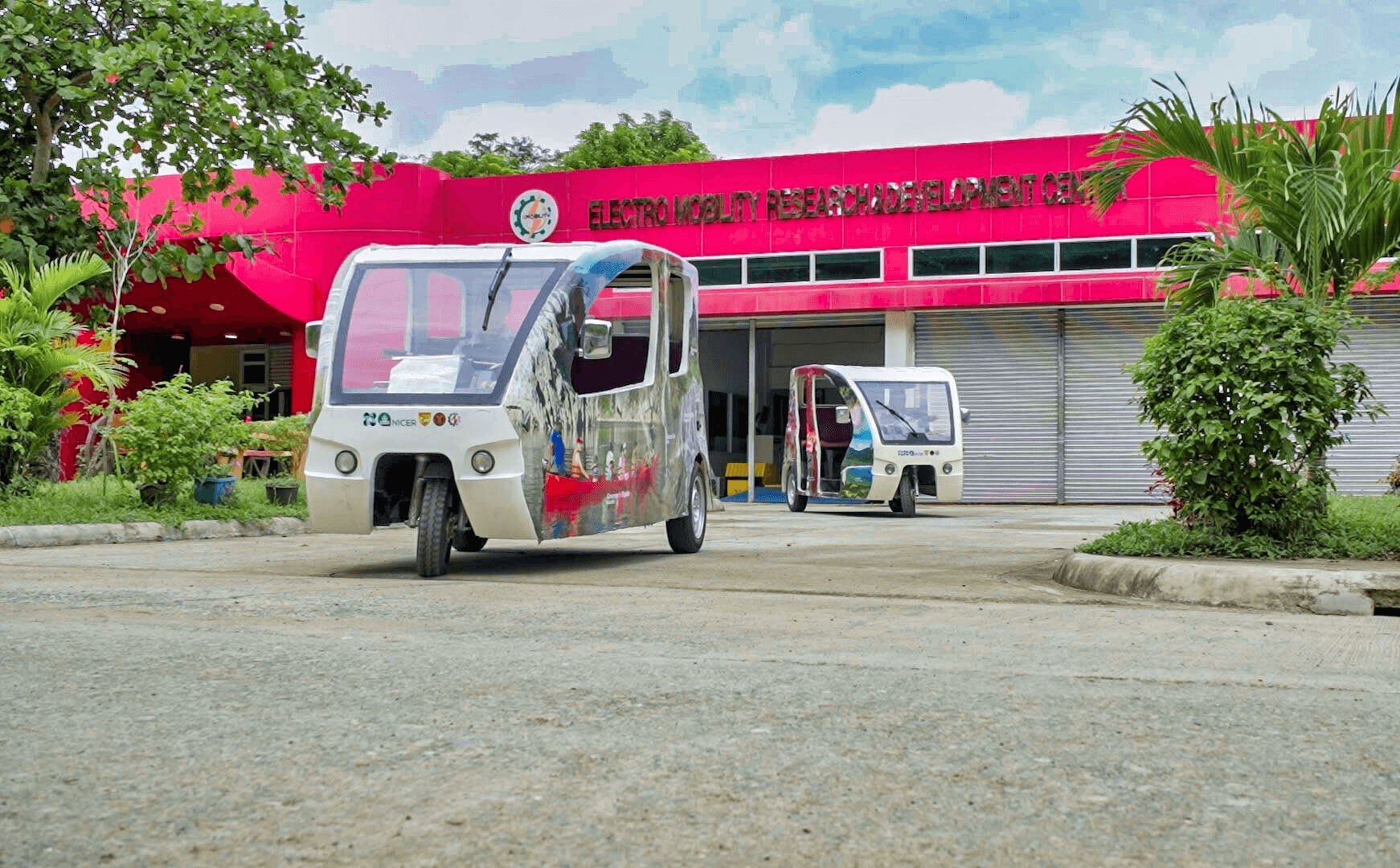
The Electromobility Research and Development Center at CSU's Carig Campus has been developing electric tricycles, buses, and utility vehicles since 2021 — and through technology licensing agreements, it is now turning research into locally manufactured, community-ready transportation.

Amianan Desk
Amianan Innovation Ventures
The Electromobility Research and Development Center, established in 2021 at Cagayan State University's Carig Campus through the DOST NICER program, has spent four years building something the Philippines has rarely produced at this scale: a full lineup of electric vehicles designed, developed, and licensed for local manufacturing — from electric tricycles to converted public utility buses. The center operates under the framework of Republic Act 11697, the Electric Vehicle Industry Development Act, and aligns with the government's Comprehensive Roadmap for the Electric Vehicle Industry.
EMRDC did not start with a concept paper. It started by building things.
What EMRDC Has Built
The center's product development trajectory reflects a deliberate progression from the most common form of community transport in the Philippines toward larger and more complex vehicles.
The Converted Electric Tricycle, or C-Trike, is the entry point. It takes a conventional tricycle and converts it to electric power — lowering operating costs for drivers, reducing emissions, and extending vehicle life without requiring drivers or operators to purchase an entirely new unit. For tricycle drivers whose daily income is directly tied to fuel costs, the conversion model is financially significant. Lower fuel expenditure means higher take-home pay from the same number of trips.
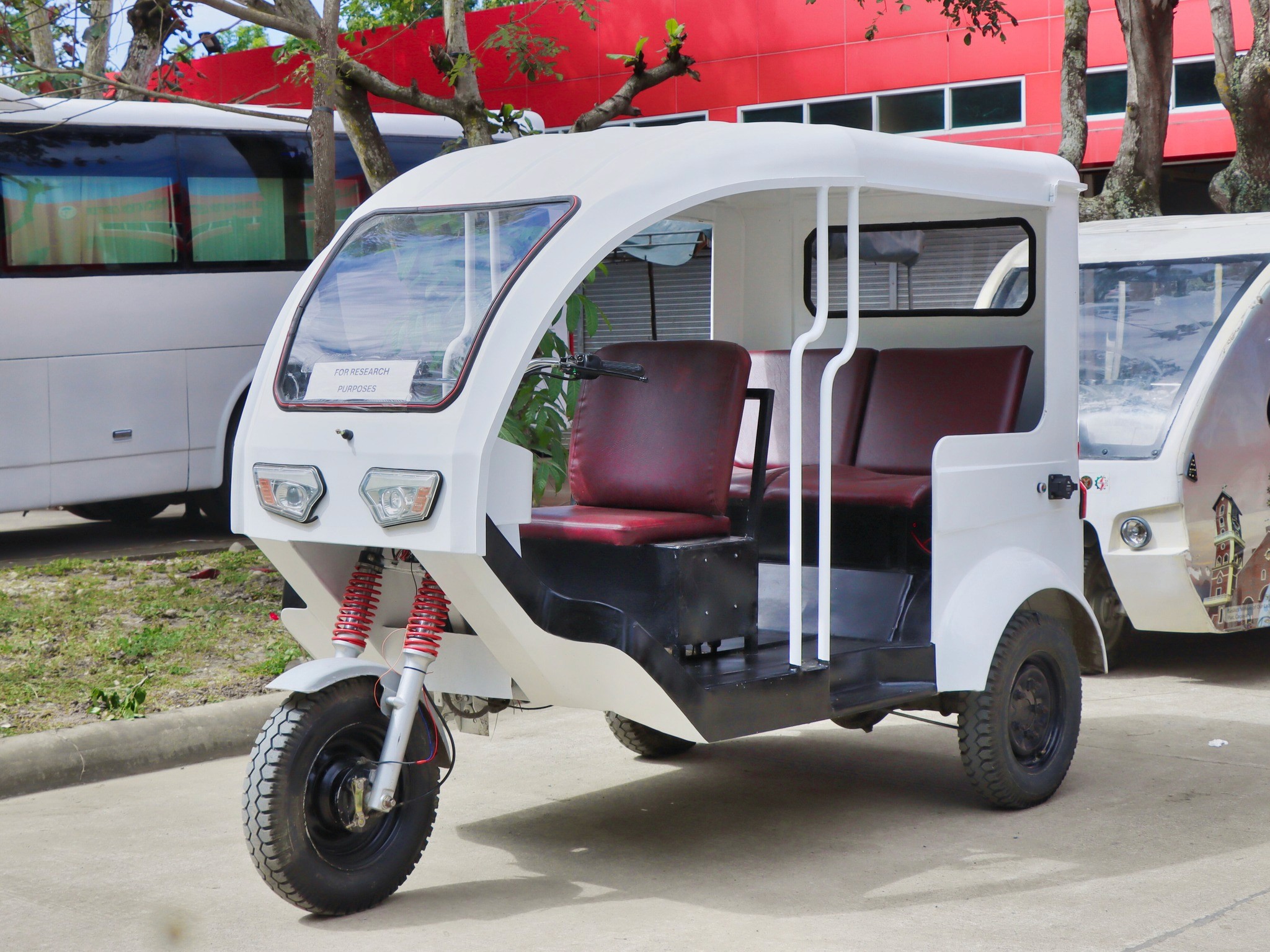
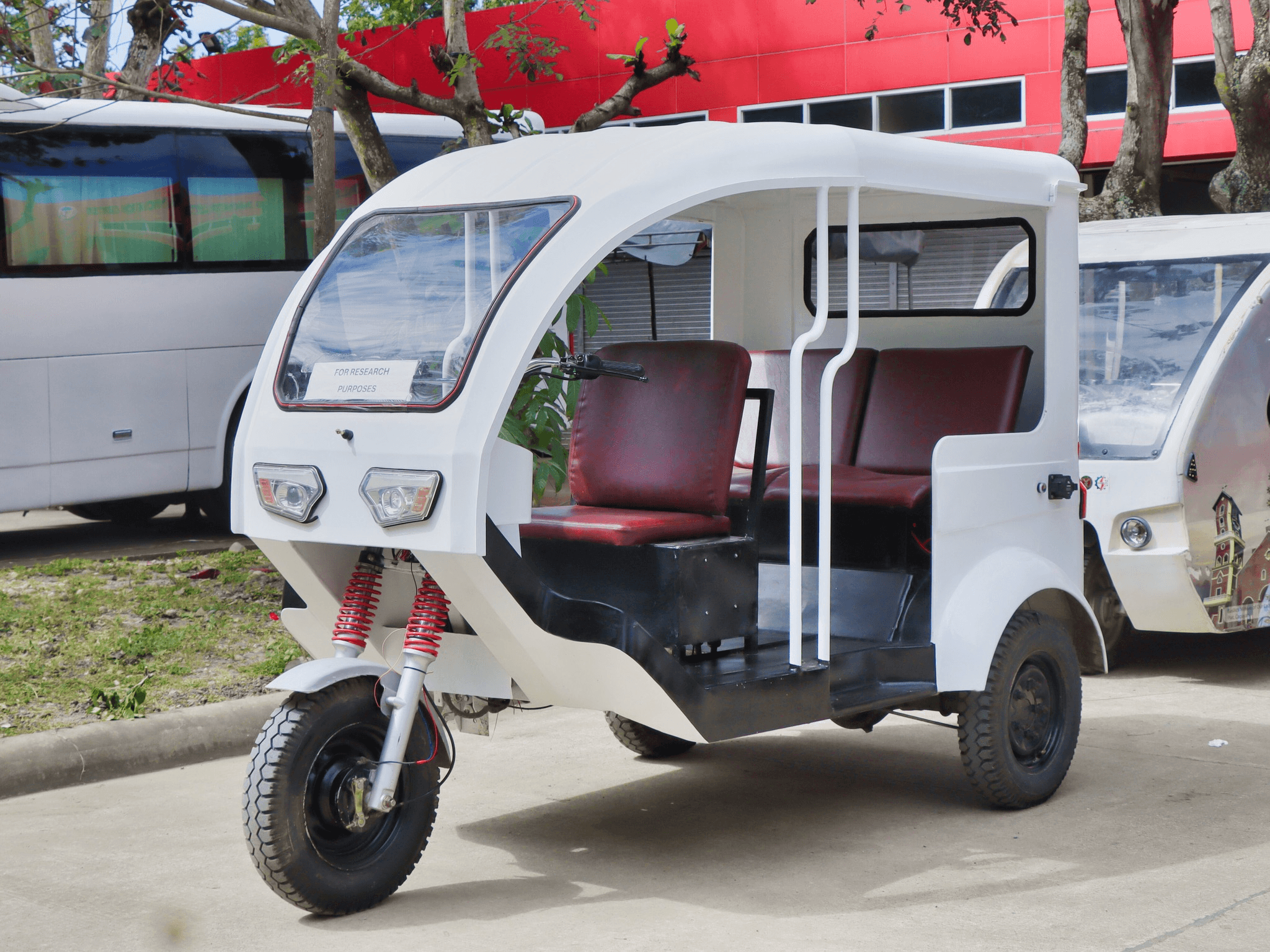
The 6+1 Passenger Electric Tricycle is the next generation of that concept — a purpose-built electric tricycle with a 5kW electric motor, a 72V 100Ah LiFePO4 battery, and a driving range of up to 70 kilometers per charge. The range is the critical specification. A tricycle that can run a full working day on a single charge removes the operational anxiety that has slowed electric vehicle adoption among drivers who cannot afford downtime.
The eBuggy is a compact, lightweight electric utility vehicle built for short-distance transport and cargo applications — a practical tool for farm-to-market logistics and last-mile delivery in communities where conventional vehicles are either too large or too expensive to operate.
The Converted Electric Public Utility Bus is the center's most ambitious product: a large-scale electrification solution for mass transit that converts conventional buses into electric-powered units with 40-plus passenger capacity. For provincial routes in Cagayan Valley and across Northern Luzon, an electric bus that can operate at lower cost per kilometer than a diesel unit represents a meaningful shift in how rural mass transit is economically structured.
From Prototype to Production
The mechanism that separates EMRDC from a typical university research center is the Technology Licensing Agreement — a formal arrangement that allows local manufacturers to produce EMRDC-developed vehicles commercially. TLAs have already been executed for eTrikes and converted electric vehicles, meaning the technology is no longer confined to the laboratory. Local businesses can manufacture, sell, and service these vehicles under license.
That licensing model is the right approach for a country with a dispersed geography and a manufacturing sector concentrated in a few regions. Rather than centralizing production, EMRDC's TLA framework creates the conditions for distributed manufacturing — where local enterprises in different provinces can produce vehicles suited to their specific terrain, transport patterns, and passenger needs.
The center has also built partnerships with LGUs, provincial governments, MSMEs, state universities and colleges, and Tricycle Operators and Drivers Associations across the country. Those relationships are what turn a research output into a deployable community solution. A vehicle that a TODA understands, endorses, and helps pilot is a vehicle that gets adopted. One that arrives from a distant research center without community buy-in does not.
What This Means for Northern Luzon
Cagayan Valley is EMRDC's home region, which means Northern Luzon is both the most natural testing ground and the most likely first beneficiary of the center's production-ready vehicles. Tricycles are the primary mode of public transport in most Cagayan Valley municipalities. Electric conversion of even a fraction of that fleet would produce measurable reductions in fuel costs for drivers, air pollution in town centers, and noise in residential areas — outcomes that benefit communities regardless of their interest in electric vehicles as a technology.
The global electric vehicle market was valued at approximately USD 388 billion in 2023 and is projected to grow at a compound annual growth rate of over 18% through 2030, driven by falling battery costs, tightening emissions regulations, and rising fuel prices. The Philippines, with its dependence on imported fossil fuels and its high density of tricycles and jeepneys, has structural reasons to accelerate EV adoption faster than many comparable economies. EMRDC at CSU is the most developed domestic research infrastructure for that transition in Northern Luzon.
For LGUs in Cagayan Valley and across Northern Luzon looking to modernize their public transport fleets, the C-Trike conversion program and the 6+1 eTrike are the most immediately deployable options. For MSMEs interested in manufacturing licensing opportunities, EMRDC's Technology Licensing Agreement framework is the starting point. For provincial governments developing electric vehicle transition plans aligned with national CREVI targets, CSU's Carig Campus is the regional resource worth engaging first.
Source: Cagayan State University