
Pangasinan State University TBI Explores Thailand’s University Innovation Ecosystem Through Study Visit
A delegation from the DOST–PSU Aligwas Technology Business Incubator visited Kasetsart University and engaged with the Thai Business Incubation and Science Park Association to exchange practices on technology incubation, research commercialization, startup support, and university-led innovation ecosystems.
 Featured
Amianan Ventures
Building International Connections for University Innovation
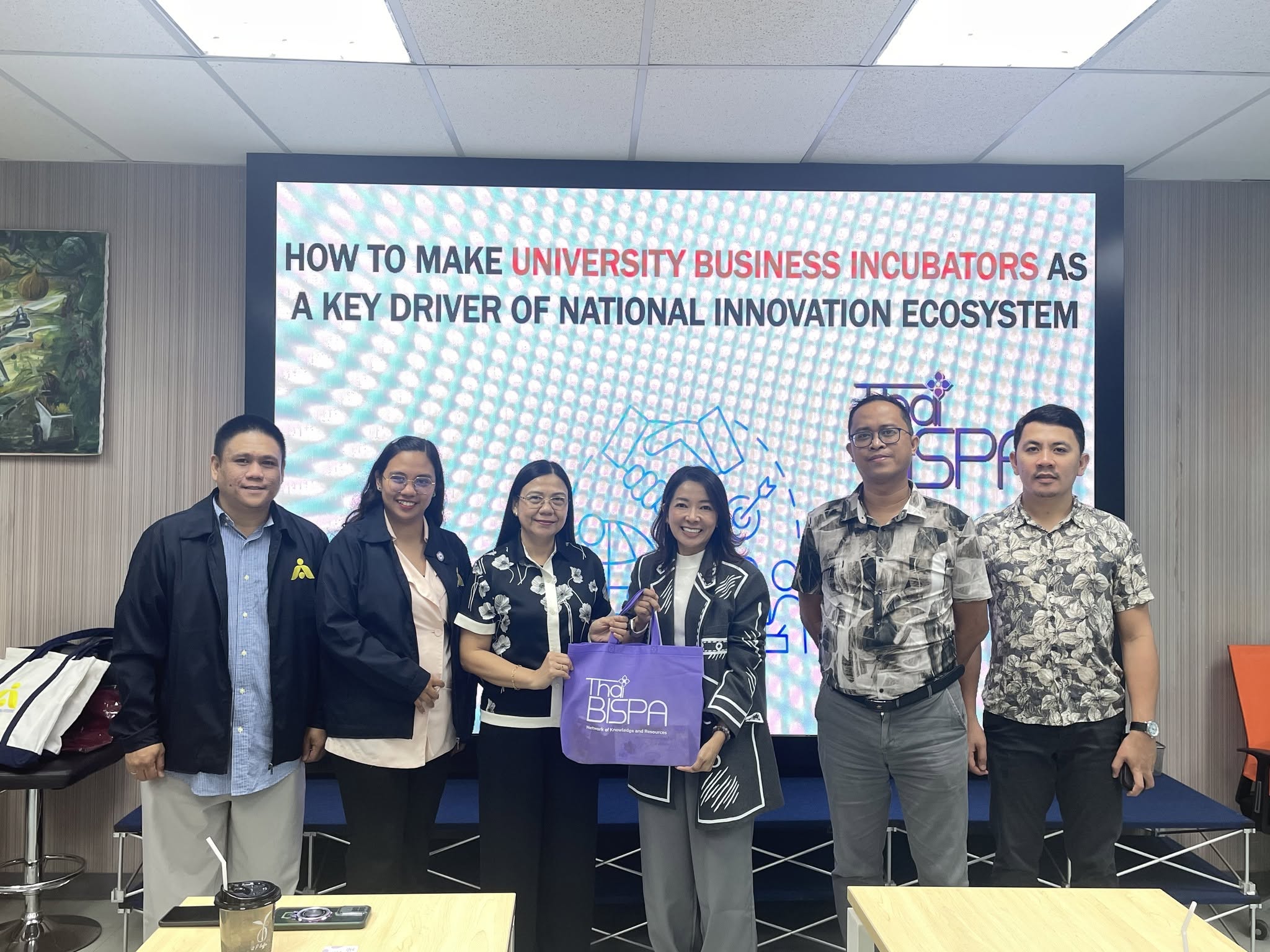
A delegation from the DOST–PSU Aligwas Technology Business Incubator (TBI) of Pangasinan State University participated in a study visit and knowledge exchange in Thailand on July 22 and 23, 2026.
The activities brought together Philippine and Thai innovation ecosystem stakeholders to exchange experiences on technology incubation, research utilization, entrepreneurship support, technology transfer, and the role of universities in developing innovation ecosystems.
The first engagement was held at the Office of Innovation and Social Engagement (KU InSE), Kasetsart University, Bang Khen, on July 22.
The Philippine delegation was welcomed by Associate Professor Dr. Srijitra Charoenlaporn, Deputy Rector for Innovation and Academic Services of Kasetsart University.
The event was also attended by Assistant Professor Dr. Busarin Jongcharoenan, Deputy Rector for Communication, Kasetsart University Faculty of Agriculture, and Assistant Professor Dr. Suthat Thongchitphakdi, Deputy Rector for Special Affairs and Networking.
Learning From Kasetsart University’s Innovation Ecosystem
The study visit focused on exchanging knowledge and practices related to the management of university innovation ecosystems.
Key areas of discussion included:
Technology transfer strategies
Intellectual property management
Startup incubation and acceleration
Support for research outcomes
Entrepreneur development
Collaboration between universities, industries, and other sectors
The participating organizations also exchanged experiences on the operational models of business incubation centers and the challenges involved in supporting research outcomes toward commercial applications.
The discussions provided an opportunity for both sides to examine how university innovation ecosystems can better connect research, entrepreneurship, industry, and broader economic development.

From Research to Commercial Application
One of the central themes of the exchange was how universities can help move research results beyond the academic environment and toward practical applications.
Research commercialization requires more than producing a technology.
It also requires mechanisms for identifying opportunities, protecting intellectual property, validating technologies, developing products, supporting entrepreneurs, and connecting innovations with potential markets.
Technology business incubators can play an important role in this process by providing structured support to researchers and aspiring entrepreneurs as they develop their ideas and explore commercialization opportunities.
Exploring Kasetsart University’s Innovation Infrastructure
The study visit also included visits to several innovation units and facilities within Kasetsart University.
The delegation visited the prototype factory, IFRPD product distribution room, True Lab, The Premium @KU, and the Kasetsart University Library Center.
These visits allowed the participants to explore infrastructure and facilities related to product development, research utilization, knowledge creation, and connections between academic outputs and business and social sectors.
For technology incubators, exposure to different institutional models can provide useful reference points when thinking about how facilities, programs, and support services can work together.
Connecting Philippine and Thai Innovation Ecosystems
The exchange continued on July 23, when the Philippine study visit team was welcomed by the Thai Business Incubation and Science Park Association (Thai-BISPA) at the National Innovation Building of the National Innovation Agency Thailand.
Ms. Watcharin Witthayaveerasak, Director of the Thai Business Incubation and Science Park Association, together with the Thai-BISPA team, hosted the session.
The discussion focused on the Thai business incubation and science park ecosystem, as well as the role of universities in supporting business incubation and innovation management.
The engagement provided another opportunity to compare approaches to innovation ecosystem development and university-based entrepreneurship support.
Why International Knowledge Exchange Matters
Technology business incubation is increasingly becoming a collaborative field.
Universities and innovation institutions do not need to build their systems entirely from scratch. Learning from other ecosystems can help institutions identify practices that may be relevant to their own local context.
For Philippine universities, international exchanges can provide exposure to different approaches in areas such as:
Research → Technology Transfer → Incubation → Validation → Commercialization
However, international best practices are not automatically transferable.
The more important task is identifying which practices can be adapted to local realities, institutional capacities, industries, and markets.
What This Means for Northern Luzon
The study visit is particularly relevant to the development of the Northern Luzon innovation ecosystem.
Universities across the region are increasingly involved in research, technology transfer, incubation, entrepreneurship, and industry collaboration.
Pangasinan State University’s engagement with institutions and organizations in Thailand creates an opportunity to expand the network of knowledge available to the region’s innovation practitioners.
International relationships can also provide potential pathways for future collaboration, knowledge exchange, and exposure to different models of university-industry engagement.
For Northern Luzon, the opportunity is not simply to replicate what other innovation ecosystems are doing.
It is to learn from them and ask:
What can work here?
The Bigger Opportunity for University Incubators
Technology business incubators can become important bridges between universities and the economy.
They can help researchers understand market opportunities, support entrepreneurs as they develop ventures, connect startups with mentors and partners, and create pathways for technologies to move toward adoption.
But their effectiveness depends on the ecosystem around them.
Universities need researchers and innovators.
Industry needs solutions.
Government can provide programs and enabling support.
Entrepreneurs can turn opportunities into ventures.
Incubators can help connect these actors.
International knowledge exchange can strengthen this capability by exposing incubator teams to different models, tools, and approaches.
Building Networks Beyond Borders
The two-day exchange between the DOST–PSU Aligwas TBI, Kasetsart University, and Thai-BISPA highlights the growing importance of international connections in innovation development.
The participating institutions explored common challenges around incubation, technology transfer, research commercialization, and entrepreneurship support.
For the Philippine innovation ecosystem, these relationships can help broaden the perspectives of universities and technology business incubators while creating opportunities to learn from established innovation networks.
For Northern Luzon, stronger connections between local institutions and international innovation ecosystems can contribute to a more connected and outward-looking regional ecosystem.
The opportunity is to take what is learned abroad and translate it into programs, partnerships, and practices that make sense locally.
Innovation ecosystems become stronger when they learn from one another. The real value of an international study visit is not simply seeing how another ecosystem works, but bringing relevant lessons home and adapting them to local needs.
Source
Market Context
For Northern Luzon, strengthening university-based technology incubation can help create stronger pathways between research, innovation, entrepreneurship, and industry.
International exchanges such as this can provide useful reference points for improving incubation models and building international networks. However, the most valuable lessons are those that can be adapted to the Philippine context and translated into practical support for researchers, student innovators, startups, and local industries.
Are you a founder, innovator, or community builder in Northern Luzon?
We're always looking for compelling stories from the region's ecosystem. Whether you're launching a startup, running a program, or doing something interesting — we'd love to feature you.