
One Pangasinan Farm Cut Its Monthly Electricity Bill From ₱135,000 to ₱13,500. Eight Others Are Telling the Same Story.
DOST Ilocos Region's SETUP programme has helped nine Pangasinan MSMEs — from poultry farms to a printing press — slash energy costs by as much as 90% through solar technology adoption. The numbers are no longer a pilot result. They are a proven model.
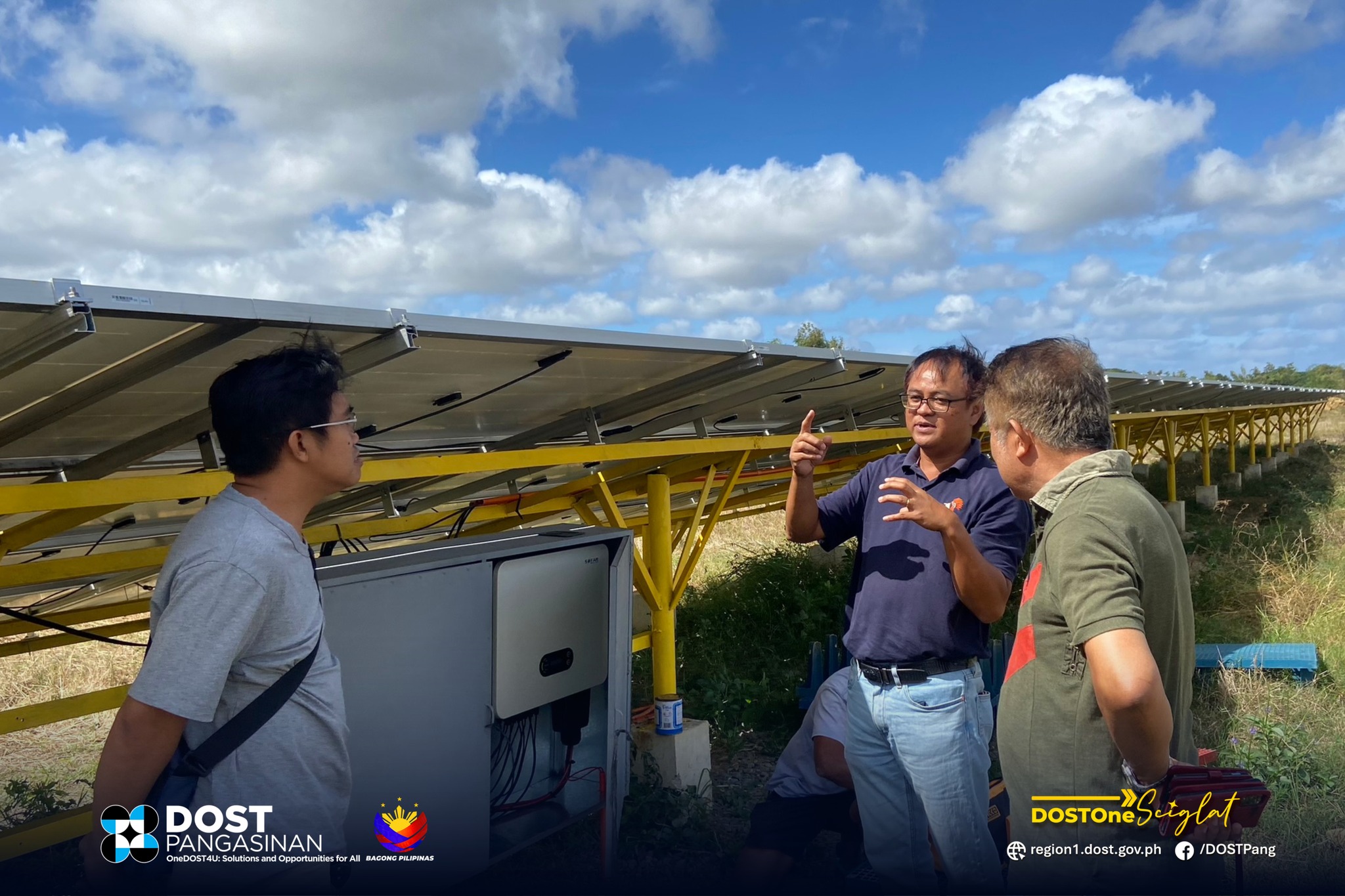
 Featured
Amianan Ventures
Rillera Farm used to pay ₱135,000 a month in electricity. After installing a solar power system through DOST Ilocos Region's Small Enterprise Technology Upgrading Program (SETUP), that bill dropped to ₱13,500. A 90% reduction. Not a projection — a result, already running.
That single data point is the clearest argument for what DOST Ilocos Region has been building quietly across Pangasinan: a renewable energy intervention programme for MSMEs that is producing outcomes most businesses in the province would not have believed possible three years ago.
What Nine Businesses Have Already Proven
To date, nine SETUP-assisted firms across Pangasinan have integrated solar power systems into their operations. The results span agriculture, aquaculture, and manufacturing — and across every sector, the pattern holds: lower energy costs, improved efficiency, increased profitability.
In the poultry sector alone:
Rillera Farm reduced monthly electricity expenses by 90% — from ₱135,000 to ₱13,500
R&E Poultry Farm achieved a 43.07% reduction in energy use
Gerrilaide Farm cut energy costs by 78.3%, directly contributing to a 15% increase in annual gross income
Moon Light Farm reported a 35% decrease in electricity consumption and a 15% increase in gross sales following full solar installation
JPD Poultry Farm (formerly Tabrilla Poultry Farm) and Sunny View Farm, both early adopters since 2016 and 2017 respectively, continue to record up to 50% efficiency gains per production cycle — affirming that solar integration delivers not just short-term savings but sustained, long-term returns
In the agriculture sector, DL Hatchery and Balut Industry installed a 15 kW solar panel system and reduced annual electricity consumption by 53.2%. In aquaculture, JL Hatchery Farm used SETUP support to address the high energy demands of prawn fry production — where stable, temperature-controlled environments are critical especially during nighttime operations — and achieved significant reductions in electricity consumption while maintaining the conditions their product requires.
A Printing Press That Now Gets Bills Close to Zero
Perhaps the most striking example outside agriculture is Unicolor Printing Press, where solar adoption produced a 60.82% reduction in annual electricity consumption.
Before the intervention, the business was paying approximately ₱60,000 per month in power costs. "Now, our lowest bills range from zero to ₱2,000," said owner Ms. Teodora M. Dar. "We are very thankful for these interventions, which have helped us reduce production costs and operate without worrying about power interruptions."
That last phrase is worth holding onto — "without worrying about power interruptions." For MSMEs operating in provinces where grid reliability is not guaranteed, solar is not just a cost-reduction tool. It is a business continuity investment. The ability to operate through brownouts and voltage fluctuations without disruption is a competitive advantage that does not show up in the energy savings percentage but is felt in every production cycle.
What DOST's Role Actually Looks Like
DOST Pangasinan Director Arnold C. Santos was clear that the programme's value extends beyond the initial technology installation. "Our goal is to ensure that these innovations translate into long-term resilience for our MSMEs. Through regular monitoring of energy outputs and operational efficiency, we ensure that these interventions continue to perform at peak capacity, helping our local entrepreneurs remain competitive."
That monitoring function is what separates a technology provision programme from a genuine enterprise development intervention. Equipment installed and left unmonitored degrades. Efficiency gains erode. The SETUP model — which includes post-installation monitoring and support — is designed to make the gains durable, not just demonstrable at launch.
What It Means for Northern Luzon's MSMEs
Pangasinan is one of the most commercially active provinces in Northern Luzon, with a dense concentration of agri-food enterprises, light manufacturing, and service businesses that run on continuous power. For these businesses, energy cost is not a footnote in the income statement — it is often one of the two or three largest operating expenses they carry.
A programme that demonstrably reduces that cost by 35% to 90%, improves operational stability, and increases gross income is not a subsidy. It is infrastructure. And the nine businesses in Pangasinan that have already proven it are the evidence that every MSME owner in the region should see before deciding whether solar is a viable option for their operations.
DOST Ilocos Region has signaled its intention to expand access to renewable energy solutions across the region. For founders and business owners in Ilocos and the broader Northern Luzon corridor wondering whether the investment pencils out — the answer, from nine businesses across multiple sectors, is already on record.
Are you a founder, innovator, or community builder in Northern Luzon?
We're always looking for compelling stories from the region's ecosystem. Whether you're launching a startup, running a program, or doing something interesting — we'd love to feature you.