
From Inabel to Innovation: La Union Builds a Creative Economy Around Culture, Entrepreneurship, and New Ideas
La Union is positioning culture and creativity as more than sources of identity. Through Laing La Union 2026 and the province’s broader creative-industry initiatives, traditional skills such as Bangar’s inabel weaving are being connected with entrepreneurship, innovation, market opportunities, and sustainable livelihoods.
 Featured
Amianan Ventures
When Heritage Becomes an Innovation Asset
Innovation does not always begin with new technology.
Sometimes, it begins with something a community has had for generations.
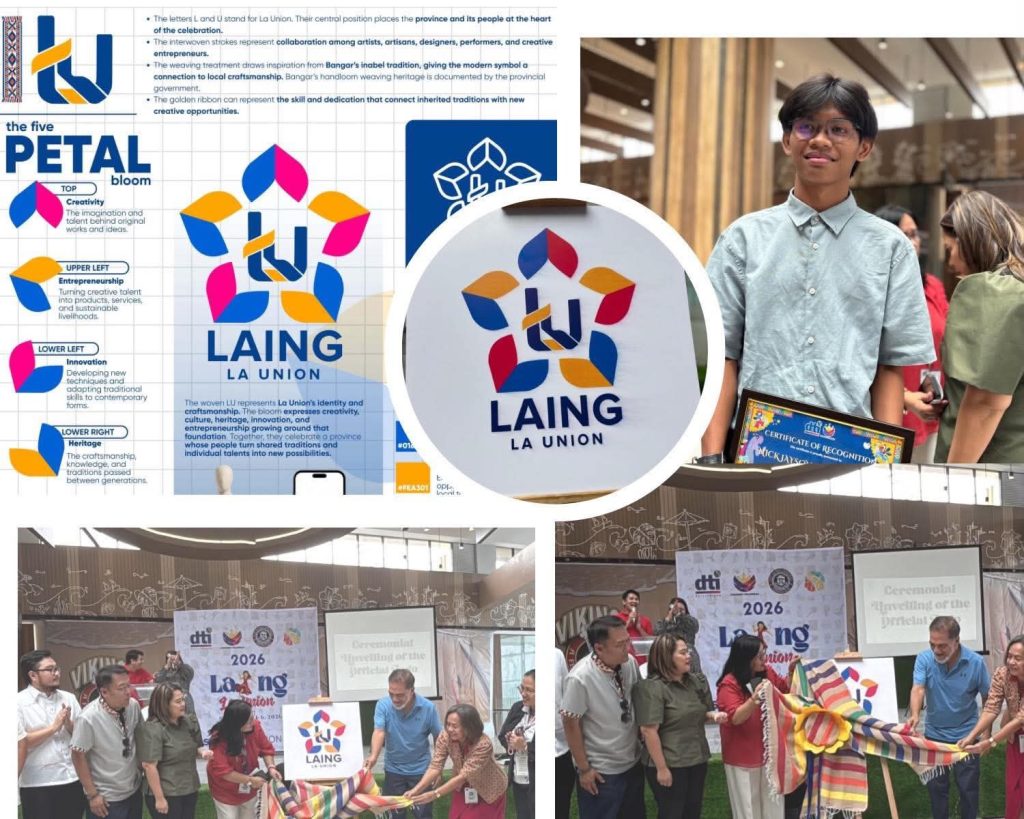
In La Union, inabel weaving in Bangar is one example. The traditional craft has become part of the province’s creative identity through the logo of Laing La Union 2026, the celebration of Philippine Creative Industries Month.
The logo features a woven “LU,” connecting La Union’s identity with its weaving tradition. Five surrounding elements represent creativity, entrepreneurship, innovation, heritage, and culture.
Beyond its role as a visual identity, the concept reflects a larger opportunity: using local culture and creative capabilities as foundations for new economic activity.
From Traditional Craft to Creative Enterprise
Cultural traditions can become valuable economic assets when connected with contemporary markets.
Inabel, for example, can inspire new designs, fashion products, home products, creative merchandise, and other applications while retaining its connection to local heritage.
The same principle can apply across other creative sectors.
Local stories can become digital content.
Traditional designs can inspire contemporary products.
Creative skills can become professional services.
Cultural experiences can support tourism.
Technology can help creative enterprises reach customers beyond their communities.
This creates a potential pathway:
Heritage → Creative Idea → Product or Service → Market → Enterprise
The challenge is finding ways to create commercial opportunities without losing the cultural meaning behind the work.
Building a Creative Economy, Not Just a Celebration
According to DTI-La Union Acting Provincial Director Victoria Ordoño, the province has a wider pool of stories, imagination, culture, and talent that can contribute to local development.
This direction is supported by Republic Act No. 11904, or the Philippine Creative Industries Development Act, which provides the national policy framework for developing the country’s creative industries.
The DTI’s Malikhaing Pinoy Program also supports creative practitioners across areas including visual arts, performing arts, publishing, design, media, and digital interactive media.
For La Union, these efforts create an opportunity to move from simply showcasing creative talent toward building enterprises around it.
That requires more than promotion.
Creative practitioners also need skills development, product development, market access, business support, and opportunities to connect with customers and partners.
Where Startups Can Find Opportunity
The creative economy also presents opportunities for startups.
A startup can help solve problems faced by artists, artisans, creative entrepreneurs, and cultural enterprises.
Potential opportunities include:
Digital marketplaces for local creative products
E-commerce tools for artisans
Branding and design services
Digital storytelling and cultural content
Creative tourism experiences
Platforms connecting creative professionals with customers
Technology for managing creative enterprises
Digital preservation of cultural knowledge and products
This illustrates an important point: a startup does not always need to invent something completely new.
Innovation can also mean creating a better way for existing talent, products, and communities to reach markets.
The Importance of Product Development
Turning culture into a viable business requires more than having a compelling story.
The product still needs to solve a customer need.
It needs appropriate pricing.
It needs quality and consistency.
It needs effective branding and distribution.
It may also need to evolve based on customer feedback.
This is where entrepreneurship becomes important.
Creative practitioners can combine their cultural knowledge with design, business, digital marketing, and product-development capabilities.
The result is not simply a cultural product—it can become a competitive creative enterprise.
What This Means for Northern Luzon’s Innovation Ecosystem
La Union’s experience offers a broader lesson for Northern Luzon.
The region has many cultural traditions, local materials, creative practices, indigenous knowledge systems, and stories that could serve as foundations for new products and businesses.
The opportunity is to recognize these as innovation assets.
A traditional craft can inspire product innovation.
A local story can become intellectual property.
A cultural practice can inspire a tourism startup.
A creative skill can become a digital service.
A local product can use e-commerce to reach national and international customers.
This creates another pathway:
Local Asset → Innovation → Entrepreneurship → Market Access → Regional Growth
Not every idea needs to become a startup. Some may develop into MSMEs, cooperatives, creative practices, or community-based enterprises.
What matters is creating pathways for promising ideas to grow sustainably.
From Local Identity to Wider Markets
One of La Union’s biggest opportunities is connecting its creative identity with wider markets.
Digital platforms, social media, e-commerce, tourism, trade fairs, and partnerships can help local creative enterprises reach customers outside the province.
But market expansion also requires entrepreneurs to understand what customers value.
This makes customer feedback and experimentation important.
A traditional product may need new packaging.
A craft may need a contemporary application.
A creative service may need a digital delivery model.
Innovation allows local enterprises to adapt while maintaining the identity that makes their products distinctive.
The Bigger Opportunity
The story behind Laing La Union 2026 is ultimately larger than a logo.
It raises an important question for the province:
How can La Union turn its culture and creative talent into sustainable opportunities for its people?
The answer will require collaboration among government, entrepreneurs, creative practitioners, communities, educational institutions, and the private sector.
The objective should not be to commercialize culture at all costs.
It should be to create an environment where creative people can protect their work, develop their ideas, reach markets, and build sustainable livelihoods.
For La Union and Northern Luzon, the opportunity is already present in the communities themselves.
The next step is learning how to turn those assets into enterprises without losing what makes them meaningful.
The future of the creative economy may not be about choosing between heritage and innovation.
It may be about weaving them together.
Original Source
Market Context
The Philippine Creative Industries Development Act provides a national framework for developing the country’s creative industries. For regions such as Northern Luzon, this creates an opportunity to connect cultural heritage and creative talent with entrepreneurship, product development, technology, and wider markets.
The larger opportunity is to build stronger pathways from creative capability to sustainable enterprise. With appropriate support in skills, intellectual property, product development, digitalization, market access, and business development, local cultural assets can contribute not only to preservation and identity but also to innovation and inclusive regional economic growth.
Are you a founder, innovator, or community builder in Northern Luzon?
We're always looking for compelling stories from the region's ecosystem. Whether you're launching a startup, running a program, or doing something interesting — we'd love to feature you.