
Isabela to Host DigiWork Expo 2026 to Advance Digital Careers and Workforce Competitiveness
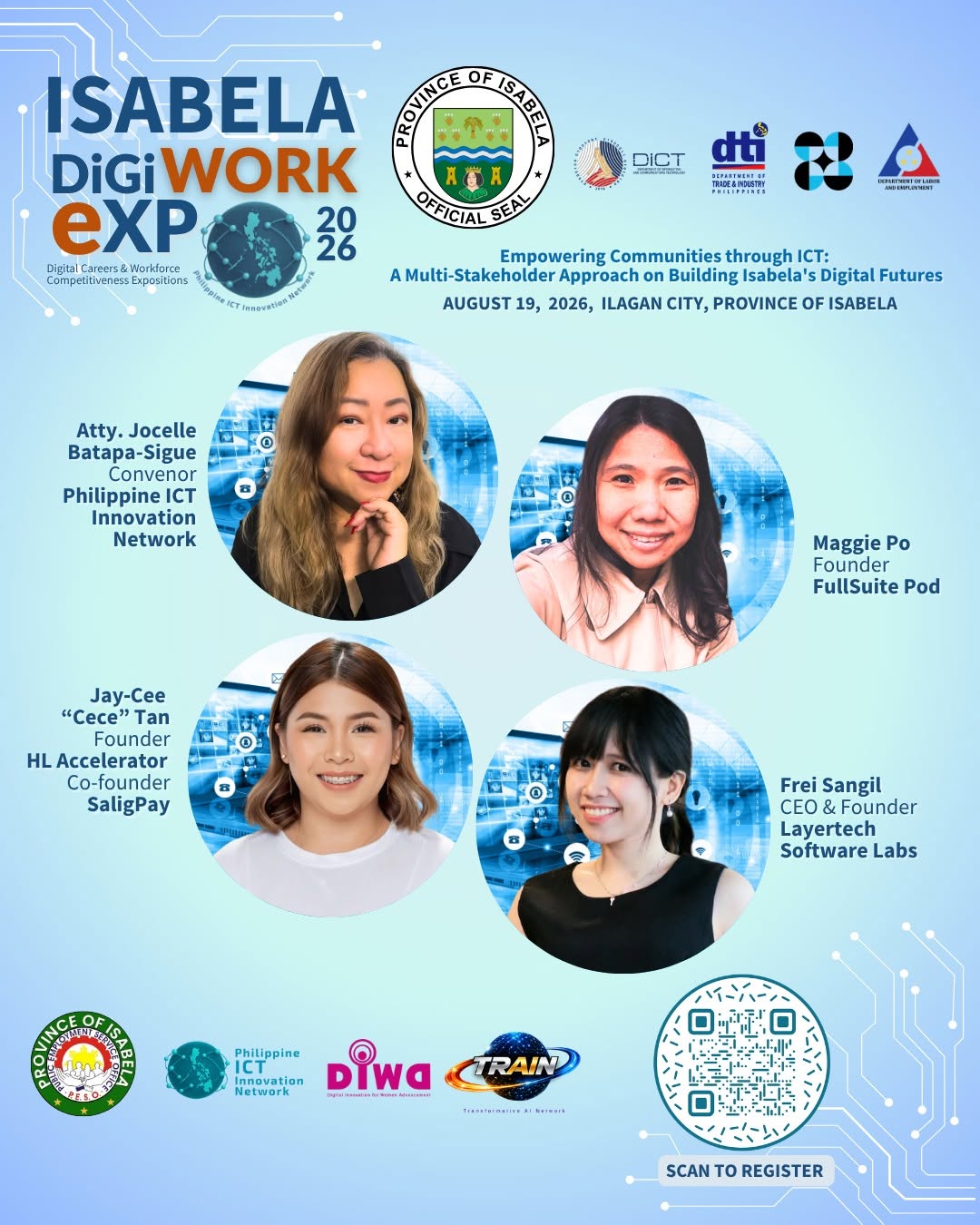
The Isabela DigiWork Expo 2026 will bring together government, industry, startups, and ICT leaders on August 19 in Ilagan City to discuss how technology, digital skills, and local talent can contribute to Isabela’s transition toward a more competitive digital economy.
 Featured
Amianan Ventures
Building Isabela’s Digital Future Through People and Technology
The digital economy is creating new opportunities for employment, entrepreneurship, and business growth across the Philippines. For provinces like Isabela, capturing these opportunities requires more than technology infrastructure. It also requires people with the skills, networks, and opportunities to participate in the digital economy.
This will be the focus of the Isabela DigiWork Expo 2026: Digital Careers & Workforce Competitiveness Exposition, which will be held on August 19, 2026, in Ilagan City, Isabela.
With the theme “Empowering Communities through ICT: A Multi-Stakeholder Approach on Building Isabela’s Digital Futures,” the expo will bring together government, industry, startups, founders, and ICT leaders to discuss the province’s digital workforce and opportunities for future growth.
Bringing Industry and Innovation Leaders Together
The expo will feature four speakers representing different areas of the Philippine technology and innovation ecosystem.
Atty. Jocelle Batapa-Sigue, Convenor of the Philippine ICT Innovation Network, Digital Innovation for Women Advancement (DIWA), and Transformative AI Network (TRAIN), will bring perspectives on ICT councils, digital jobs, and inclusive digital innovation across Philippine regions.
Maggie Po, Founder of FullSuite Pod, will share insights on AI-enabled operations, startup scaling, and the potential of regional talent to compete in global markets.
Jay-Cee “Cece” Tan, Founder of HL Accelerator and Co-Founder of SaligPay, will bring experience in startup acceleration, fintech adoption, and grassroots digital entrepreneurship.
Meanwhile, Frei Sangil, CEO and Founder of Layertech Software Labs, will contribute perspectives on digital governance, cybersecurity readiness, and data-driven transformation among local government units.
The combination of these perspectives provides a broader view of the digital economy, from workforce development and entrepreneurship to AI, fintech, cybersecurity, and digital governance.
Digital Careers Are Expanding Beyond Major Cities
The growth of remote work, digital services, artificial intelligence, and technology-enabled businesses is changing where opportunities can emerge.
Talent from provincial communities can increasingly participate in national and international markets without necessarily relocating to major metropolitan areas.
For Isabela, this creates an opportunity to connect local talent with the skills and industries driving the digital economy.
Digital careers can span software development, creative services, digital marketing, artificial intelligence, cybersecurity, business process services, design, and other technology-enabled fields.
At the same time, digital entrepreneurship provides another pathway for local talent to create businesses that can serve customers beyond their immediate communities.
A Multi-Stakeholder Approach to Digital Development
The expo emphasizes that building a digital future cannot be achieved by one sector alone.
Government can create enabling policies and programs. Educational institutions can develop relevant skills. Industry can provide market opportunities and practical experience. Startups can introduce new products and business models. Communities and local talent provide the people who ultimately drive digital transformation.
Bringing these stakeholders together can help identify gaps between education, workforce needs, entrepreneurship, and technology adoption.
This is particularly important for provincial economies where digital transformation can become a tool for creating new opportunities beyond traditional industries.
What This Means for Northern Luzon’s Innovation Ecosystem
Isabela’s DigiWork Expo reflects a broader shift happening across Northern Luzon.
As provinces look toward digital transformation, the conversation is moving beyond simply providing internet access or technology infrastructure. The focus is increasingly on building digital talent, entrepreneurial capacity, innovation networks, and competitive local businesses.
For the region’s startup ecosystem, this creates opportunities to connect emerging founders with talent, mentors, technology companies, investors, and potential markets.
It also reinforces the importance of developing local ecosystems where people can build careers and companies without being limited by geography.
If provincial communities can successfully combine digital skills, entrepreneurship, infrastructure, and industry partnerships, they can participate more actively in the growing digital economy while creating opportunities closer to home.
The digital future of Isabela will ultimately be shaped not only by the technologies it adopts, but by the people who know how to use those technologies to create businesses, careers, and solutions.
The Isabela DigiWork Expo 2026 aims to bring those people and institutions into the same conversation.
Event Details
📅 August 19, 2026
📍 Ilagan City, Province of Isabela
Interested participants may scan the registration QR code provided by the organizers to join the event.
Original Source
This article is based on information provided by the organizers of the Isabela DigiWork Expo 2026: Digital Careers & Workforce Competitiveness Exposition.
Market Context
The growth of remote work, digital services, AI-enabled businesses, fintech, cybersecurity, and other technology-driven industries is creating new opportunities for talent outside major metropolitan centers. For provincial economies, developing a competitive digital workforce can support both employment and entrepreneurship while helping local businesses access wider markets. A multi-stakeholder approach is particularly important because digital competitiveness depends on the interaction of education, industry, government, technology infrastructure, and entrepreneurial support. For Northern Luzon, initiatives that connect local talent with digital careers, startups, and technology companies can contribute to a more distributed and inclusive regional innovation economy.
Are you a founder, innovator, or community builder in Northern Luzon?
We're always looking for compelling stories from the region's ecosystem. Whether you're launching a startup, running a program, or doing something interesting — we'd love to feature you.