
Cagayan State University Advances Startup Ecosystem and E-Mobility Projects Through Post-Project Monitoring
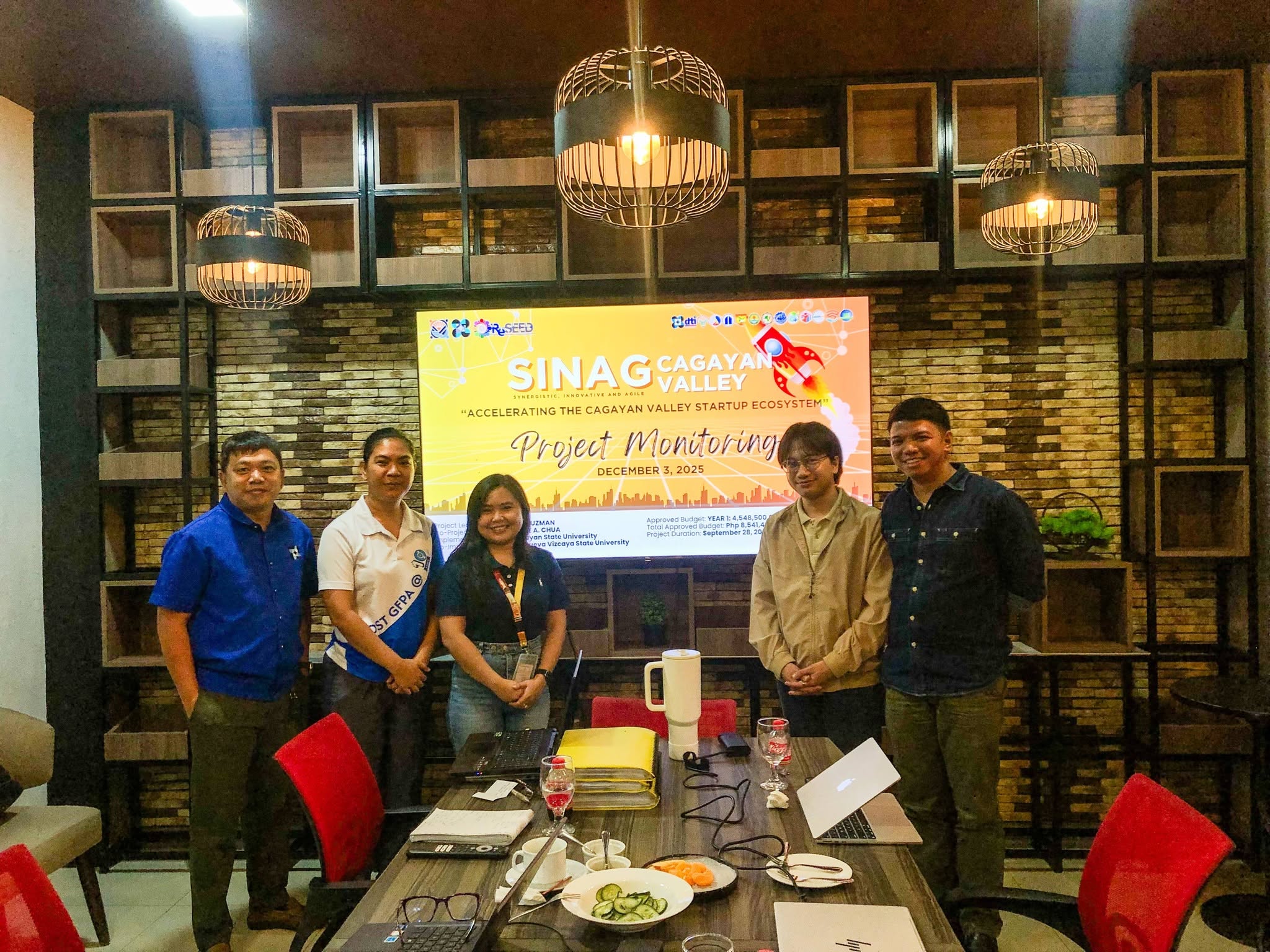
A post-project monitoring visit at Cagayan State University reviewed the progress of two innovation initiatives in the Cagayan Valley: the SINAG startup ecosystem project and the FASTRAC Lite: C-Trike Pre-Commercialization project. The discussions focused on project accomplishments, sustainability, commercialization, and opportunities to strengthen regional support for startups and emerging technologies.
 Featured Partner
Inv8 Studio
Innovation Partner for Startups & Growing Businesses
Turning Innovation Projects Into Sustainable Programs
Innovation does not end when a funded project reaches its final stage.
For technologies and startup ecosystem initiatives to create lasting impact, their progress needs to be assessed, lessons documented, and sustainability plans developed.
This was the focus of a recent post-project monitoring visit conducted by the DOST-PCIEERD Regional Innovation, Technology Transfer and Development (RITTD) team at Cagayan State University (CagSU).
The monitoring covered two initiatives: the ReSEED SINAG Startup Ecosystem project and the FASTRAC Lite: C-Trike Pre-Commercialization project.
The monitoring was led by Engr. John Edrick Coroza, Project Technical Assistant VI-RITTD, together with Engr. Anthon Jay B. Toledano, Project Technical Assistant VI.
Strengthening the Startup Ecosystem in Cagayan Valley
The monitoring began with the SINAG Cagayan Valley project.
The project team, represented by Ms. Rachelle Joy Consigna, VP Audy Quebral, and Director Anderson Gonzales, presented updates on initiatives designed to strengthen the region’s startup ecosystem.
Discussions covered the project’s accomplishments, catch-up plan, lessons learned, sustainability strategies, and opportunities to expand support for startups and innovation enablers across Cagayan Valley.
The focus on ecosystem development reflects the growing need for regional support structures that can help startups access mentorship, networks, technical assistance, programs, and other resources needed to move from ideas toward sustainable ventures.
For emerging ecosystems outside major urban centers, building these connections can be particularly important. A startup’s ability to grow often depends not only on its product but also on whether the surrounding ecosystem can provide access to the people, institutions, and opportunities required for growth.
Moving the C-Trike Toward Commercialization
The monitoring team also reviewed the progress of the FASTRAC Lite: C-Trike Pre-Commercialization project.
The project team, represented by Engr. Michael Orpilla, Mr. Arnold Kien Tolbe, and the E-Mobility Project staff, presented updates on the technology’s progress toward commercialization.
The discussions covered milestones achieved, implementation experiences, and plans to improve the technology’s market readiness.
The team also discussed strategies for sustaining and maximizing the technology’s potential for adoption and commercialization.
This stage is critical for technology projects because developing a working technology is only one step toward market adoption. Technologies also need to demonstrate practical value, respond to user requirements, and develop pathways for deployment and commercialization.

Connecting Research, Startups, and Commercialization
The two projects demonstrate different but complementary dimensions of regional innovation.
The SINAG project focuses on strengthening the ecosystem that supports startups and innovation, while FASTRAC Lite focuses on advancing a specific technology toward market readiness.
Together, they illustrate how regional innovation systems need both support infrastructure and technologies with commercialization potential.
Universities such as Cagayan State University can play an important role in this process by serving as environments where research, technology development, entrepreneurship, and industry collaboration can intersect.
Post-project monitoring provides an opportunity to determine what worked, identify gaps, and ensure that investments in innovation continue producing value after formal project implementation.
Collaboration Remains Central to Regional Innovation
The monitoring activity was supported by Cagayan State University – Carig and Andrews Campuses, the Electromobility Research and Development Center, and DOST Region II.
The team also recognized the support of CSU Carig Campus Director for RDE Dr. Emer T. Quezon, as well as DOST Region II Assistant Regional Director Mary Ann Maglasin, Ms. Rowena Guzman, and Mr. Romeo Puyat of PSTO-Cagayan.
The continued collaboration among research institutions, government agencies, and innovation stakeholders demonstrates the importance of partnerships in sustaining regional technology and entrepreneurship initiatives.
What This Means for Cagayan Valley’s Innovation Ecosystem
Cagayan Valley’s innovation ecosystem is developing across multiple fronts, from startup support to emerging technologies and university-based research.
Projects such as SINAG and FASTRAC Lite show the importance of creating pathways that extend beyond project implementation.
For startups, this means having an ecosystem capable of providing sustained support as they develop and grow.
For university technologies, it means having mechanisms that help move research outputs toward validation, adoption, and commercialization.
For government and development institutions, it means continuously learning from funded initiatives and using those lessons to improve future programs.
The long-term opportunity is to build an ecosystem where innovation projects do not remain isolated initiatives. Instead, they become part of a connected regional pipeline that supports research, technology development, entrepreneurship, commercialization, and economic impact.
Innovation becomes more valuable when it can survive beyond a project period.
Through continued monitoring, collaboration, and sustainability planning, Cagayan State University and its partners are working to ensure that promising technologies and ecosystem initiatives have a stronger path toward adoption and long-term regional impact.
Original Source
Market Context
Regional innovation ecosystems require more than individual startup programs or research projects. They need sustained mechanisms connecting universities, government, industry, investors, entrepreneurs, and support organizations. At the same time, university-developed technologies require pathways from research and prototyping toward validation, market readiness, adoption, and commercialization. Initiatives such as SINAG and FASTRAC Lite highlight these two complementary needs. For Cagayan Valley, strengthening both startup ecosystem infrastructure and technology commercialization pathways can help convert regional research and innovation capabilities into sustainable enterprises, technologies, and economic opportunities.
Are you a founder, innovator, or community builder in Northern Luzon?
We're always looking for compelling stories from the region's ecosystem. Whether you're launching a startup, running a program, or doing something interesting — we'd love to feature you.