
40+ Baguio MSMEs Move From Ideas to Prototypes Through Green Innovation Workshop Co-Organized by SIGLAT and DTI Baguio-Benguet
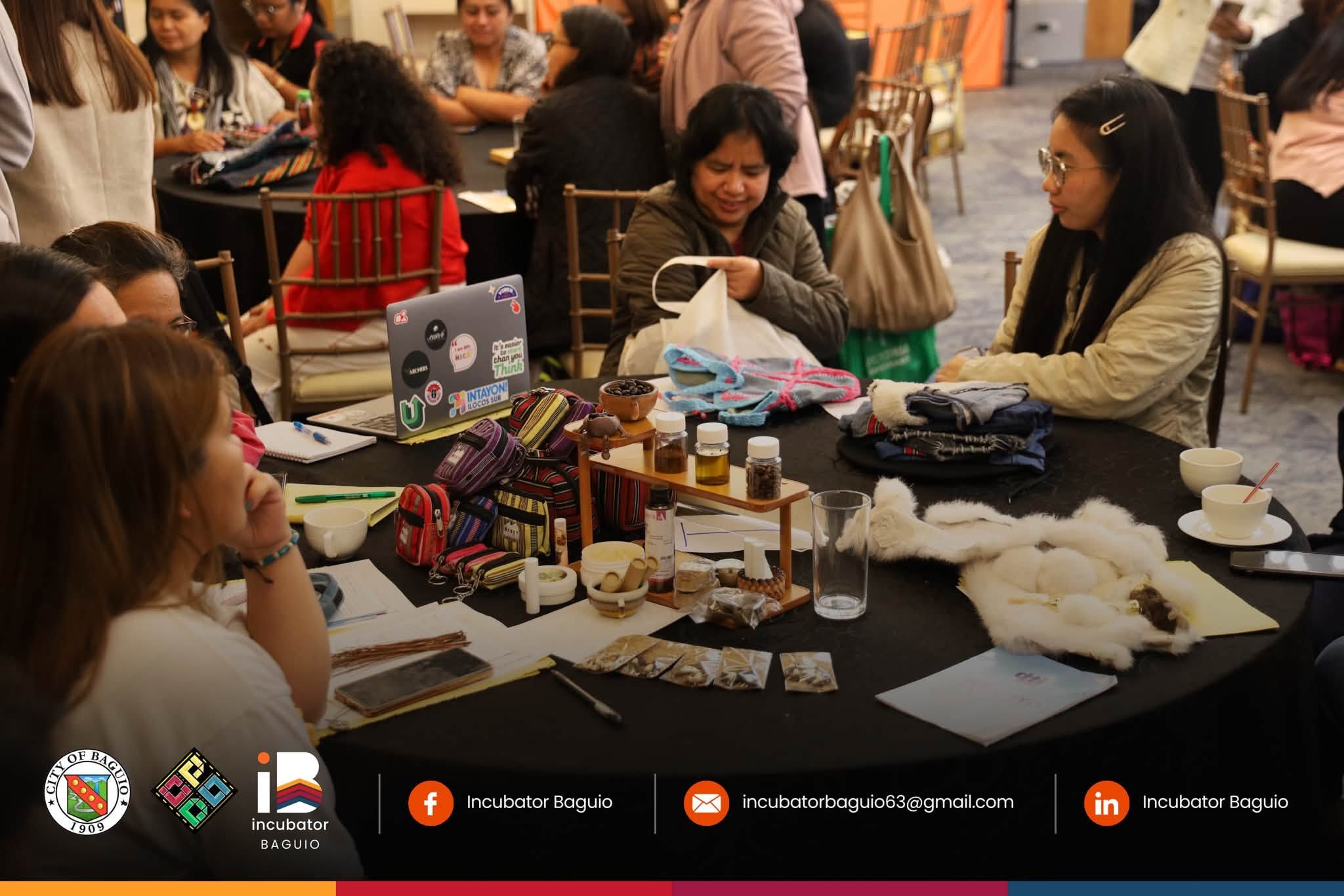
More than 40 Baguio MSMEs advanced their product development journey during Day 2 of the Design Thinking for MSME Green Economy Transition and Product Development Workshop, working on business models, sustainable product concepts, and prototypes as they prepare for the next stage of development.
 Featured Partner
Inv8 Studio
Innovation Partner for Startups & Growing Businesses
From Ideas to Something Businesses Can Build
More than 40 Baguio MSMEs continued their product development journey on August 20, 2026, during Day 2 of the Design Thinking for MSME Green Economy Transition and Product Development Workshop at the Orchard Hotel in Baguio City.
The workshop was co-organized by the SIGLAT – Baguio Youth Innovation Hub and DTI Baguio-Benguet, bringing together local entrepreneurs in a hands-on environment focused on product innovation, business model development, and the transition toward greener and more sustainable business practices.
The workshop brought together local entrepreneurs working to strengthen their products and explore more sustainable approaches to business.
For Incubator Baguio, the session provided an opportunity to work directly with MSMEs as they moved beyond ideas and began refining their products, business models, and prototypes.
This stage is important because innovation does not end with having a good idea.
Entrepreneurs need to understand their customers, define the value of their products, determine how the business will operate, and eventually test whether the solution can work in the real world.
Connecting Products With Business Models
One of the sessions focused on the Business Model Canvas, facilitated by Leandro Rey W. Gepila of Incubator Baguio, who served as a resource speaker and mentor-coach.
Participants mapped their existing products, customers, value propositions, and other key components of their businesses.
The exercise helps entrepreneurs see their businesses as interconnected systems rather than focusing only on the product itself.
A product may be technically good, but entrepreneurs also need to consider questions such as:
Who is the customer?
What problem does the product solve?
Why would someone choose it?
How will the business reach customers?
How will the business generate revenue?s
What resources and partners are needed?
These questions can reveal gaps that are difficult to see when entrepreneurs focus only on improving the product.

Prototyping Makes Ideas Testable
The workshop also involved hands-on coaching, mentoring, and prototype refinement.
Bryan Sombilon of Incubator Baguio supported participants as a mentor-coach, working with MSMEs as they refined their concepts and prepared their prototypes for the next stage of development.
A prototype gives entrepreneurs something concrete to examine and improve.
Instead of asking whether an idea sounds good in theory, entrepreneurs can begin asking whether people can actually use it, whether it solves the intended problem, and what needs to change.
This creates an important feedback loop:
Idea → Prototype → Feedback → Refinement → Better Product
The process can help MSMEs reduce the risk of investing heavily in a product before understanding what customers actually need.
Designing for a Green Economy
The workshop went beyond conventional product development by incorporating sustainability and circular economy concepts.
Participants engaged in sessions covering Human-Centered Product Innovation, Business Models for the Circular Economy, and Design Excellence for Sustainable Product Development.
This introduces another dimension to product development.
Entrepreneurs are not only being encouraged to ask whether a product can sell. They are also being encouraged to consider how it is designed, produced, used, and eventually disposed of or reused.
For MSMEs, sustainability can potentially become more than an environmental responsibility.
It can also create opportunities to reduce material costs, develop new products from existing resources, differentiate a brand, and access customers who increasingly value responsible products and practices.
Human-Centered Innovation Starts With the Customer
The emphasis on human-centered product innovation is particularly relevant for MSMEs.
Small businesses often have a major advantage over larger organizations: they can interact directly with customers and adapt quickly.
That advantage becomes stronger when entrepreneurs deliberately observe how customers use their products and identify where problems occur.
Instead of starting with:
“What product can we make?”
a human-centered approach starts with:
“What problem are people experiencing, and what would make their lives better?”
The answer can lead to improvements in an existing product or, sometimes, an entirely different solution.
The Role of Incubator Baguio
For Incubator Baguio, the workshop represents the role an ecosystem organization can play in helping local entrepreneurs move through the early stages of innovation.
Incubation is not simply about providing a venue or organizing training.
It is about connecting entrepreneurs with the knowledge, mentors, networks, resources, and opportunities they need at different stages of development.
In this case, the process connects design thinking with business model development, sustainability, prototyping, and eventually market preparation.
This kind of support can be particularly valuable for MSMEs that may have strong technical or product knowledge but limited access to structured innovation and business development support.
What This Means for Baguio’s MSME Ecosystem
Baguio has a diverse base of MSMEs operating across food, tourism, creative industries, manufacturing, services, agriculture-related businesses, and other sectors.
Helping these businesses innovate does not necessarily mean turning every MSME into a technology startup.
Innovation can take many forms.
It can mean developing a new product.
Improving an existing one.
Changing a production process.
Reducing waste.
Finding a new customer segment.
Creating a more sustainable business model.
Or discovering a better way to deliver value.
This broader understanding of innovation is important for building an inclusive local innovation ecosystem.
From Workshop to Market Validation
The next stage of the workshop will take place on August 28, 2026, when participants are expected to present their products and prototypes before a diverse panel of judges.
This creates an opportunity for the MSMEs to receive another round of feedback as they continue developing their products.
The transition from workshop to presentation also introduces an important entrepreneurial discipline.
Entrepreneurs need to explain not only what they built, but also why it matters.
They need to communicate the problem, the customer, the solution, and the value created.
Eventually, those same questions will come from customers, partners, distributors, investors, and other stakeholders.
The Bigger Opportunity: Building More Innovative MSMEs
Programs like this can contribute to a stronger MSME ecosystem when the learning continues beyond the workshop.
A training session can provide knowledge.
A prototype can provide something to test.
Mentoring can provide direction.
But market validation is where entrepreneurs begin discovering whether their assumptions hold true.
The longer-term opportunity is therefore to create a pathway:
Problem → Idea → Prototype → Business Model → Validation → Market → Growth
Not every participating product will become a large business, and that should not be the only measure of success.
Some may become stronger local enterprises.
Others may develop sustainable products.
Some may discover new markets.
Others may inspire completely new ventures.
What matters is creating an environment where entrepreneurs have the opportunity to test, learn, and improve.
A Practical Path for Northern Luzon Entrepreneurs
For Baguio and the wider Northern Luzon ecosystem, strengthening MSME innovation can have an impact beyond individual businesses.
More competitive local enterprises can create jobs, strengthen local supply chains, develop new products, and contribute to a more resilient regional economy.
The combination of design thinking, sustainability, business model development, and prototyping gives MSMEs a practical framework for doing this.
The real measure of the workshop, however, will come after the sessions end.
Will the prototypes continue to improve?
Will customers validate the products?
Will businesses adopt more sustainable practices?
Will new markets emerge?
And will some of these ideas eventually become stronger and more competitive enterprises?
Those are the questions that the next stages of the journey will begin to answer.
Moving From Ideas to Action
Day 2 of the workshop demonstrates an important principle in entrepreneurship:
Ideas become valuable when they are tested, improved, and turned into something people can use.
For the more than 40 Baguio MSMEs participating in the program, the journey is still underway.
From business models to prototypes, from sustainability concepts to customer needs, the entrepreneurs are taking another step toward building products that are not only viable, but potentially more relevant to the communities and markets they serve.
As they prepare for the August 28 presentation, the next challenge is to take what they have developed and put it in front of people who can challenge their assumptions.
That is where innovation becomes real.
Original Source
Market Context
MSMEs represent an important part of Northern Luzon’s local economy, but many businesses face challenges in product development, market validation, digital adoption, sustainability, and access to specialized support.
For Baguio, programs that combine design thinking, business model development, circular economy principles, mentoring, and prototyping can help bridge the gap between traditional MSME development and innovation-led growth.
The opportunity is not to turn every MSME into a startup. It is to help more local businesses develop the capacity to continuously improve their products, understand their customers, adopt sustainable practices, and compete in changing markets.
Are you a founder, innovator, or community builder in Northern Luzon?
We're always looking for compelling stories from the region's ecosystem. Whether you're launching a startup, running a program, or doing something interesting — we'd love to feature you.