
43 Baguio MSMEs Complete 3-Day Innovation Journey From Ideas to Market-Ready Products
Forty-three Baguio MSMEs completed a three-day Design Thinking for MSME Green Economy Transition and Product Development Workshop, moving from business ideas to prototypes, product presentations, and startup-style pitching. The program highlighted how design thinking, sustainability, business modeling, mentorship, and market feedback can help local enterprises become more innovative and competitive.
 Featured Partner
Inv8 Studio
Innovation Partner for Startups & Growing Businesses
From Ideas to Products
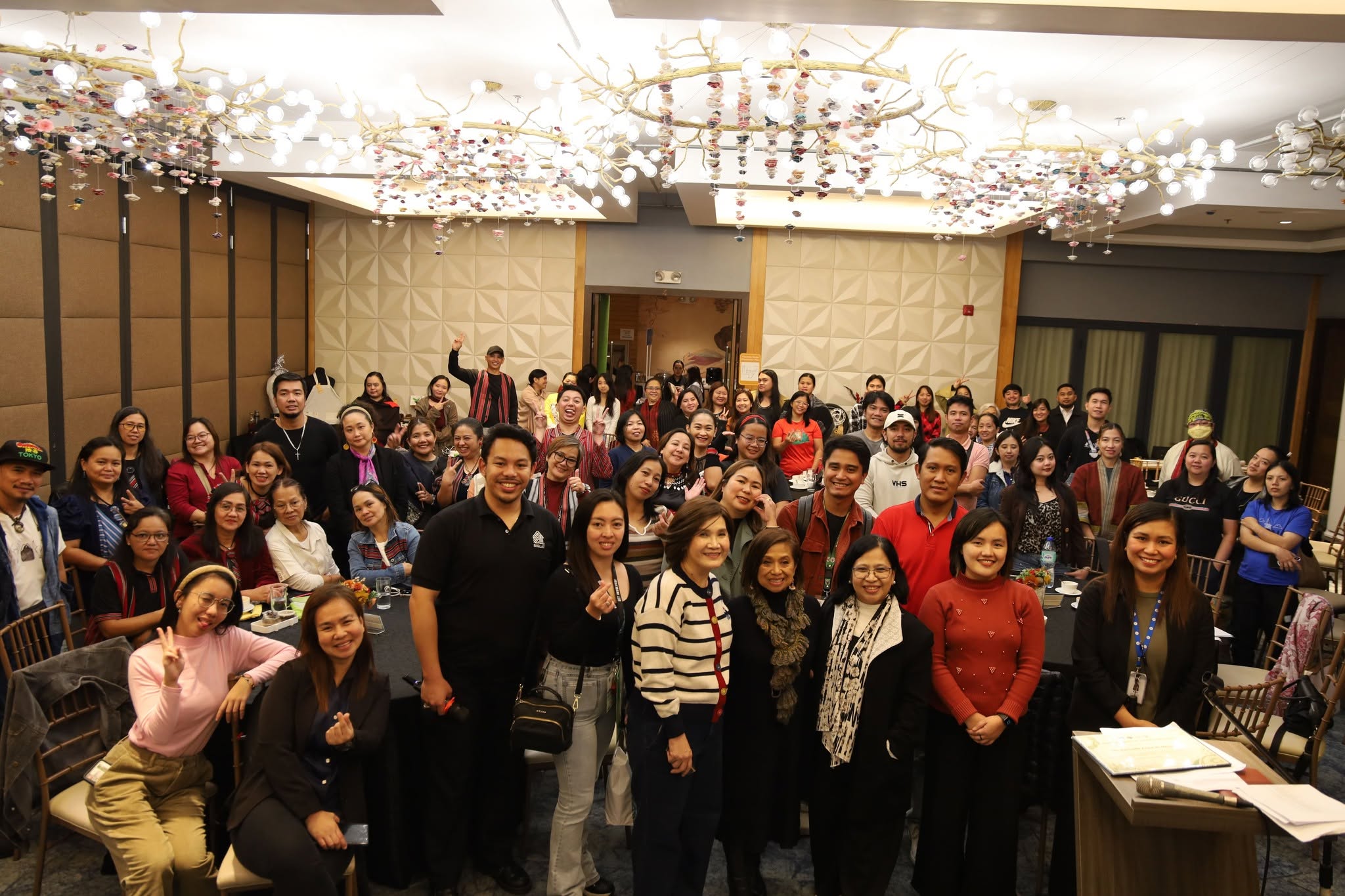
After three days of learning, mentoring, refining, and building, 43 Baguio MSMEs came together for the culmination of the Design Thinking for MSME Green Economy Transition and Product Development Workshop.
Organized by DTI Baguio-Benguet and funded by the SIGLAT Youth Innovation Hub, the three-day program brought together entrepreneurs to rethink their products, strengthen their business models, explore sustainable approaches, and develop prototypes.
The culmination on the third day was more than a product showcase.
It was an opportunity for entrepreneurs to demonstrate how far an idea can move when it is given the right combination of knowledge, mentorship, feedback, and market perspective.
For startup founders, this process may look familiar.
It follows a similar principle:
Build → Test → Learn → Improve → Repeat.
The difference is that for MSMEs, innovation can happen within an existing business, transforming a current product or business model rather than necessarily creating an entirely new company.

From Workshop to Real-World Validation
Day 3 opened with an inspirational message from Ms. Marie Venus Tan, setting the tone for a day focused on the creativity, progress, and innovation of the participating MSMEs.
The morning featured a Gallery Walk, where participants presented their developed products and prototypes.
From these presentations, the Top 10 teams were selected and evaluated by:
Dr. Thelma Palaoag, Vice President for Research, Innovation and Institutional Planning of the University of the Cordilleras
Ms. Rachelle Anne N. Montoya of JHMC
Mr. Bryan P. Sombilon of Incubator Baguio
The Gallery Walk provided an important transition from building privately to presenting publicly.
Once an entrepreneur puts a product in front of other people, assumptions begin to face scrutiny.
Is the product understandable?
Does it solve a meaningful problem?
Is it functional?
Can it be improved?
Does it have a market?
These questions are central to both startup development and MSME innovation.

Ten Teams Take the Next Step
In the afternoon, the Top 10 teams moved from showcasing to pitching.
They presented their products before a diverse panel of judges composed of:
DTI Baguio-Benguet Provincial Director Felicitas O. Bandonill, Engr. Hansi G. Dinumla of DOST-CAR, Ms. Joana Erika Lora-Zamoranons and Ms. Ross Ann Molina of SM Baguio, and Mr. Manuel Supat of TiongSan Supermarket & Department Store.
The teams were evaluated based on product innovation and creativity, functionality, market readiness, business potential, and product improvements.
These criteria are particularly relevant to entrepreneurs because they move the conversation beyond simply asking whether a product is new.
A product can be innovative but difficult to use.
It can be functional but have limited market potential.
It can have a promising market but require significant improvements before it is ready to scale.
Innovation requires balancing these different considerations.
Why Market Readiness Matters
One of the biggest differences between an idea and a business is evidence.
An entrepreneur can believe a product is valuable.
But customers ultimately determine whether that value is real.
This is why market readiness is an important part of the innovation journey.
Entrepreneurs need to progressively answer:
Who needs this?
What problem does it solve?
Why would customers choose it?
Can we produce it consistently?
Can we make money from it?
Can the business continue to improve and grow?
The workshop’s progression from product development to pitching gives MSMEs an opportunity to begin addressing these questions.
Circular Economy as a Business Opportunity
The program also placed sustainability and circular economy principles at the center of product development.
This creates an opportunity for entrepreneurs to rethink how products are created, used, and eventually disposed of.
Circular business models can explore ways to reduce waste, extend product lifecycles, reuse materials, and create additional value from resources that might otherwise be discarded.
For Baguio MSMEs, this can be especially relevant across industries where local materials, tourism, food, crafts, manufacturing, and other sectors intersect.
Sustainability does not have to be treated only as an environmental objective.
It can also become a source of product differentiation, operational efficiency, and new business opportunities.
The Startup Lesson for MSMEs
Although the participants are MSMEs, much of the process mirrors how early-stage startups develop products.
Startups rarely get everything right on the first attempt.
They build an initial version, put it in front of users, collect feedback, and make changes.
The same principle applies to established small businesses.
A business does not need to call itself a startup to adopt a startup mindset.
It can experiment with a new product.
Test a new market.
Change its packaging.
Try a new distribution channel.
Use customer feedback to improve an existing product.
Or develop a new business model around an emerging need.
This ability to continuously experiment and adapt can become a competitive advantage.
The Role of Mentors and Ecosystem Support
Entrepreneurs often know their businesses better than anyone else.
But being close to a business can also make it difficult to see its weaknesses objectively.
This is where mentors, judges, industry partners, and ecosystem organizations can provide value.
They bring different perspectives.
A mentor may identify a weakness in the business model.
An industry representative may see a market opportunity.
A customer may point out a usability problem.
An investor may question scalability.
A technical expert may suggest a better way to develop the product.
Each perspective can help entrepreneurs make better decisions.
This is why innovation ecosystems matter.
Entrepreneurs do not have to figure everything out alone.
From Local MSMEs to Potential Ventures
Not every innovation developed through an MSME program needs to become a high-growth startup.
That distinction is important.
Some products may strengthen an existing family business.
Some may open a new market.
Some may become sustainable enterprises.
Others may eventually grow into scalable ventures.
What matters is creating pathways for promising ideas to continue developing.
The journey can look like:
Existing Business → New Problem → New Idea → Prototype → Market Feedback → Improved Product → New Market
In some cases, the next step could be:
Prototype → Validation → Startup → Scale
The ecosystem should be able to support both pathways.
What Happens After the Workshop?
The end of a three-day program should not be the end of the innovation journey.
The real test begins after the event.
Can the entrepreneurs continue improving their products?
Can they validate them with actual customers?
Can they identify paying markets?
Can they improve production?
Can they develop stronger branding and distribution?
Can they turn the prototype into a sustainable business?
These questions determine whether the workshop creates lasting impact.
Training creates knowledge.
Mentoring provides direction.
A prototype creates something tangible.
But market validation creates evidence.
That is the next important step for these entrepreneurs.
Building a More Innovative Baguio
The participation of 43 MSMEs demonstrates that innovation is not limited to technology startups or university research laboratories.
Local businesses can also become important players in Baguio’s innovation ecosystem.
They understand community needs.
They interact directly with customers.
They have knowledge of local markets.
And many have the ability to experiment and adapt faster than larger organizations.
Connecting these entrepreneurs with government, universities, mentors, industry, and innovation organizations can create stronger opportunities for local economic development.
For Baguio, this means innovation can become part of the everyday growth of its local businesses.
The Bigger Opportunity for Northern Luzon
For Northern Luzon, programs like this point toward a broader opportunity.
The region already has entrepreneurs, researchers, universities, government agencies, industry partners, and innovation organizations.
The challenge is connecting them.
When entrepreneurs can access mentors, customers, technical expertise, financing, markets, and innovation programs, their ability to develop and grow can increase significantly.
The goal is not simply to produce more prototypes.
It is to create more pathways from ideas to products, products to customers, and businesses to sustainable growth.
The Journey Continues
The three-day workshop may have concluded, but the development journey of the 43 participating MSMEs continues.
Their prototypes are now starting points for further testing.
Their pitches are opportunities to refine their stories.
Their feedback can guide their next iteration.
And their business models can continue evolving as they learn more from the market.
For the Top 10 teams, the pitching stage provided another opportunity to put their innovations under scrutiny.
For all 43 MSMEs, the bigger achievement is having gone through the process of learning, building, testing, and presenting.
That process is at the heart of entrepreneurship.
An idea does not become an opportunity simply because it is created. It becomes an opportunity when people are willing to test it, improve it, and find a way to make it valuable.
For Baguio’s MSMEs, that journey has now moved one step closer to the market.
Original Source
The activity was organized by DTI Baguio-Benguet and funded by the SIGLAT Youth Innovation Hub, with support from the resource speakers, mentors, judges, partners, and other contributors to the three-day program.
The startup and entrepreneurship perspectives in this article are editorial analysis intended to contextualize the reported activity and are not presented as statements from the organizers.
Market Context
MSMEs are an important part of local economic ecosystems, but innovation support is often discussed primarily in the context of startups and technology companies.
Programs that introduce MSMEs to design thinking, business modeling, prototyping, sustainability, and market feedback can help broaden the region’s innovation pipeline.
For Baguio and Northern Luzon, the opportunity is to create stronger connections between MSMEs, startups, universities, government, industry, mentors, and markets.
The long-term value of these programs will depend on what happens after the workshop: whether businesses continue validating their products, improving their models, accessing markets, and turning promising prototypes into sustainable enterprises.
Are you a founder, innovator, or community builder in Northern Luzon?
We're always looking for compelling stories from the region's ecosystem. Whether you're launching a startup, running a program, or doing something interesting — we'd love to feature you.