News
DTI-CAR Opens a ₱1.08 Million Green Banana Flour Facility in Paracelis — The Cooperative Already Has a South Korean Buyer
The Paracelis Abat Farmers Agriculture Cooperative in Mountain Province launched a Shared Service Facility for green banana flour processing on March 6, with a large-capacity drying machine and an existing international client already waiting for higher volumes.

Amianan Desk
Amianan Innovation Ventures
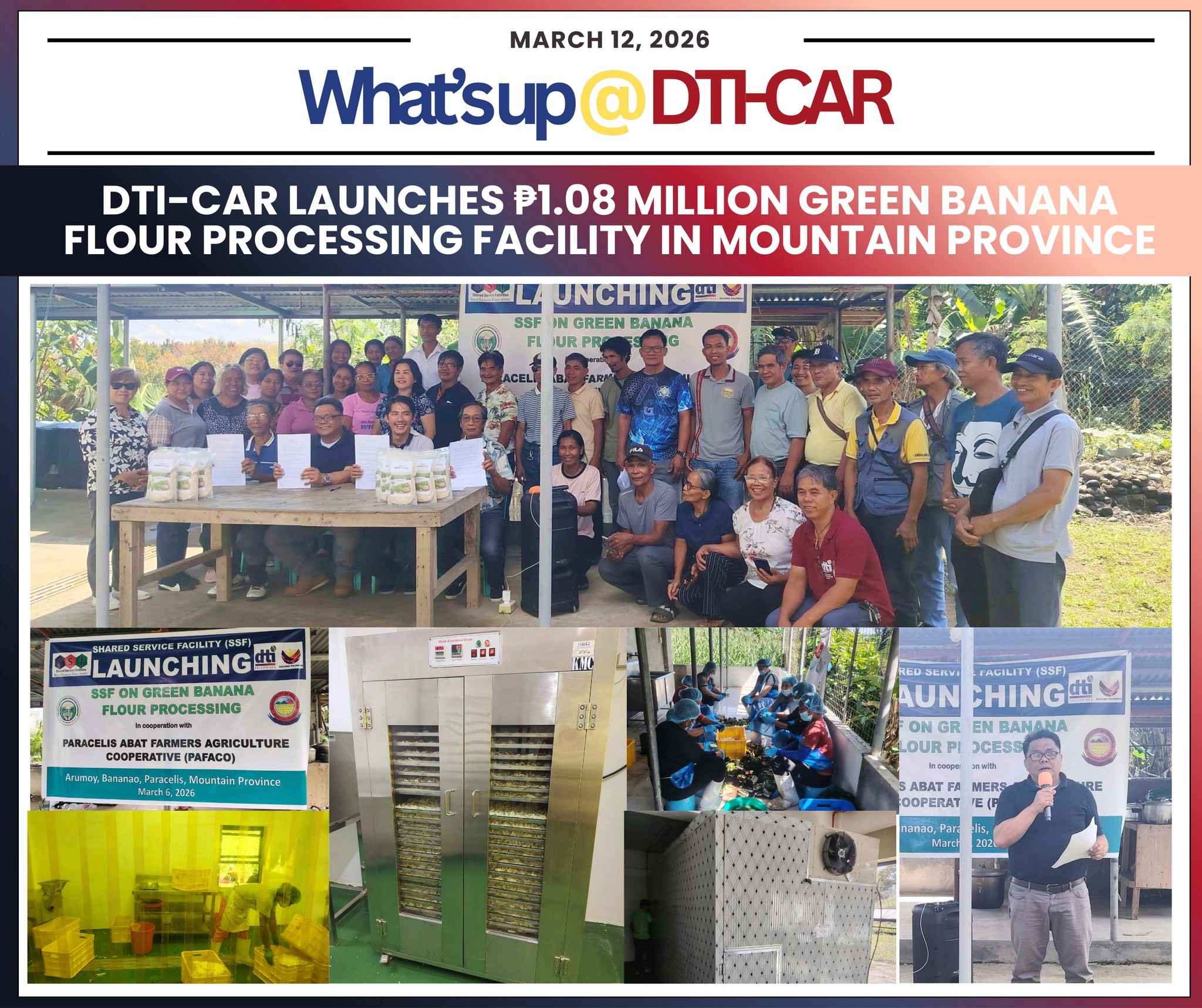
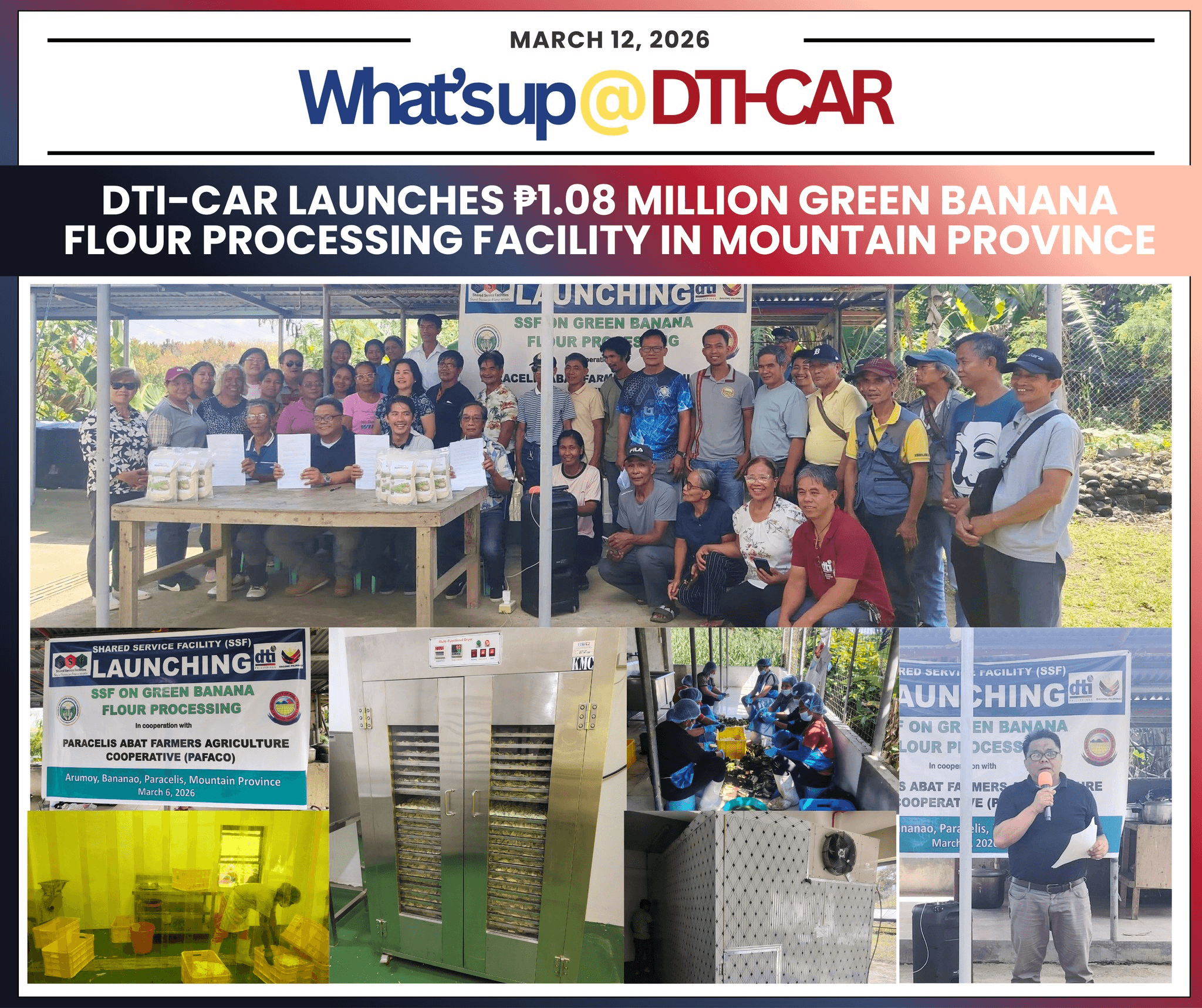
The Department of Trade and Industry Cordillera Administrative Region officially launched a ₱1.083 million Shared Service Facility for Green Banana Flour Processing in Bananao, Paracelis, Mountain Province on March 6, 2026. The facility was awarded to the Paracelis Abat Farmers Agriculture Cooperative, a local group that is already supplying green banana flour to a buyer in South Korea. The new equipment positions the cooperative to meet higher international demand while simultaneously opening supply to the domestic market.
The detail that changes the meaning of this launch: the export relationship already exists. This is not a facility built in anticipation of a market. It is infrastructure built to serve one that is already pulling product out of Paracelis.
What the Facility Can Do
The centerpiece of the new SSF is a large-capacity drying machine that can process 300 kilograms of green bananas in a single batch. That processing capacity is the critical upgrade. Green banana flour production requires consistent, controlled drying to meet food quality standards — a step that limits output when done at small scale with limited equipment. The new machine removes that bottleneck, giving the cooperative the throughput it needs to fulfill larger orders reliably.
DTI-CAR was represented at the launch by SSF Regional Coordinator Edwin Bagano Jr. and Ms. Teresita Deliu, standing in for Regional Director Atty. Raymond G. Panhon. Their message to the cooperative was direct: the government provides the machines and the mentoring, but the mindset and the mastery must come from the beneficiaries themselves.
Why Green Banana Flour, Why Now
The product is well-matched to where global food demand is moving. Green banana flour is gluten-free, rich in resistant starch, and increasingly sought after by health-conscious consumers and food manufacturers in markets like South Korea, Japan, and parts of Europe. Paracelis grows bananas that would otherwise face the same seasonal oversupply and price collapse that affects most raw agricultural commodities in the region. Processing that surplus into flour transforms a perishable, price-volatile crop into a shelf-stable, higher-value product with a longer selling window and a more consistent price.
DTI-CAR framed the project around three pillars that are worth taking seriously as a framework for agri-processing initiatives across Northern Luzon. Innovation means moving from raw produce to a processed product with growing global demand. Sustainability means ensuring that no banana goes to waste by turning agricultural surplus into economic output. Resilience means giving the cooperative alternative income streams that protect members when fresh fruit prices drop.
Those three pillars describe something real: the transition from subsistence farming to market-integrated enterprise, done through a shared facility that makes the upgrade accessible to a cooperative rather than requiring each member to invest individually.
What This Means for Northern Luzon
Mountain Province does not often appear in conversations about export-ready agri-enterprises in Northern Luzon. The Paracelis cooperative's existing relationship with a South Korean buyer changes that. It is evidence that a highland community in one of the Cordillera's less-connected provinces has already found an international market for a value-added product — and that the infrastructure investment needed to serve that market at scale is exactly what the SSF program is designed to provide.
For other farming cooperatives in the Cordillera and across Northern Luzon dealing with seasonal oversupply of agricultural crops, the Paracelis model is instructive. The path from raw produce to export-ready processed product does not require a private investor or a large capital outlay. It requires a cooperative with a product idea, a government facility program, and the willingness to build the operational discipline to use both well.
Cooperatives and agri-enterprises in the Cordillera interested in the DTI-CAR Shared Service Facility program can reach out to DTI-CAR directly. For farming communities with crops facing seasonal price volatility and oversupply, exploring food processing as a value-adding strategy is a conversation worth starting with your nearest DTI Negosyo Center.
Source: DTI-CAR