News
DICT-CAR Is Planning a ₱60 Million Upgrade of the Baguio Post Office Into a Digital Hub — Without Touching Its 1918 Heritage Character
The Department of Information and Communications Technology Cordillera has submitted a Conservation Management Plan for the rehabilitation of the Digital Transformation Center and the Baguio Post Office building — a project that has to balance a modern ICT hub with the preservation of one of Session Road's most historically significant structures.

Amianan Desk
Amianan Innovation Ventures
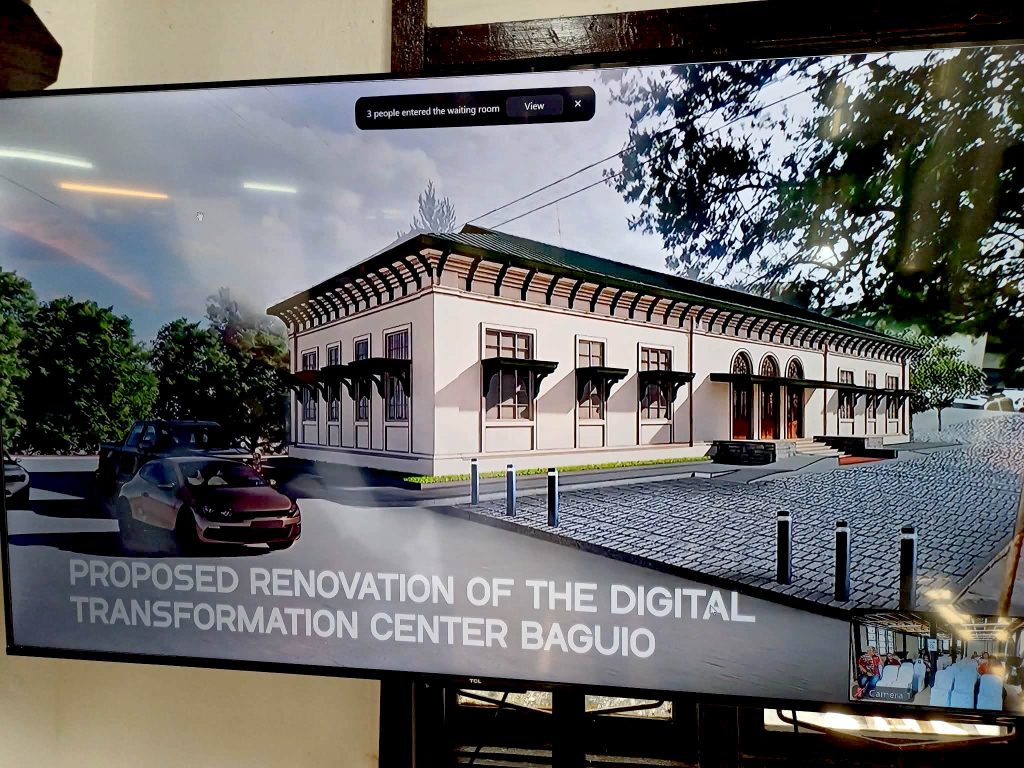
The Department of Information and Communications Technology Cordillera Administrative Region has proposed a ₱60 million rehabilitation project for the Digital Transformation Center and the Baguio Post Office building along Session Road, blending a modern ICT facility upgrade with the preservation requirements of a structure built in 1918 during the American colonial period. DICT-CAR recently led a blended public consultation on the project, which has been submitted to the National Historical Commission of the Philippines as part of a drafted Conservation Management Plan.
The building's heritage status under Republic Act 10066, the National Cultural Heritage Act, means this is not a standard government renovation. Every design decision requires explicit justification against the structure's character-defining features — and any change that compromises its historical integrity requires national commission approval.
What the Rehabilitation Will Actually Include
The project is structured in two phases. Phase 1 covers the interior. Phase 2 addresses the facade and exterior — the more sensitive portion given the building's heritage designation.
On the interior, the upgraded DTC Baguio is planned to include an ICT training center, a conference room, a lounge-type co-working space available for free public use, an open area for ICT-related seminars, and Free WiFi for All service at the park in front of the building. That combination — structured training space, open co-working, and outdoor connectivity — reflects an understanding of how a digital hub actually gets used by the community it is meant to serve.
DICT-CAR Engineer Katherine Faith Aguilar noted that three-fourths of the post office building is under DICT-CAR while one-fourth belongs to the post office, which continues to serve postal functions. Some areas have been leased to private businesses. The rehabilitation will work within that existing division of space rather than displacing current uses.
The Heritage Constraint and Why It Is Actually an Advantage
The 1918 structure's coverage under the National Cultural Heritage Act is often framed as a complication for development projects. DICT-CAR Regional Director Jimmicio Daoaten is taking a different approach — treating preservation as a design principle rather than a bureaucratic obstacle.
"Any proposed renovation must carefully balance development with preservation, ensuring that the site's character-defining features and heritage value are protected while improving its function as a modern digital learning and innovation space," Daoaten said.
That framing matters for Baguio, a city that has repeatedly struggled with the tension between development pressure and heritage conservation. A government agency voluntarily submitting a Conservation Management Plan to the National Historical Commission — before breaking ground, not after — is a procedurally correct and institutionally responsible way to handle a project of this sensitivity. The public consultation adds a layer of community accountability that most infrastructure projects skip.
The building's location at the top of Session Road is also an asset, not just a constraint. A heritage structure in one of Baguio's most visible and trafficked locations gives the DTC a visibility and civic identity that a new building in a peripheral location could never achieve. A beautifully rehabilitated 1918 post office that also functions as a free co-working space and ICT training hub becomes a destination rather than just a facility.
Who the Upgraded DTC Is Designed to Serve
Daoaten has been direct about the DTC's target users: MSMEs, startups, the academe, and the general public. That range is significant. A DTC that serves only students or only government-affiliated users misses most of the people who need it most. A free co-working space accessible to anyone — the freelancer, the MSME owner who needs a meeting room, the startup founder who cannot afford an office — is a meaningful piece of public digital infrastructure in a city where co-working spaces are available but rarely free.
The ICT training center component connects directly to DICT-CAR's broader mandate of bridging the digital divide in underserved Cordillera communities. Training delivered from a well-equipped, accessible facility in Baguio City reaches a broader catchment than training delivered from a provincial field office — and a rehabilitated DTC at the post office building, with its central location and heritage character, is more likely to attract consistent foot traffic and regular users than a facility tucked away from the city's main corridors.
What This Means for Northern Luzon
Baguio's Session Road post office building is one of those structures that most people in the city walk past without thinking much about. A ₱60 million rehabilitation that turns it into a functioning digital hub while preserving its 1918 character would change how that building is experienced by everyone who uses Session Road — and give the Cordillera's innovation ecosystem a civic anchor at the center of the region's most accessible urban corridor.
For MSMEs, startups, and students in Baguio and the wider Cordillera, the upgraded DTC is worth watching as it moves from consultation to construction. The free co-working space and open ICT seminars alone would address a genuine gap in the city's current support infrastructure for early-stage ventures and digital workers. For heritage advocates watching how government agencies handle culturally significant structures in the region, DICT-CAR's Conservation Management Plan approach sets a procedural standard that other agencies managing heritage properties in Baguio should be following.
Community members and stakeholders with input on the proposed rehabilitation can engage through DICT-CAR, which has committed to a public consultation process as part of the Conservation Management Plan submission.
This article is based on original reporting by Carlito Dar for the Philippine Information Agency CAR, April 8, 2026. We are grateful for the original reporting that brought this story to light.