
Santa Ana, Cagayan Is Building a Cold Chain Facility for Its Fisheries Sector. A Learning Visit to Navotas Just Gave Them the Blueprint.
The LGU of Santa Ana, Cagayan, with support from DTI Region 2 Cagayan and the DTI Supply Chain and Logistics Group, visited cold chain industry leaders in Navotas City on April 22, 2026, gathering the technical insights needed to develop a dedicated Cold Chain Shared Service Facility in Barangay San Vicente.
 Featured
Amianan Ventures
Santa Ana, Cagayan is a coastal municipality with a strong fisheries sector and a persistent post-harvest problem: without adequate cold chain infrastructure, the value of what its fishers catch begins to erode the moment it leaves the water. The municipality has a plan to fix that. On April 22, 2026, it took a concrete step toward making it real.
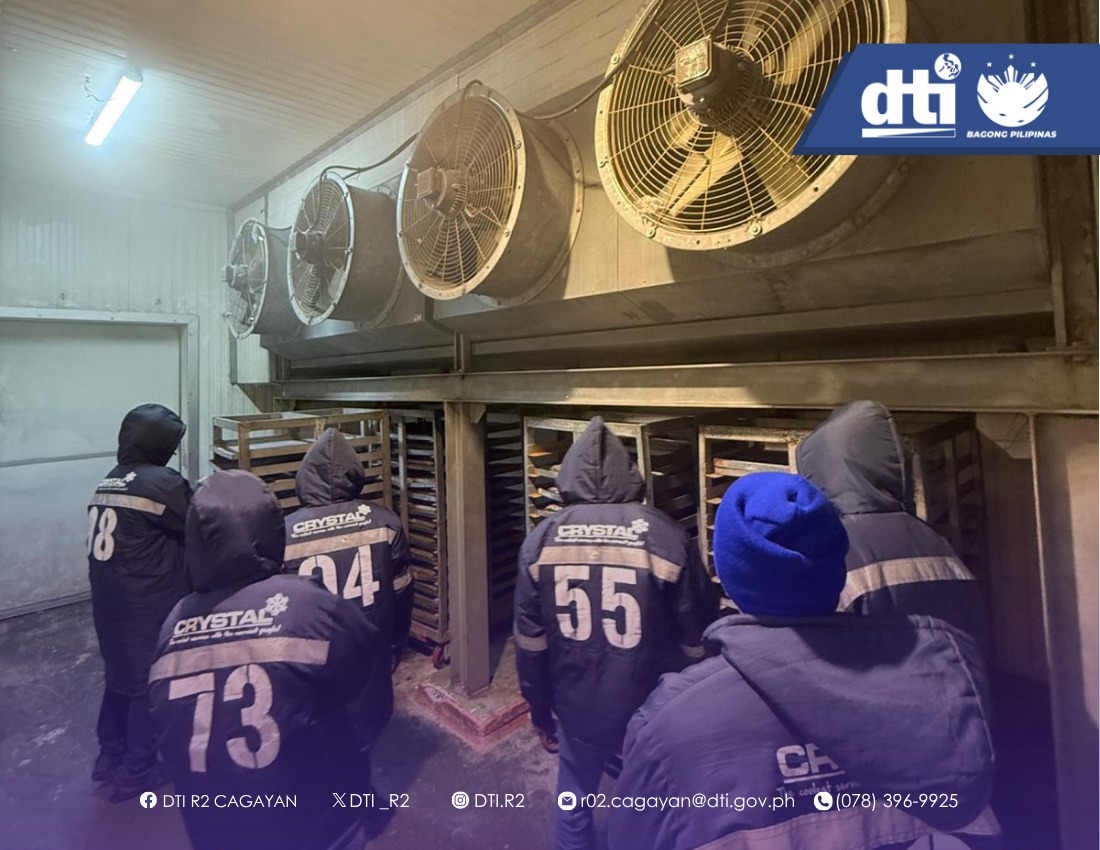
An LGU delegation traveled to Navotas City, Metro Manila, for an industry learning visit to two of the country's established cold chain operators: Frabelle Cold Storage Corporation and Crystal Cold Chain Corporation. The visit was conducted with the assistance of the Department of Trade and Industry Region 2 Cagayan Provincial Office and the DTI Supply Chain and Logistics Group, and forms part of the municipality's preparation for a dedicated Cold Chain Shared Service Facility in Barangay San Vicente.
What They Came to Learn
The focus of the Navotas visit was practical and specific. The delegation studied temperature-controlled logistics, facility design, and operational systems from operators whose infrastructure is already running at scale. The goal was not to replicate these facilities directly, but to extract the design principles and operational logic that can be adapted to Santa Ana's context and capacity.
A day before the facility visits, the delegation stopped at the DTI SCLG Head Office on April 21, where Undersecretary Mary Jean T. Pacheco briefed the group on strategic directions and national-level initiatives to strengthen logistics systems across key industries. That policy-level framing, paired with ground-level facility observation, gave the Santa Ana team a complete picture: where the national cold chain agenda is heading, and what a well-designed municipal-scale facility needs to do to fit within it.
The Facility They Are Planning
The target is a Cold Chain Shared Service Facility in Barangay San Vicente, designed to improve post-harvest handling, strengthen supply management, and raise the competitiveness of Santa Ana's aquamarine products in regional and national markets.
The SSF model is well-suited to a municipality of Santa Ana's profile. Rather than requiring individual fishing operators or small enterprises to invest in their own cold storage, a shared facility spreads infrastructure costs across multiple users while ensuring that the post-harvest standards needed for broader market access are met consistently. DTI Region 2 Cagayan has reaffirmed its support for the preparation and development of the project, committing to provide technical guidance to ensure the proposed facility is responsive to industry needs and aligned with supply chain development priorities.
Why Cold Chain Infrastructure Is the Bottleneck
For coastal municipalities like Santa Ana, the limiting factor in fisheries competitiveness is rarely the catch itself. The fish, the fisherfolk, and the boats are there. What has historically been missing is the infrastructure between harvest and market that preserves product quality, reduces spoilage, and makes it possible to sell into institutional buyers, processing companies, and export channels that require cold chain compliance as a baseline condition.
Post-harvest losses in the Philippine fisheries sector remain a structural drag on income for fishing communities. A properly designed cold chain facility does not just reduce waste. It changes the commercial profile of the entire municipality's fisheries output, enabling higher-value product forms, longer shelf life, and access to buyers who would otherwise look elsewhere.
Santa Ana's initiative, backed by DTI R2 Cagayan and informed directly by industry benchmarks from Navotas, is a model of how LGUs can take a sectoral gap seriously and move toward a concrete solution with the right technical partners. The learning visit was not a study tour for its own sake. It was due diligence for an infrastructure project that has the potential to materially change how a fishing community earns.
Are you a founder, innovator, or community builder in Northern Luzon?
We're always looking for compelling stories from the region's ecosystem. Whether you're launching a startup, running a program, or doing something interesting — we'd love to feature you.