
Mountain Province Is Reviving Bamboo Craftsmanship — and Turning It Into a Livelihood
A three-day training in Tadian brought together artisans and community members from across Mountain Province on April 29–May 1, 2026, with DOST-CAR, DTI, and the Provincial Government aligned behind a single goal: make bamboo craftsmanship economically viable again.
 Featured Partner
Inv8 Studio
Innovation Partner for Startups & Growing Businesses
Bamboo has been part of Cordilleran life for generations — in housing, in tools, in culture. But the knowledge of how to work it properly, preserve it, and turn it into market-ready products has been quietly thinning out. A training initiative that opened on April 29, 2026, in Tadian, Mountain Province is working to reverse that.
The Training on Bamboo Craft Revival for Livelihood and Heritage formally kicked off at Layog Farm in Kayan West, gathering artisans, community members, and local stakeholders from various municipalities across Mountain Province for three consecutive days of hands-on learning. The initiative is jointly implemented by DOST-CAR through the Provincial Science and Technology Office of Mountain Province, DOST's Forest Products Research and Development Institute (DOST-FPRDI), DTI–Mountain Province, and the Provincial Government of Mountain Province.
What Day One Covered
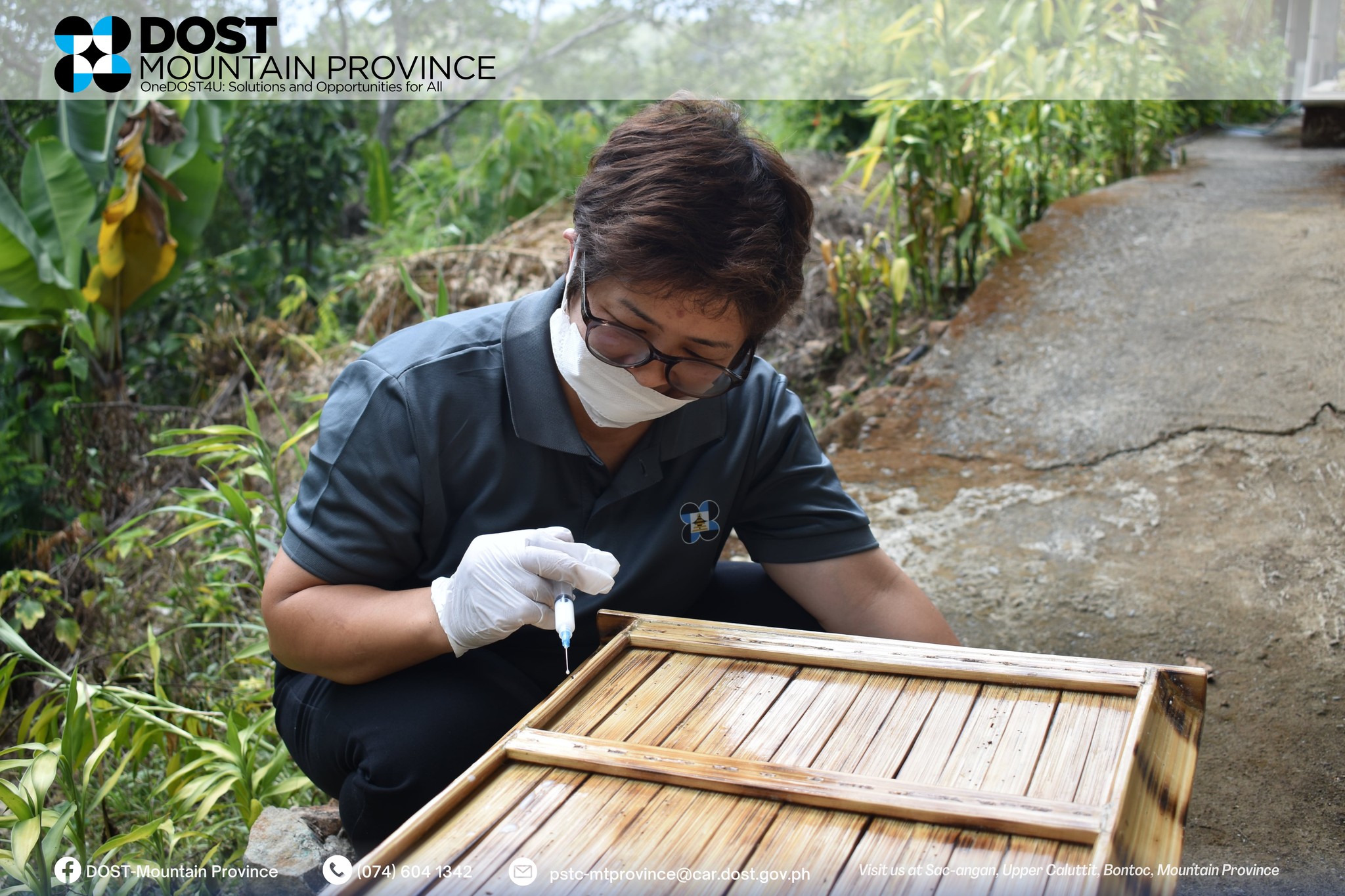
The opening session was grounded and practical. DOST-FPRDI's Mr. Christian R. Amante delivered the course overview, laying out the training framework and what participants would build toward by the end of three days. From there, subject matter specialists Ms. Mylene D. Rizare and Ms. Allaine P. Omalin led a comprehensive lecture on bamboo preservation and treatment — the foundational layer of everything that follows.
The techniques covered were not surface-level. Proper bamboo handling, preservation methods, and treatment processes directly determine how long a product lasts, how resistant it is to pests, and how it holds up in actual market conditions. A beautiful piece of bamboo craft that warps or cracks within a year is not a viable livelihood product. These sessions addressed exactly that — turning raw material knowledge into a quality baseline.
The lecture was reinforced with a hands-on demonstration, putting participants in direct contact with the methods discussed. Theory without practice rarely transfers. The organizers built the demonstration into Day One deliberately, so that by the time participants moved into production work on Days Two and Three, they were not starting from scratch.
Days Two and Three: From Craft to Enterprise
Sessions on April 30 and May 1 moved into bamboo craft production, product development, and entrepreneurship — the arc from raw material to finished product to sustainable income. This is where training programmes often stay abstract, but the framing here is specific: transforming traditional skills into viable economic opportunities for the communities that hold them.
That framing matters. Bamboo craftsmanship in the Cordillera carries both practical and cultural weight. The indigenous knowledge embedded in how communities have historically worked bamboo — the forms, the techniques, the uses — is part of the region's heritage. A livelihood programme built around bamboo is not just economic intervention. It is also a mechanism for keeping that knowledge alive, practiced, and passed on.
Why This Matters Beyond Mountain Province
For the broader Northern Luzon ecosystem, the Tadian training is a model worth watching. It brings together a national research institute with deep materials expertise (DOST-FPRDI), a trade development agency with market linkage capability (DTI), a science and technology office with provincial reach (DOST-CAR PSTO), and a local government body with community trust and implementation infrastructure — all aligned around a single, community-level programme.
That convergence is rare. And it is exactly the kind of institutional coordination that turns a one-time training into a sustained industry development effort. Whether it produces a cluster of bamboo craft enterprises in Mountain Province — or remains a well-run but isolated event — will depend on what happens after the three days end: whether product development gets market linkage, whether participants get access to capital, and whether the institutions that showed up for the opening also show up for the follow-through.
Are you a founder, innovator, or community builder in Northern Luzon?
We're always looking for compelling stories from the region's ecosystem. Whether you're launching a startup, running a program, or doing something interesting — we'd love to feature you.